Skip to content
The Northwest School of Aromatic Medicine
  • About
  • Courses
  • Resources
    • The Aromatic Medicine Blog
    • Video Library
  • Shop
  • Contact
  • Close Search Form
    Open Search Form
  • facebook
  • instagram
  • youtube
Student Login
Tag

plant connection

Aromatherapy
Aromatic History & Lore
Herbal Medicine
Human/Plant Connection
Plant Profiles
February 26, 20260Comments

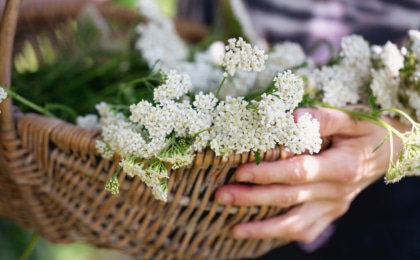
Yarrow in Herbal & Aromatic Medicine: History, Uses, and Energetics

The first time I truly met Yarrow was on a group hike with one of my herbal teachers. As we walked, he pointed out the feathery leaves at our feet
by NW School of Aromatic Medicine
Aromatherapy
Herbal Medicine
Human/Plant Connection
Incense as Medicine
Ritual
February 19, 20260Comments

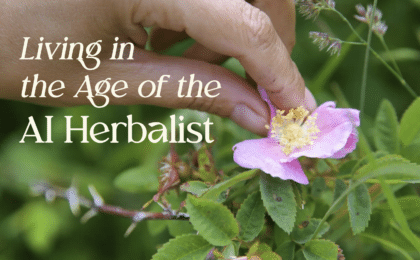
Living in the Age of the AI Herbalist

In late 2025, an investigation by Originality.ai revealed something staggering: roughly 82% of herbal remedy books on Amazon were at least partially generated by AI [1]. Pause for a moment
by NW School of Aromatic Medicine
Aromatherapy
Aromatic Recipes
Herbal Medicine
Human/Plant Connection
Incense as Medicine
Ritual
February 12, 20260Comments

Aromatic Roots for Winter: Warming & Grounding Herbs

Winter is the most yin of all the seasons: inward, dark, quiet, conserving. In classical Chinese philosophy, yin and yang describe the great rhythm of life, opposing yet interdependent forces
by NW School of Aromatic Medicine
Alchemy
Natural Perfumery
January 15, 20260Comments

Creating Harmony: The Composition of Natural Perfumes

We live in a world saturated with scent. Our air fresheners, laundry detergents, cosmetics, body products, and even most perfumes are infused with synthetic fragrance compounds designed to imitate nature.
by NW School of Aromatic Medicine
Aromatherapy
Natural Perfumery
January 7, 20260Comments

Natural Perfumery & Aromatherapy: Where Scent Becomes Medicine

Long before scent was bottled, branded, or adulterated, it was burned, worn, prayed with, and brewed into medicine. Across cultures and centuries, aromatic plants have lived at the crossroads of
by NW School of Aromatic Medicine
Aromatherapy
Human/Plant Connection
Incense as Medicine
Ritual
December 4, 20250Comments

Aromatic Rituals for Holiday Stress, Boundaries & Nervous System Support

You’re standing in your childhood kitchen when it begins: your mother casually asking why you’re still single (again), your sister spiraling about seating arrangements, and your uncle launching into opinions
by NW School of Aromatic Medicine
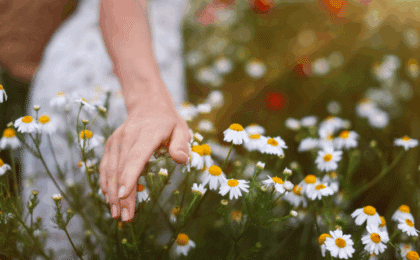
woman touching a field of chamomile outside on a sunndy day
Aromatherapy
Herbal Medicine
Human/Plant Connection
November 17, 20250Comments

The 4 Elements in Traditional Medicine: The Foundation of Energetics & Constitution

Have you ever wondered why the same essential oil that melts away your tension leaves someone else feeling restless? Or why your favorite go-to digestive herb doesn’t help your friend?
by NW School of Aromatic Medicine
Incense as Medicine
October 16, 20250Comments

5 Common Myths About Incense (and the Truth Behind Them)

Lighting incense has a way of transforming not just the space around you, but the atmosphere within you. The match strikes, the incense tip glows amber-red, and within moments the
by NW School of Aromatic Medicine
Incense Crafting
October 9, 20250Comments

4 Powerful Reasons to Make Your Own Incense

Close your eyes for a moment and imagine: a thin ribbon of smoke rising from a hand-rolled cone of incense, its earthy-sweet scent unfurling through the room like a gentle
by NW School of Aromatic Medicine
Alchemy
Aromatherapy
Herbal Medicine
Human/Plant Connection
Incense as Medicine
September 18, 20250Comments

From Hobbyist to Healer: Stepping Into Herbal and Aromatic Practice

Many of us step onto the plant path as hobbyists, captivated by herbs and aromatic plants, experimenting with teas, oils, or incense blends for personal use. Sometimes we share our
by NW School of Aromatic Medicine
« Older Articles

aromatic_medicine

🌿 Follow us on Instagram for daily inspiration, plant knowledge, aromatic wisdom, and one-of-a-kind courses 🌿

“Over every mountain there is a path, although it “Over every mountain there is a path, although it may not be seen from the valley.” 

– Theodore Roethke

__________
#poetry #TheodoreRoethke  #lifeisamountain  #theodoreroethkequote  #climbthemountain  #naturemetaphors
Across cultures and continents, tree resins have p Across cultures and continents, tree resins have played a central role in spirituality, ritual, and sacred ceremony for thousands of years. But why have these substances been so universally revered?

In many spiritual and healing traditions around the world, resins have been viewed as the living essence, or spirit, of the tree itself. When we work with resins, especially when they’re burned as incense, it’s often considered as an invitation for the spirit of the tree to join and support whatever intention we bring to the ritual.

In other traditions, including ancient Indigenous cultures and even Biblical teachings, burning incense or resin is believed to create a direct connection to the spirit world. The rising smoke is seen as carrying prayers and offerings upward, drawing the attention of God, gods, or spiritual forces. 

In fact, many cultures referred to these resins as the “Food of the Gods.” Their aromas were believed to please and appease divine beings more than any other offering.

Because of this, resins have long stood at the heart of sacred ceremonies around the world. The fragrant smoke released from these substances – drawn from the very heart of trees – is offered through fire as a bridge between the earthly and spiritual realms. 

In many traditions, this act is not merely symbolic. The smoke of incense is believed to open a pathway of communication, helping prayers and intentions reach the spirit world more clearly.

*This is an excerpt from our new video blog, The Magic and Medicine of Botanical Resins. 

In the vlog, you’ll discover: 

• What tree resins actually are (and how they differ from sap)
• Why cultures around the world consider them sacred
• Their powerful therapeutic properties
• How they’re used in incense, perfumery, and herbal medicine
• A simple way to begin working with resins at home

🌲 Read the full blog and watch the video at the link in our bio.

--
#treeresin #incenseresin  #harvestingtips  #wildharvesting #sustainableharvest  #incensecrafting  #botanicalresin
Evan Sylliaasen, founder of the NW School of Aroma Evan Sylliaasen, founder of the NW School of Aromatic Medicine and Higher Mind Incense, explores the Magic and Medicine of Botanical Resins in our new video blog.
You'll discover: 

• Why cultures around the world consider resins sacred
• Their powerful history and therapeutic properties
• How they’re traditionally used in incense, perfumery, and herbal medicine
• Simple steps you can use at home to meditate and tune into the medicine of resins 

🌲 Visit the full vlog at the link in our bio.
How to Harvest Tree Resin 🌲 Did you know you can How to Harvest Tree Resin 🌲

Did you know you can harvest tree resin any time of year? Spring is when it’s often the most abundant.

In North America, the easiest resin-producing trees to find are conifers, including Pine, Fir, Spruce, Juniper, Cedar, Hemlock, and Larch. (Be sure to confidently identify the tree before harvesting!)

The easiest resin to work with is hardened resin that has already dried on the tree. Fresh resin can also be collected, but it’s very sticky and a bit messier to handle. If you do harvest fresh resin, try using a piece of foil (or something similar) to collect it, then allow it to dry for several weeks to months, depending on the species and your climate.

You can also blend fresh resin directly into an incense formula without drying it first.

When harvesting, always gather resin that has flowed away from the tree’s wound. The tree produced that resin to protect itself, so leaving what’s closest to the injury helps keep pests and infection out.

Most importantly, have a good time going out into the forest!

______________
 #treeresin #incenseresin  #harvestingtips  #wildharvesting  #sustainableharvest  #incensecrafting  #botanicalresin
What do ancient Egyptian temples, the art of incen What do ancient Egyptian temples, the art of incense, Aztec healing applications, natural perfumery, topical medicines, and modern meditation practices all have in common?

Tree resins.

For thousands of years, these fragrant substances have been burned as ritual incense, used as traditional medicine, and treasured as sacred offerings across cultures around the world.

But what exactly are tree resins… and why have they been revered for so long?

In our new video and blog, we explore:

🌲 What tree resins are (and how they differ from sap)
🌲 Their powerful therapeutic properties
🌲 Their sacred history across cultures
🌲 A simple way to work with resin incense at home

If you love aromatic herbs, sacred incense, or plant medicine, this is a fascinating world to explore.

Read the blog and watch the full video at the link in our bio.

---
 #treeresin #incenseresin  #harvestingtips  #wildharvesting  #sustainableharvest  #incensecrafting  #botanicalresin
The sweet, sacred Frankincense resin we know and l The sweet, sacred Frankincense resin we know and love is a rich terpenoid oleoresin harvested from Boswellia trees, a group of about 24 species in the Torchwood family, alongside other aromatic icons like Elemi and Myrrh. 

Known as “tears” for the way they drip from the bark, these golden drops are the tree’s natural defense system: when injured, the bark releases this resin to seal the wound, protect against infection, and guard against pests.

Frankincense is one of the oldest aromatic medicines on the planet. For thousands of years, it has been traded across ancient civilizations and deeply rooted in spiritual practices from Judaism and Hinduism to Christianity and Islam and beyond. 

Its role in rituals of cleansing and renewal reflects a universal human desire to connect to the sacred. This enduring resin transcends cultural boundaries, offering a sense of balance and grounding that has resonated across generations.

Its name comes from the medieval French word franc (“pure”) and the Latin word incensium (“to smoke”), echoing its ancient role as “pure smoke” used for purification, protection, and connection to the divine. 

Across cultures and religions, the rising smoke of Frankincense has symbolized prayers carried to the heavens and the bridge between the material and spiritual realms. 

🔥 Swipe through to explore the aromatic and therapeutic gifts of this sacred resin.

✨ P.S. Our sister company, Higher Mind Incense, carries 4 different species of sustainably sourced Frankincense resin! You can find them at the link in our bio.
The first time I ever burned Frankincense, somethi The first time I ever burned Frankincense, something unexpected happened.

Within a few breaths, my awareness sharpened, my thoughts grew quiet, and a deep sense of calm washed over me. There was a feeling of ancient sacredness in the air…something difficult to explain, but impossible to ignore.

That moment opened the door to a world I hadn’t yet discovered: the beautiful realm of tree resins.

For thousands of years, resins like Frankincense, Myrrh, Copal, Pine, and Cedar have been burned as sacred incense in rituals, used as traditional medicines, and revered across cultures for their therapeutic and spiritual qualities.

In our new video and blog, we explore:

• What tree resins actually are (and how they differ from sap)
• Why cultures around the world consider them sacred
• Their powerful therapeutic properties
• How they’re used in incense, perfumery, and herbal medicine
• A simple way to begin working with resins at home

I also talk about my favorite way to work with resins: burning it on charcoal as incense.

Sitting with the smoke of a single resin allows you to experience its qualities directly, while tuning in to how its presence affects your mind, body, and emotions.

In this way, working with resin incense becomes not only a ritual practice but also a subtle and powerful form of plant-based medicine.

🌲✨ Read the full blog and watch the video at the link in our bio.

 #treeresin #incenseresin  #harvestingtips  #wildharvesting  #sustainableharvest  #incensecrafting  #botanicalresin
One Plant. Many Expressions. 🌿 In the 1960s, bio One Plant. Many Expressions. 🌿 

In the 1960s, biochemist Pierre Franchomme uncovered something groundbreaking while studying essential oils: a single aromatic plant species can express itself through multiple chemotypes, each with a distinct chemical makeup, aroma, and therapeutic personality.

A chemotype is a chemically distinct version of the same plant species. Influenced by factors like soil, climate, altitude, and genetics, chemotypes can dramatically change how an essential oil works in aromatic medicine.

Thyme is a perfect example.

Here are some of the most common Thyme chemotypes:

✨ Thymus vulgaris ct. thymol
Strong, pungent, and herbaceous. Highly stimulating and powerful for respiratory support (but best reserved for adults due to its potential to irritate skin and mucous membranes).

✨ Thymus vulgaris ct. linalool
Soft, sweet, and green-herbaceous. Gentle, calming, and emotionally supportive. Generally non-irritating and suitable for children over 6.

✨ Thymus vulgaris ct. geraniol
Rosy-sweet and mild. Often used interchangeably with linalool and traditionally considered supportive to the heart and gentle on the system.

✨ Thymus vulgaris ct. thujanol
Native to southern France. Sweet, soft, and non-irritating (making it one of the most versatile and widely loved thyme chemotypes).

✨ Thymus vulgaris ct. borneol
From Northwest Africa. Spicy, herbaceous, and robust, with stimulating aromatic qualities.

✨ Thymus vulgaris ct. cineole
Fresh, camphor-like, and high in 1,8-cineole. Commonly used to support the respiratory system and clear congestion.

Same species. Different chemistry. Different medicine.

This is why knowing the chemotype is just as important as knowing the plant. 🌱

_____________
#chemotypes #essentialoils #aromatherapy #thyme #thymusvulgaris #thymeessentialoil #thymeoil
Follow on Instagram

OFFERINGS

  • Aromatic Medicine Garden Membership
  • Incense Crafting Course
  • Botanical Resins & Gums Course
  • Materia Aromatica Ebook

QUICK LINKS

  • About
  • Courses
  • The Aromatic Medicine Blog
  • The School
  • Evan Sylliaasen
  • Contact
  • Privacy Policy
  • Terms & Conditions

FOLLOW US

  • Facebook
  • Instagram
  • Youtube

OUR NEWSLETTER

Stay in the know on new releases and special offers

Loading

support@aromaticmedicineschool.com

© 2026 The Northwest School of Aromatic Medicine, All rights reserved.