Skip to content
The Northwest School of Aromatic Medicine
  • About
  • Courses
  • Resources
    • The Aromatic Medicine Blog
    • Video Library
  • Shop
  • Contact
  • Close Search Form
    Open Search Form
  • facebook
  • instagram
  • youtube
Student Login
Category

Bio-Regional Aromatic Medicine

Aromatic History & Lore
Bio-Regional Aromatic Medicine
Human/Plant Connection
Ritual
June 4, 20260Comments

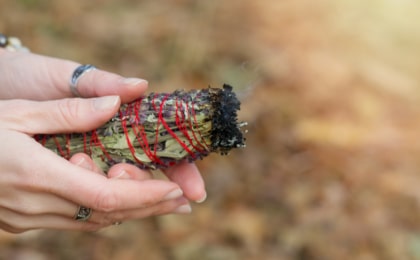
Spring Cleaning: Aromatic Herbs for Smoke Cleansing

There's something about spring that makes you want to throw open the windows and start fresh. That urge to declutter and reorganize isn't just a trend on social media, though;
by NW School of Aromatic Medicine
Bio-Regional Aromatic Medicine
Human/Plant Connection
Sustainability
July 29, 20250Comments

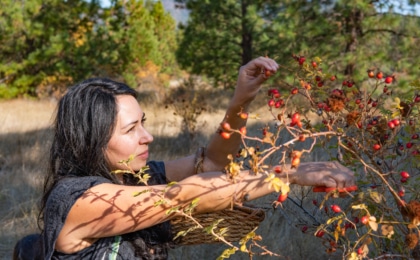
Wild Harvesting with Integrity: Respectful and Sustainable Harvesting Practices

There’s a kind of botanical magic that only summer can bring – the scent of a sun-warmed Rose bush in full bloom, the crisp brightness of Lemon Balm brushing against
by NW School of Aromatic Medicine
Aromatherapy
Bio-Regional Aromatic Medicine
Herbal Medicine
Human/Plant Connection
Incense Crafting
Natural Perfumery
Ritual
May 22, 20250Comments

The Energy You Bring to the Craft: Intention as an Ingredient

Have you ever followed a recipe exactly, only to have it fall flat, while someone else makes the same thing and it comes alive? Or crafted an herbal or aromatic
by NW School of Aromatic Medicine
Aromatherapy
Bio-Regional Aromatic Medicine
Herbal Medicine
Incense as Medicine
Plant Profiles
Sustainability
Topical Medicine
January 9, 20250Comments

The Benefits of Pine Resin & How to Harvest It

I will never forget meeting my friend Sam (name changed to spare them any embarrassment), a budding herbalist radiating excitement and curiosity about the wonders of the natural world. One
by NW School of Aromatic Medicine
Aromatherapy
Aromatic History & Lore
Aromatic Recipes
Bio-Regional Aromatic Medicine
Herbal Medicine
Human/Plant Connection
Plant Profiles
Sustainability
November 7, 20240Comments

Pine Needle Tea Benefits, Harvesting Tips & Recipe

In the bitter winter of 1536, deep in the wilds of North America, morale was low. The French explorer Jacques Cartier and his crew, weakened by months at sea, began
by NW School of Aromatic Medicine
Aromatherapy
Aromatic History & Lore
Aromatic Recipes
Bio-Regional Aromatic Medicine
Herbal Medicine
Incense as Medicine
Plant Profiles
Sustainability
Topical Medicine
January 24, 20240Comments

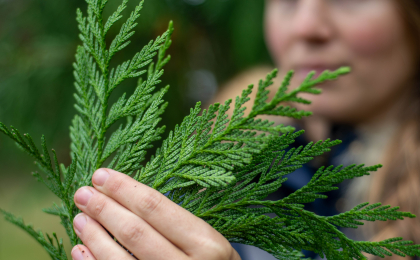
Medicine of the Evergreens: Our Greatest Winter Allies

In the heart of winter's icy grip exists a steadfast symbol of endurance and resilience – the magnificent evergreen trees. With autumn behind us, many plants have shed their leaves
by NW School of Aromatic Medicine
Aromatherapy
Aromatic History & Lore
Aromatic Recipes
Bio-Regional Aromatic Medicine
Incense as Medicine
Plant Profiles
Topical Medicine
December 21, 20229Comments

The Magic and Medicine of Douglas Fir

With autumn behind us, many plants have shed their leaves in preparation for winter and wild-harvesting opportunities can feel sparse. But there is one particular type of plant you can
by NW School of Aromatic Medicine
Aromatherapy
Bio-Regional Aromatic Medicine
Human/Plant Connection
Sustainability
April 14, 202210Comments

13 Aromatic Plants You Can Easily Grow at Home

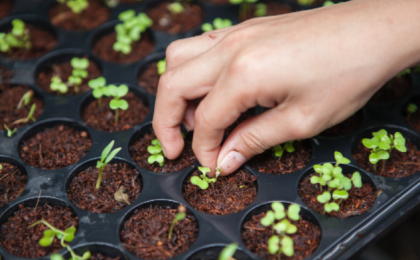
Have you thought about growing a garden this spring? Now is a great time to start preparing! Whether you're a complete beginner, or a master in aromatic medicine making, there is
by NW School of Aromatic Medicine
Bio-Regional Aromatic Medicine
Human/Plant Connection
Ritual
April 5, 20210Comments

Speaking the Language of Plants

Can You Communicate With Plants?There are many ways you can learn about plants. But there are also many ways you can learn from plants. Learning about plants through books and
by NW School of Aromatic Medicine
Aromatic History & Lore
Bio-Regional Aromatic Medicine
Plant Profiles
January 25, 202134Comments

The Medicine & Magic of Pine

Article written by Evan SylliaasenFor ages, humans across the Earth have maintained a special and magical relationship with evergreen trees of all kinds. The multifaceted wisdom in their growth patterns,
by NW School of Aromatic Medicine
« Older Articles

aromatic_medicine

🌿 Follow us on Instagram for daily inspiration, plant knowledge, aromatic wisdom, and one-of-a-kind courses 🌿

The legend of Ylang-Ylang 🌿 In the beginning of t The legend of Ylang-Ylang 🌿

In the beginning of time, when the Earth was created, most of the plants had leaves but no flowers. 

The Goddess of Beauty arrived to decorate the Earth with color and heavenly aromas. She painted beauty high and low, across all the lands, and gave many trees and plants flowers. 

She believed that only the kind-hearted flowers deserved luxurious scents, and went on a mission to interview each one. 

She asked Wild Rose, “What would you do if I gave you a beautiful smell?” and the Rose said, “I would ask Sister Wind to help share it with everyone.” And so, Rose was blessed with a divine, sweet floral aroma. 

She asked the Lotus flower what they would do, and the Lotus replied, “I would harness the aroma to inspire kindness in every soul.” So the Goddess gave Lotus a lovely, fruity smell.

After asking Hibiscus the same question, they said: “With a sweet aroma in addition to my already stunning beauty, I would be the most powerful flower in the world!” The Goddess rolled her eyes and moved on. (This is why Hibiscus doesn’t have a strong smell.)

When her work was almost done, she realized she still hadn’t given away the most pure and prized of all aromas, “the Goddess of the Scents”. And then she spotted Ylang-Ylang and asked what they would do with a beautiful scent. And Ylang-Ylang replied, “I would be so grateful, but I think you should give it to the grass! I am blessed with living in a tree, where I get to float and sway in the wind, but the flowers in the grass get stepped on every day.”

With tears in her eyes, the Goddess cried, “Oh sweet Ylang-Ylang, you deserve this pure and magical fragrance – use it to spread love to all living beings on Earth!” And so, to this day, Ylang-Ylang is revered as a pure, intoxicating smell, and often referred to as the “Goddess of the Flowers”. 

________
#ylangylang #ylangylangessentialoil #folklore #plantfolklore #plantlore #aromatics
Since ancient times, aromatic plants have been all Since ancient times, aromatic plants have been allies in supporting our minds, bodies, and spirits. That's why their stories survived this long, passed down through song, folklore, and the written record, long before anyone needed a clinical trial to take them seriously. 

They're more than just a pleasant smell or a beautiful bloom; they have a real, measurable influence on how we feel and move through the world. 

It's easy for modern skepticism to wave all of this off as superstition or wishful thinking, but the plants—and now, increasingly, the research—say otherwise.

In our newest blog, we explore 4 aromatic plants whose traditional uses are now being supported by modern research, revealing how ancient wisdom and contemporary science can deepen our understanding of aromatic medicine.

✨ Comment ANCIENT to get the full article sent to your inbox!

____________
#ancientwisdom #plantwisdom #herbaltradition #herbalwisdom #plantscience #herbalism #aromatherapy
What’s Patchouli all about? It’s not just a sign t What’s Patchouli all about? It’s not just a sign that hippies are near 😉🌿

This plant has a grounding, earthy aroma that has a long history of use in aromatic medicine and is one of the most widely used natural raw materials in perfumery. 

Patchouli is a bushy herb in the Mint family, native to Indonesia and Malaysia. It can grow up to 2-3 feet high and has small, pink-white flowers.

When fresh, the plant is almost odorless, but when dried, it has a strong, rich, musky-sweet fragrance. 

Its aromatics have been traditionally used to help ease stress, depression, anxiety, and insomnia. It’s also commonly used to help relieve cold and flu symptoms.

With Patchouli, we find that people either fall in love with it or are totally repelled by it. 

Where do you stand?

______________
#patchouli  #patchoulioil #patchouliknowledge #patchouliperfume #aromatherapy #aromaticmedicine #aromaticherbs
Have you heard of bio-regional aromatic medicine? Have you heard of bio-regional aromatic medicine? 🌿✨

It’s the theory that the plants growing near you are the most powerful medicine for you. People of a specific region are best nourished by the flora of that same region. 

This is wisdom that traditional healers and ancient medical systems around the world have known and used for ages.

When you live in a particular place, the environment becomes a part of you: the air that you breathe, the water you drink, and the food that you eat (especially if it’s sourced locally) have energetic imprints of the Earth and the elements that are unique to that place. 

Even the climate, weather patterns, seasonal changes, unique stars and planetary alignment, and specific levels of minerals and nutrients in the soil become a part of you. 

The flora that grows near you is a part of this interconnected web. The plants in your backyard are thriving in the same environment that you are living in. And since that environment is also a part of you, these plants have a much easier time thriving inside of you.

What local plants are your best support system??

____________
 #bioregionalherbalism #bioregionalism #localplants #aromaticmedicine #aromatherapy #herbalism
Have you worked with Sagebrush before? This poten Have you worked with Sagebrush before?

This potent aromatic medicine has many therapeutic benefits.

Its antimicrobial properties make it a great air purifier; as it’s burned, it kills airborne bacteria and viruses in the atmosphere. 

Not only can Sagebrush clear energy physically and energetically, but it also helps to clear and declutter the mind, boosting mental clarity, focus, memory, and cognition.

It’s also commonly used to support respiratory health issues, since it’s been known to help open up the airways and clear out infection. It’s traditionally used to relieve asthma, bronchitis, sinus infections, and other respiratory ailments. 

Sagebrush can also be used topically, and its analgesic properties make it a great addition to topical oils and salves for pain and inflammation relief.

*If you plan to harvest Sagebrush, please do some research on the region before harvesting. The Sagebrush ecosystem is now considered critically endangered due to wildfires, invasive species, and land development.*

____________
#sagebrush #sage #aromatherapy #artemisia #artemisiatridentata
What if ancient healers knew something science is What if ancient healers knew something science is only beginning to understand?

For thousands of years, aromatic plants have been used to calm the mind, sharpen memory, support digestion, and uplift the spirit. These traditions were passed down long before laboratories or clinical trials existed.

Today, modern research is beginning to back up many of those same traditional uses.

In this week’s blog article, we explore the history and science of 4 aromatic plants, comparing what ancient cultures believed with what new research is discovering.

It's a beautiful reminder that sometimes the oldest wisdom still has something to teach us.

🌿 Read the full article through the link in our bio.

_____________
#ancientwisdom #plantwisdom #herbaltradition #plantscience #herbalism #aromaticherbs #ancienthealing
Have you ever wondered where the aroma of Vetiver Have you ever wondered where the aroma of Vetiver comes from? Vetiver is often referred to as the “Fragrance of the Soil” because of its earthy and woody scent profile. 

This aromatic grass, native to India, possesses a distinctive aroma reminiscent of damp earth, roots, and the essence of the soil itself. Its fragrance is deeply grounding, often described as rich, smoky, and slightly sweet.

The nickname “Fragrance of the Soil” captures the essence of Vetiver's olfactory profile, as it brings to mind the natural, organic scent of freshly turned earth. This association with the Earth's aroma is thanks to the roots of the Vetiver plant, which contain fragrant compounds that imbue the soil with their characteristic scent.

Vetiver roots are strong and grow deep beneath the soil, and the plants are often grown for erosion control and bioremediation. 

When the roots are harvested for essential oil production, the grasses are traditionally repurposed by locals, woven into cooling shades and sometimes intertwined with the roots to make roof thatching, window screens, blinds, and hand fans. The shades are consistently doused with water, effectively cooling and transforming hot, scorching summer air into aromatic, moist, balmy breezes. 

Vetiver's earthy fragrance has made it a popular ingredient in perfumery for centuries, where it adds depth, complexity, and a sense of connection to the natural world. Its ability to evoke a sense of rootedness and stability has earned it a special place in the world of perfumery – it is so popular that it’s the main ingredient in over 30% of all Western high-end perfumes, including Chanel N°5. (If you’re interested in learning how to make your own perfumes, check out our Natural Perfumery Course!)

Swipe through to learn all about the aromatic medicine of Vetiver. ➡
When did plant medicine become "alternative"? For When did plant medicine become "alternative"?

For generations, cultures around the world discovered that aromatic plants could calm the nervous system, sharpen the mind, encourage restful sleep, support digestion, and uplift the spirit.

This wisdom was passed down through oral tradition and ancient texts, becoming the foundation of many traditional healing systems.

Yet somewhere along the way, much of that knowledge came to be dismissed as folklore or placebo.

But that's beginning to change.

As more human clinical research is conducted on aromatic plants, scientists are finding evidence that supports many of the uses documented by traditional healers hundreds—even thousands—of years ago.

In this week's article, we're digging into some of those stories, both ancient and modern.

We explore 4 amazing aromatic plants, what ancient physicians and herbalists believed about them, and what modern scientific research is revealing today.

🌿✨ Link in bio. 

_______________
#aromaticplants #plantwisdom #plantmedicine #aromaticmedicine #herbalwisdom  #herbaltraditions #ancientwisdom
Follow on Instagram

OFFERINGS

  • Aromatic Medicine Garden Monthly Membership
  • Incense Crafting Course
  • Botanical Resins & Gums Course
  • Materia Aromatica Ebook

QUICK LINKS

  • About
  • Courses
  • The Aromatic Medicine Blog
  • The School
  • Evan Sylliaasen
  • Contact
  • Privacy Policy
  • Terms & Conditions

FOLLOW US

  • Facebook
  • Instagram
  • Youtube

OUR NEWSLETTER

Stay in the know on new releases and special offers

Loading

support@aromaticmedicineschool.com

© 2026 The Northwest School of Aromatic Medicine, All rights reserved.