
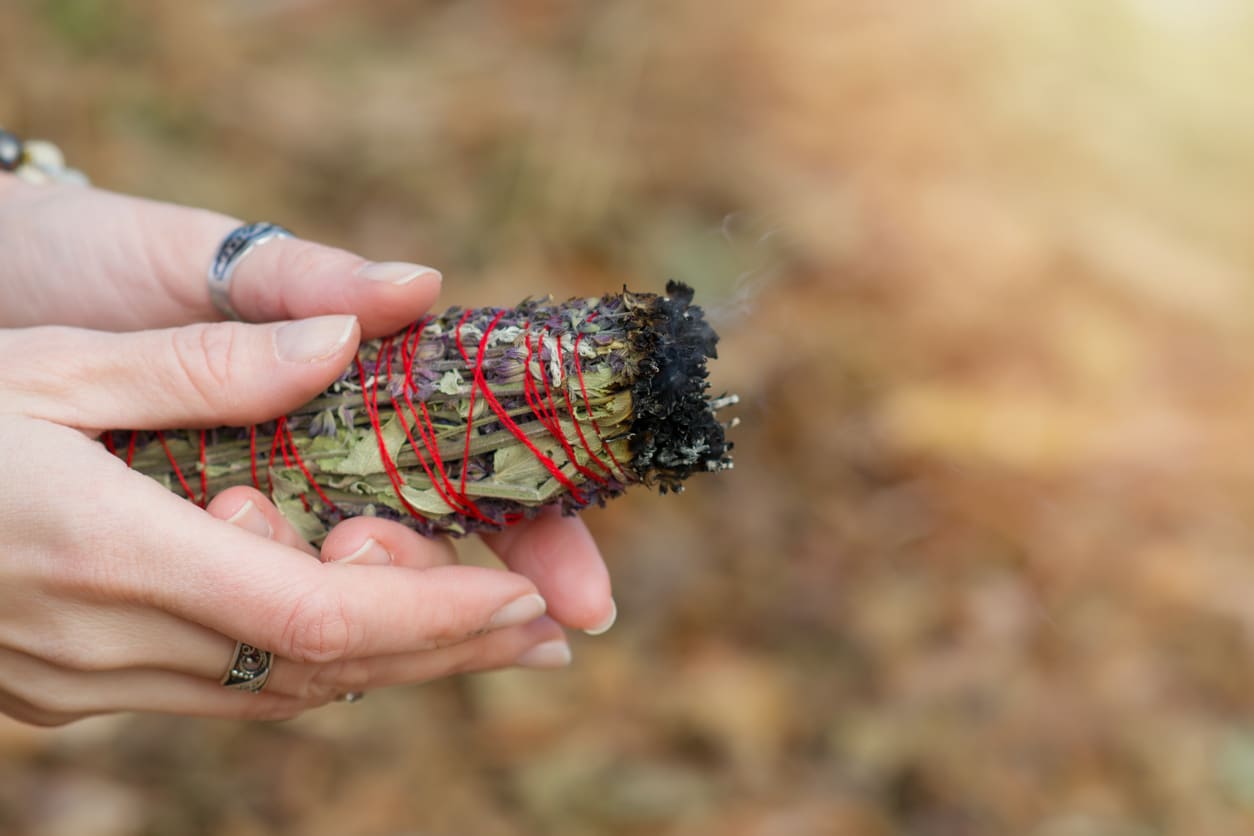
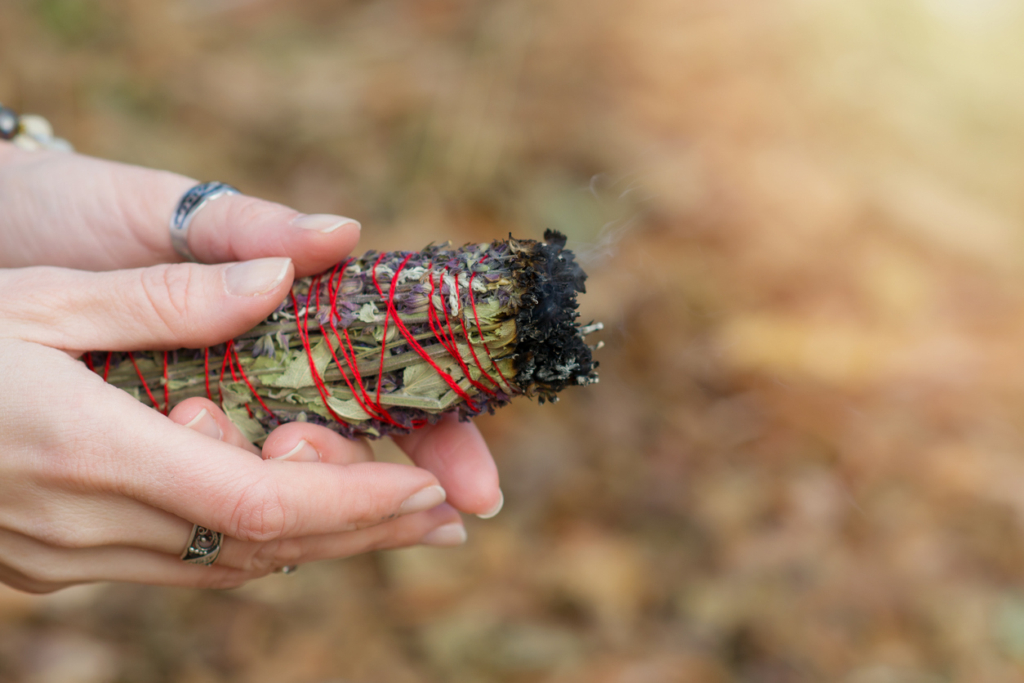
There's something about spring that makes you want to throw open the windows and start fresh. That urge to declutter and reorganize isn't just a trend on social media, though; it's your inner world responding to the season's invitation for renewal. But true spring cleaning goes deeper than what we can see. As you clear out the closets and refresh your spaces this spring, don't forget the most important reset of all: clearing the energy that lingers in the background.
Spring calls us toward new growth, but leaving the energy of winter behind isn't always easy. Some years it clings like a fog in the mind, a sluggishness in the body, or a staleness in the home that's hard to name but impossible to ignore. Aromatic plants have long been used to move exactly this kind of feeling: breaking up stagnation, lifting the spirit, and signaling to the body that it's time to begin again.
For centuries, cultures around the world have worked with aromatic herbs, smoke, and incense as part of seasonal cleansing rituals and energetic resets. Aromatic plants have a unique ability to awaken the senses and shift the feeling of a space (or our headspace). In this article, we’ll explore the significance and power of aromatic smoke cleansing, which herbs can be used for spring cleaning rituals, and how to make your own dried herb bundles using plants growing around you.
Why Aromatic Herbs Are Used for Smoke Cleansing
Aromatic smoke has always occupied a special place in human experience, symbolizing a bridge between the physical and the invisible, the seen and the unseen. The moment you light an herb bundle, incense, or resin and the smoke begins to rise, the scent engages your senses immediately, softening tension, altering mood, and changing the felt quality of a space in a way that's difficult to put into words.
When we inhale the aroma of a plant, its volatile compounds travel through our nasal passages to the olfactory bulb, which is part of the limbic system – the brain's center for processing emotions and housing memories. This direct connection is what makes aromatic plants so effective in influencing our mental state.
Scent is the sense most deeply tied to our memories and emotions, which means aromatic smoke can reach places deep within our psyche. It can ease grief, lift mental fog, signal a transition, or simply tell the body: something is different now. It's okay to let go. Perhaps this is part of the reason why aromatic plants have been considered sacred across cultures for centuries. They stir something within us that’s hard to describe.
The History of Smoke Cleansing
Aromatic plants have a remarkable ability to shift our internal atmosphere, but their influence doesn't stop there. Many aromatic plants contain volatile antimicrobial compounds that literally cleanse the air around us, which is why incense has carried a long history of medicinal use alongside its spiritual and ritual purposes. In ancient traditions, aromatic smoke was used as a fumigant, burned around the sick to support recovery and in shared spaces to prevent the spread of illness.
This impulse to cleanse with smoke is one of the most universal threads running through human history. Across cultures and centuries, aromatic smoke has been used to clear the air of both physical and energetic influences, and the forms this takes are as diverse as the peoples who practice it.
In old Northern European tradition, the twelve nights between December 25th and January 6th were considered a liminal and spiritually charged time. Households burned aromatic plants like Juniper, Fir resin, and Mugwort for four consecutive nights to clear out dark influences and welcome the returning light. This practice was observed first in Pagan cultures and later carried on by Catholic priests as a ritual of protection and purification. In Celtic tradition, smoke cleansing is known as "fire saining," a practice of purification and protection performed to clear negative influences from people, places, objects, and livestock.
In many Native American cultures (where these are living, actively practiced traditions, not relics of the past), smudging with sacred plant medicines such as Sweetgrass, White Sage, Tobacco, Cedar, Pine, and Juniper has long been used to purify people, places, and objects, and to open the way for prayer and ceremony. Throughout Mesoamerica and parts of South America, Indigenous cultures have burned Copal resin and other sacred plants for purification, prayer, offerings, and ceremony for centuries.
Across Asia, incense has burned in temples and homes for millennia, used to honor ancestors, purify sacred spaces, and mark the turning of seasons. In many Mediterranean and Middle Eastern cultures, aromatic resins like Frankincense and Myrrh have been burned in doorways and thresholds as a means of protecting what was held inside.
Spring house-clearing rituals, protective doorway herbs, temple incense, seasonal smoke ceremonies, energetic or spiritual rituals — the forms vary widely, but the intention beneath them remains consistent. Humans have always understood, in one way or another, that aromatic plants are sacred, and that scent and smoke carry the power to cleanse, protect, and renew.
This is just a glimpse into the rich and diverse world of smoke cleansing across cultures, and is not all-inclusive. Every tradition carries its own depth of meaning, from the plants chosen to the rituals practiced, all shaped by centuries of wisdom and intention. We invite you to explore your own ancestral roots to discover the smoke cleansing practices that resonate most with your heritage and your life.
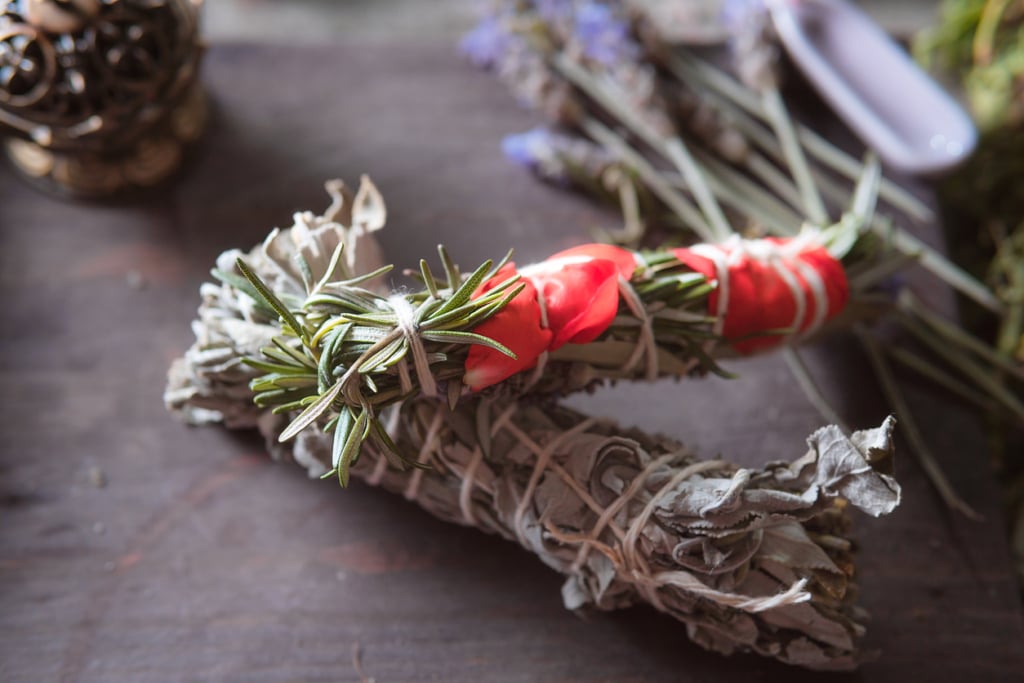
A Note About White Sage & Smudging
The term "smudging" refers to a specific, sacred, closed Native American religious ceremony using dried herbs such as White Sage or Sweetgrass for prayer, blessing, and spiritual cleansing. All other cultural practices involving smoke are more accurately referred to as "smoke cleansing."
White Sage holds deep sacred significance for many Indigenous cultures of North America, and that deserves our respect and awareness before we reach for it casually. For many Native communities, watching a sacred ceremony become commercialized and stripped of its spiritual context has been painful and disrespectful, and it was illegal for Native cultures to practice their religion (including smudging) until 1978 in the U.S. It's important for us to reflect on this before making a choice to use White Sage.
Beyond the cultural conversation, there is also an ecological one. Over the past few decades, the commercialization of smudging has placed enormous pressure on wild White Sage populations. It is now frequently over-harvested to meet global demand, and currently sits on the United Plant Savers At-Risk Species List. While commercial harvesting on public lands requires a permit, no such permit exists for White Sage, meaning much of the wild-harvested White Sage available on the market is thought to come from unauthorized harvesting.
If you choose to work with White Sage, please ensure it was cultivated on a farm rather than wild-harvested, so you're not inadvertently contributing to ecological harm. Better yet, consider growing your own. Cultivating White Sage at home allows you to develop a personal relationship with the plant while helping reduce pressure on native wild populations.
For a deeper look, we explore this topic more in our article “Smudging: An Issue of Ethics and Sustainability.”
Connect With Your Local Flora
Perhaps one of the most fulfilling ways to deepen your smoke cleansing practice is closer than you think — right outside your door. Getting to know the aromatic plants of your local landscape is a beautiful way to develop a practice that feels truly your own. Local plants carry a special kind of resonance because they grow and thrive in the same ecosystem you inhabit and move through the same seasons you experience. They feel like home because, in a very real sense, they are.
If you have the space for even a small garden (or simply a few herb pots on a sunny windowsill), tending your own aromatic plants can also add depth to your practice. There is something profound about working with a plant you've grown yourself, having witnessed its full journey from seed to smoke.
And one of the great joys of exploring the botanical world is discovering what's already thriving in your own region! Whether it's Rosemary from your garden, Cedar from a nearby woodland, or Lavender growing in your neighbor's yard (with permission to harvest, of course), the plants around you are waiting to be known. All it takes is a little curiosity and a willingness to slow down and look.
As always, please harvest sustainably and with care for the ecosystems. For sustainable harvesting tips, visit our article here.
Aromatic Herbs for Smoke Cleansing
The rich, global history of smoke cleansing means there is a way into this practice for everyone — one that feels personally meaningful without intruding on traditions that are sacred to others. There are many paths to finding the aromatic plants that resonate with you. You might explore your own ancestral or cultural heritage or already follow a spiritual path that carries its own botanical incense traditions. Or maybe there are aromatic allies you've worked with and know well, but haven’t tried burning yet. Let this list be your starting point and doorway into deeper exploration.
Garden Sage (Salvia officinalis)
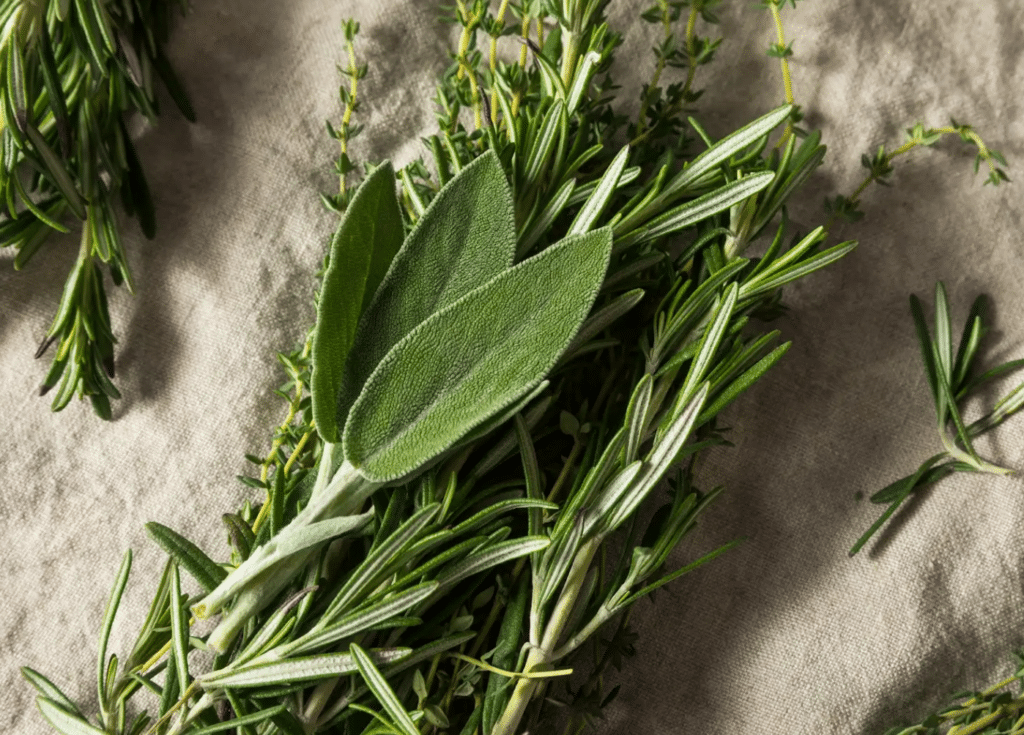
Garden Sage is one of the most accessible and sustainable alternatives to White Sage, sharing a similar aromatic profile and also growing abundantly. Traditionally, it has been used to clear negative energy and purify spaces, and like many aromatic plants, it carries antimicrobial qualities that make it both functional and ceremonial. Its warm, herbaceous scent is thought to ease stress and anxiety, sharpen mental clarity, and gently lift the mood. As the name suggests, Garden Sage is wonderfully easy to grow at home and widely available at most garden centers!
Mugwort (Artemisia vulgaris)
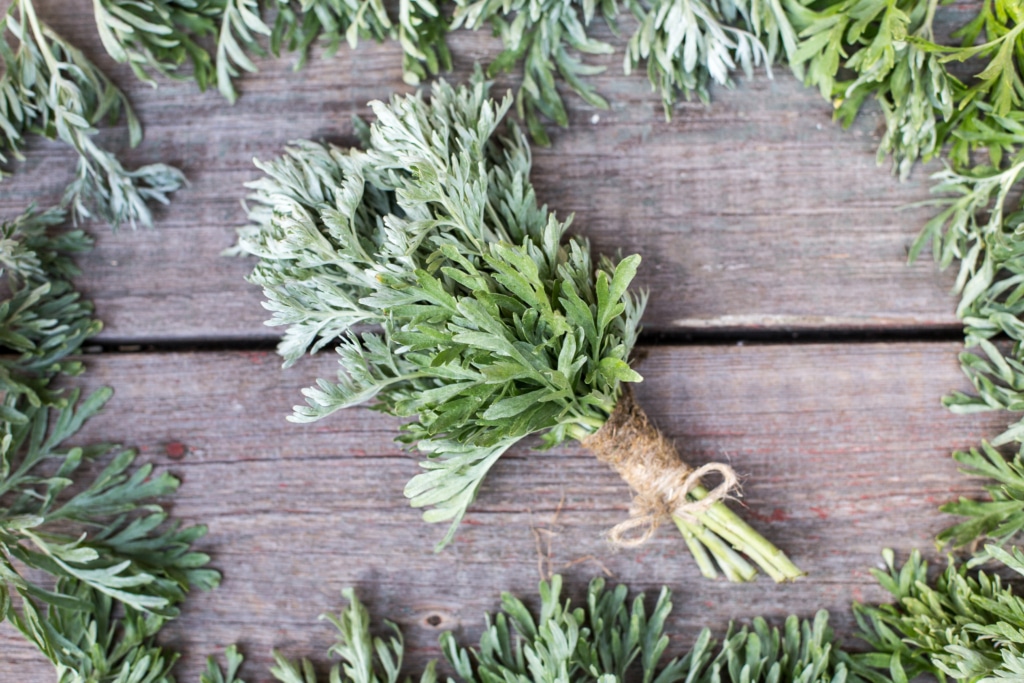
Mugwort has a long and storied history as an incense and smoke cleansing herb, particularly within saining traditions. Its smoke is believed to clear negative and stagnant energies, purify spaces on both a physical and energetic level, and create an environment that feels sacred and renewed. With natural antiseptic qualities and a deeply aromatic presence, Mugwort brings a sense of lightness and clarity wherever it is burned.
Beyond space cleansing, Mugwort is perhaps best known for its relationship with the inner world. Its smoke is said to sharpen intuition, heighten spiritual awareness, and open the senses, and it’s often called upon for meditation, ritual, divination, and dreamwork. It is thought to thin the veil between waking and dreaming consciousness, making it a favorite herb for those who work with lucid dreaming, shamanic journeying, or any practice that calls for a deeper receptivity to what lies beneath the surface.
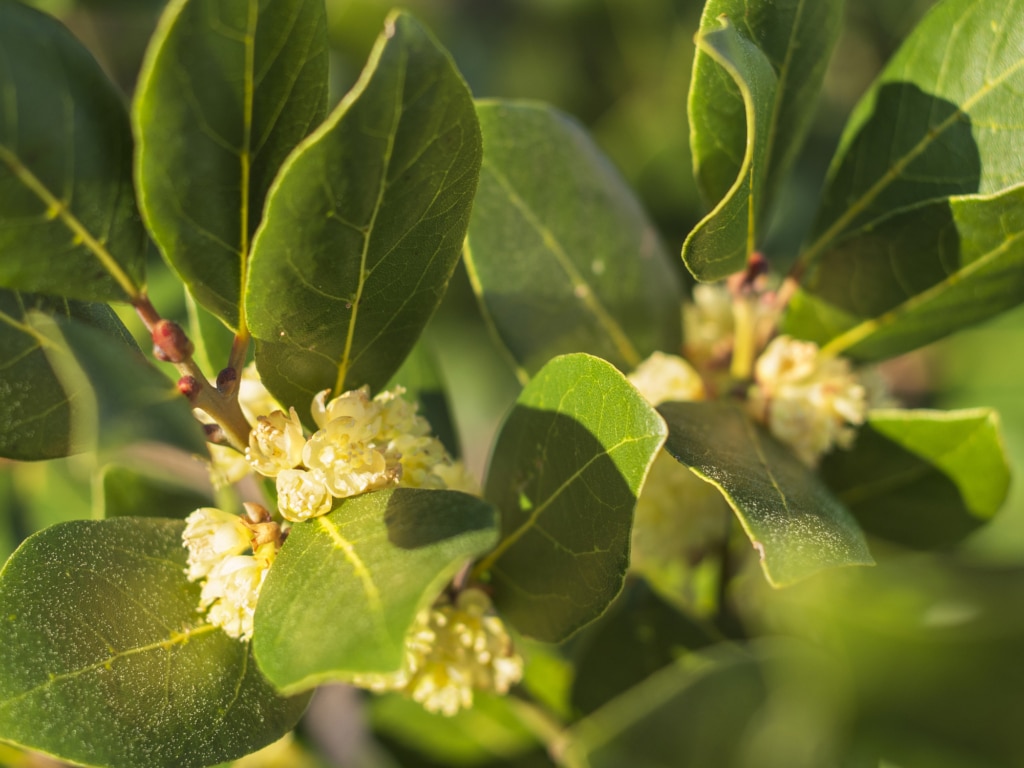
Bay Laurel (Laurus nobilis)
The culinary Bay leaf, derived from the Bay Laurel tree (Laurus nobilis), has a rich history that extends far beyond the kitchen. In Ancient Greece, Bay Laurel was revered as a sacred plant associated with prophecy, inspiration, and divine wisdom. At the Oracle of Delphi, the priestesses known as the Pythia are said to have inhaled the aroma of burning Bay leaves as part of their ritual preparations, helping induce visionary trance states through which they delivered prophecies believed to come from the god Apollo. Before entering the temple’s inner chamber, the Pythia underwent ceremonial purification and carried Bay branches, a symbol of spiritual insight and connection to the divine.
For centuries, Bay Laurel has been valued for its cleansing and protective qualities. The ancient Greeks regarded it as a symbol of purification, and its leaves were commonly burned as incense in rituals intended to cleanse both physical spaces and spiritual energies. Traditionally used during times of plague to freshen and purify the air, Bay leaves contain naturally antimicrobial compounds that help cleanse the atmosphere. The warm, uplifting aroma of Bay is believed to encourage confidence, courage, self-esteem, and creative inspiration, making it a fitting ally when embarking on new ventures rather than, as the saying goes, “resting on your laurels.”
If you'd like to explore beyond the classic culinary variety, consider experimenting with Indian Bay Leaf (Cinnamomum tamala) or California Bay Leaf (Umbellularia californica).
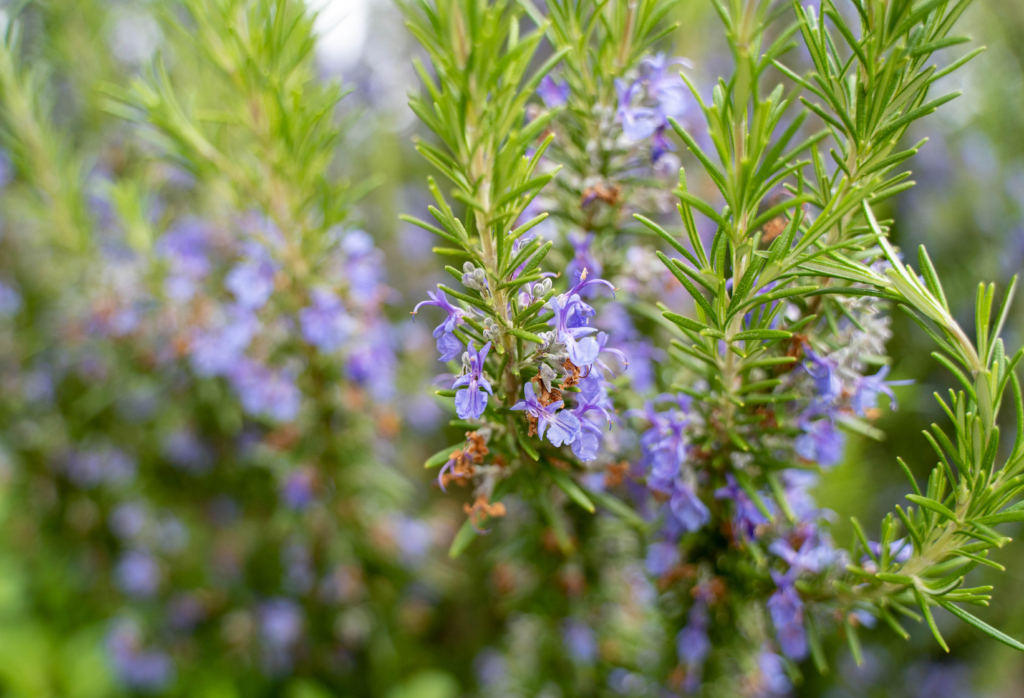
Rosemary (Rosemarinus officinalis/Salvia rosmarinus)
Rosemary isn’t just good on potatoes – it has a long history of use in aromatic medicine! During the Middle Ages in France, it was commonly burned in hospitals to fumigate and cleanse the air due to its well-documented antimicrobial properties. But Rosemary's ability to clear and invigorate extends far beyond the physical. Its bold, fresh aroma is known to break up stagnation on every level, sweeping out stuck or heavy energy and making room for clarity, motivation, and inspiration. Think of it as a broom for the atmosphere of both the air around you and your inner landscape.
Energetically, Rosemary has a particular affinity for those who feel lost, discouraged, or disconnected from themselves. It speaks to the part of us that has grown dim, weighed down by self-doubt, apathy, or the paralysis of negative thought spirals, and calls it back to life. Its smoke is uplifting and clarifying, helping to dissolve pessimism and reignite a sense of inner purpose and self-worth. If you find yourself stuck in a rut and unsure how to move forward, Rosemary is waiting to help you find your way back to yourself.
Unlock Your Free Rosemary Issue Of...
🌿 The Aromatic Medicine Garden Membership 🌿
Are you ready for a deeper, holistic dive into the world of aromatic plants? See what our membership is all about with your free full-length Rosemary issue, including an hour-long plant talk and a 21-page plant profile pdf full of recipes and insights.

Evergreens: Pine, Cedar, Juniper, Fir, and beyond
Throughout human history, evergreens have held a sacred status in the lore and spiritual life of cultures around the world. In the depths of winter, when the natural world falls silent and the days grow short, these trees stand unwavering: green, alive, and enduring. Evergreens have long been symbols of hope, resilience, and connection to the divine, offering both physical and spiritual support during the harshest of seasons. The aromatics of evergreen species are broadly considered grounding and centering, lending emotional balance, protection, and a sense of calm clarity. Many also carry antimicrobial qualities, purifying the air as well as the spirit.
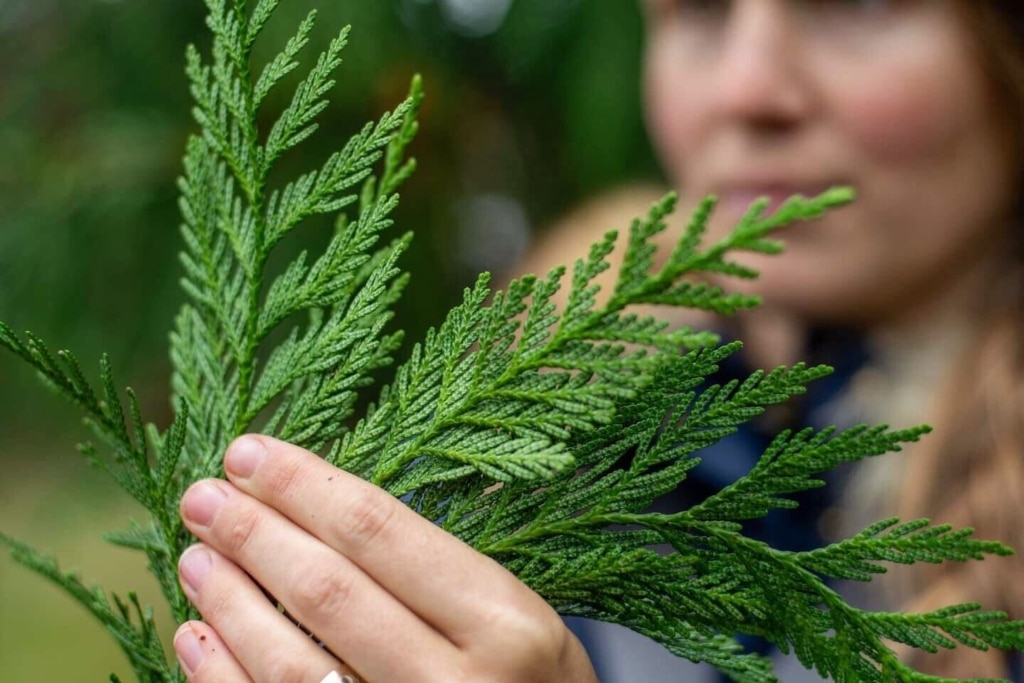
Cedar has long been used for both physical and spiritual cleansing, valued for its strong antimicrobial properties and affinity with the respiratory system. Pine, rich in the compound bornyl acetate (the source of its unmistakable crisp, foresty fragrance), is well known for its ability to ease emotional stress and invite relaxation. Juniper, a tree capable of thriving in the most unforgiving desert environments, has traditionally been burned for purification and protection, and is revered across many cultures as a symbol of strength and fortitude.
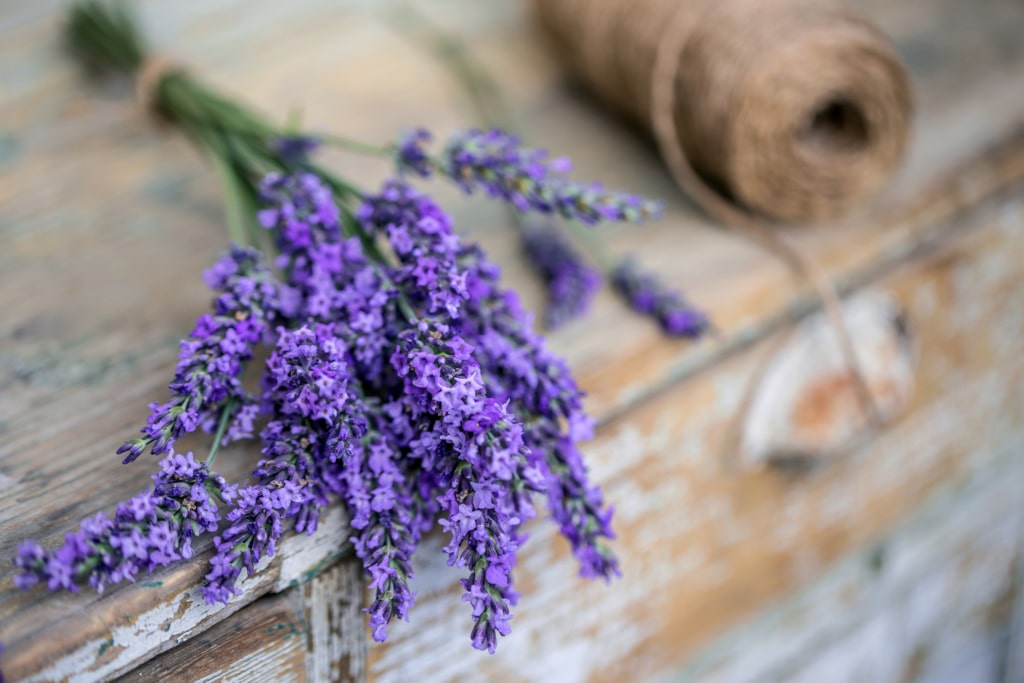
Lavender (Lavandula spp.)
The name Lavender traces back to the Latin word lavare, meaning "to wash" or "to cleanse," a fitting origin for a plant that has long been used to purify both body and mind. During the bubonic plague of the 14th century, Lavender was commonly burned around the sick to help curb the spread of infection, thanks to its antiseptic properties. It is also one of the classic ingredients in Four Thieves Vinegar, the immune-boosting herbal remedy born from that same era (learn more about the Four Thieves folklore and how to make this remedy in our blog post here).
When burned as incense, Lavender is thought to cleanse the mind of negativity, circular thinking, and emotional turbulence, gently restoring a sense of clarity and equilibrium. Its soothing aroma is renowned for easing stress, frustration, and irritability, helping to release mental energy that has become stuck or overwhelming. In this way, Lavender embodies its name fully: washing away what clouds the inner atmosphere and leaving a settled sense of renewal in its place.
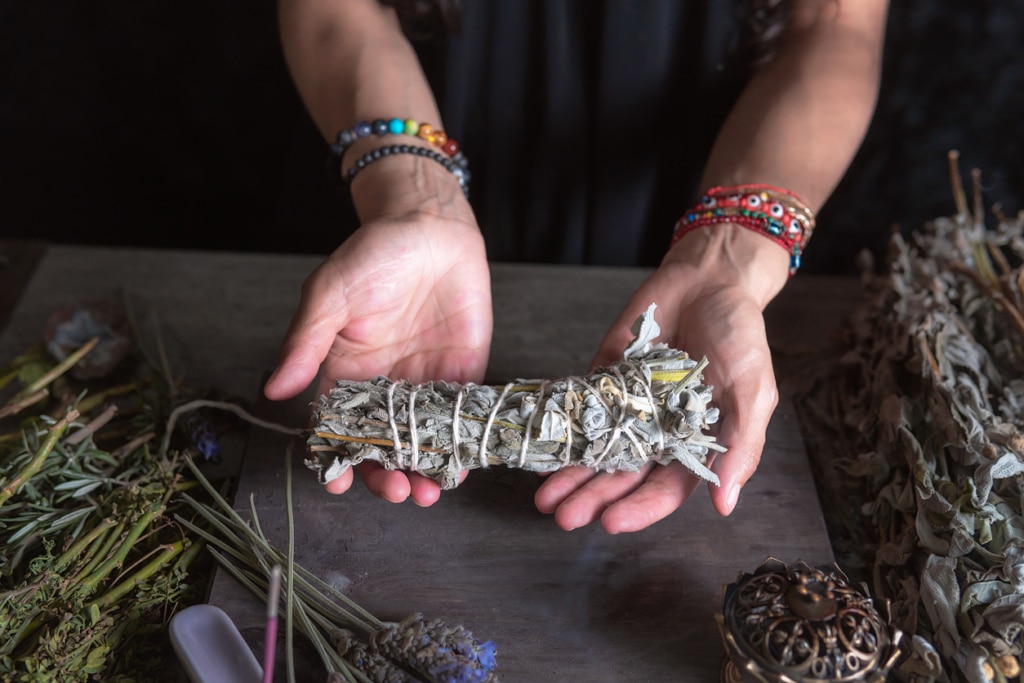
How to Make a Dried Herb Bundle
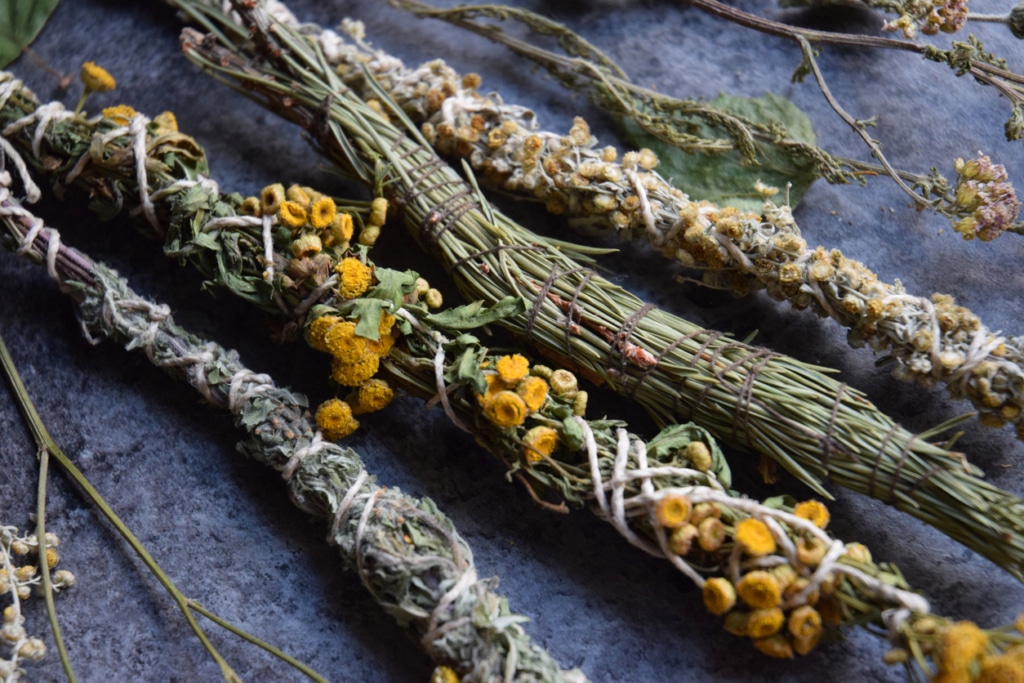
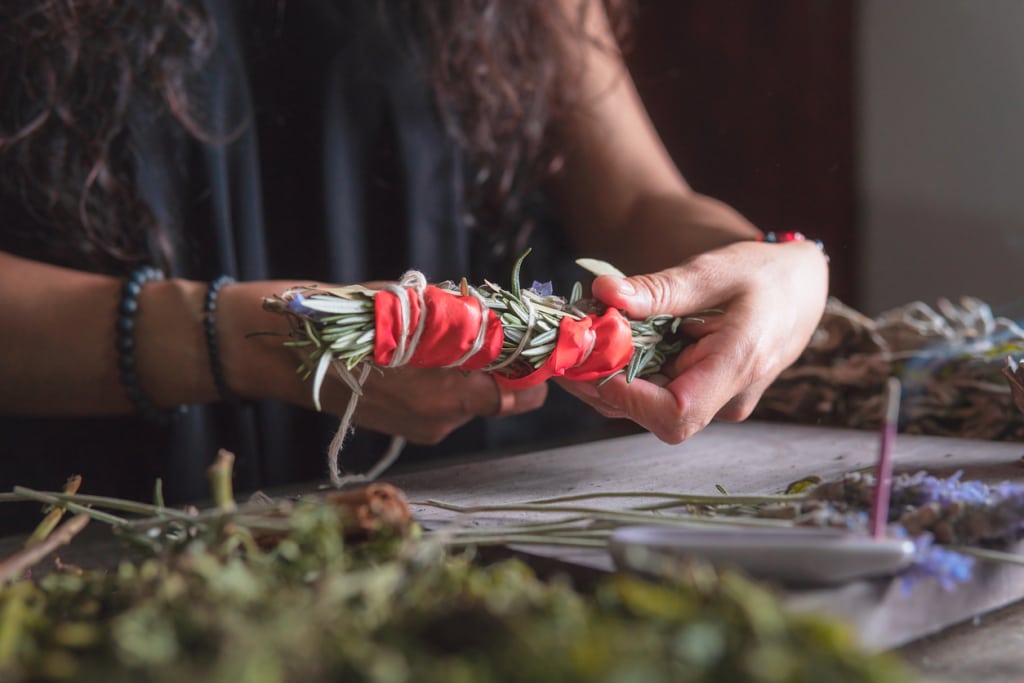
Now for the fun part: creating your own aromatic herb bundles for smoke cleansing! You can keep things simple and use a single plant, or use mostly one plant with 1 or 2 sprigs of another, or flowers you love added for an extra aromatic touch (or simply because it looks beautiful). My favorites to add are sprigs of Rose, Jasmine, Chamomile, Calendula, Thyme, Basil, or flowers of aromatics from around the garden, like Catnip, Rosemary, or Peppermint.
You might also choose to bundle several aromatic plants that you feel naturally complement one another or that resonate with you. There is no single "right" way to do this. Experiment, follow your senses, and enjoy the creative process!
Making an herb bundle begins with harvesting fresh plant material. If you don't have a garden of your own, consider reaching out to your community. You may have neighbors with herbs to spare, find a local farm, or discover what you're looking for at a farmers' market. If you're interested in foraging, pick up a reliable field guide with clear photographs and begin learning the plants in your region. If you need some guidance, local nurseries, herb shops, co-ops, and nature centers often offer guided plant walks that can help build your confidence and identification skills.
Tools
Fresh herbs
Sharp scissors or garden snips
Rubber bands
Natural twine (like cotton or hemp – avoid synthetic materials)
Instructions
1. Harvest Your Herbs
Using sharp scissors or garden snips, harvest your herbs by cutting approximately ¼ inch above a healthy leaf node, ideally one that faces outward from the center of the plant. This encourages healthy regrowth while helping minimize stress to the plant.
2. Partially Dry the Herbs
This step is essential! Before making your bundles, allow the herbs to wilt slightly for 24–48 hours. The goal is to remove some of their moisture while keeping them pliable enough to bend without breaking. This step significantly reduces the risk of mold forming inside the finished bundles.
To dry the herbs, string a length of twine in a cool, shaded room and hang the stems upside down. If needed, you can stretch a string between two nails, use a clothing rack, clothesline, or hangers. Choose a location with good airflow and keep the herbs out of direct sunlight.
If the space feels stagnant, consider opening a window or running a fan. In humid climates, you might want to turn on a dehumidifier if you have it!
3. Hang Herbs to Wilt
Gather 6–8 herb stems together and secure them tightly at the base with a rubber band. Hang each small bunch upside down, leaving a few inches of space between bundles for airflow. Drying the herbs in this position helps keep the plants straight and makes them easier to work with when it is time to create your bundles.
Check on the herbs every 6–12 hours. Remember, you're looking for plant material that feels slightly limp and flexible—not too wet, but not too crisp or crumbly.
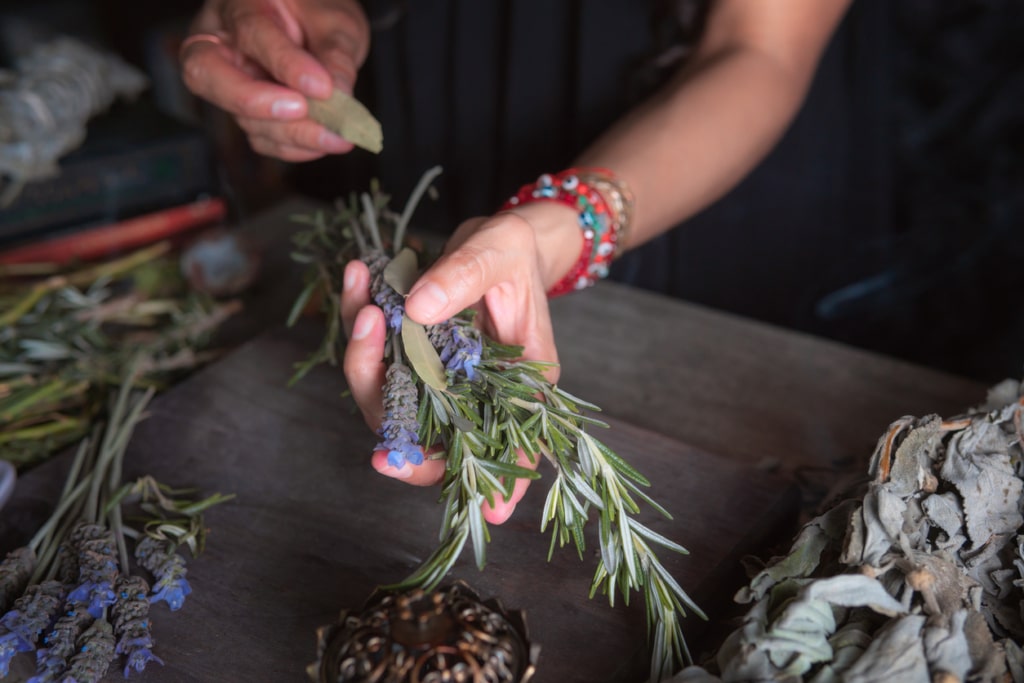
4. Create Your Herb Bundle
Once the herbs have wilted for 24–48 hours, it's time to assemble your bundle! Gather the herbs you’d like to use and hold them together with all stems aligned at the base. Feel free to add flowers, leaves, or additional aromatic plants that call to you. Your bundle can be as large or small as you like, but try to keep it under about 2 inches thick to ensure it dries and burns evenly.
5. Wrap the Bundle
Tie a knot around the base of the stems, leaving several inches of extra twine hanging from the end. (You'll use this extra twine later.) Begin wrapping the twine slowly around the bundle, working your way toward the tip and then back down toward the stems.
Don't worry if your first few bundles aren't perfect. This is a skill that improves with practice! If a leaf or flower slips out, simply tuck it back into place and secure it on your next pass. Any uneven ends can be trimmed later with scissors.
Continue wrapping until the herbs feel secure but not overly compressed. A little airflow between stems is beneficial for drying.
6. Tie Off and Dry
Once you're satisfied with the shape of the bundle, guide the twine back down to the base and tie it securely using the extra string you left at the beginning. Trim the twine from the spool, leaving enough excess twine to create a hanging loop.
Hang your finished bundles upside down in a cool, dry location with good airflow until they are completely dry. Drying times will vary depending on the size of the bundle and the humidity of your environment, but most bundles require several weeks.
Don’t have access to fresh plants? You can still try this method with dried herbs, gently wrapping them with twine to avoid crushing them. Or grind the dried herbs into powder and make them into natural incense instead!
Reconnect With the Plants Around You
While it's easy to become fascinated by exotic resins and sacred plants from distant lands, there is a special kind of magic in getting to know the herbs, trees, and flowers growing right outside your door. The plants around us have figured out how to thrive in our shared environment, and they have stories to tell and gifts to offer.
Spring invites us to reconnect with the natural world and remember that we are a part of it, not separate from it. And the plants have a way of helping us remember. All it takes is a willingness to slow down and step outside with curiosity, openness, and respect.
Want to Go Deeper?
If this article has sparked your curiosity about the world of aromatic plants, you’ll love the Aromatic Medicine Garden, our online plant library dedicated to exploring the traditional uses, cultivation, botany, folklore, and herbal and aromatherapy applications of aromatic plants from around the world.
Inside, you'll find in-depth plant videos, growing and harvesting tips, natural remedy recipes and tutorials, plant monographs, and a community of like-minded plant lovers all learning to deepen their relationship with the aromatic world.
Article Written By Melissa Szaro

© 2026 The Northwest School of Aromatic Medicine. All rights reserved.
*The statements above have not been evaluated by the FDA, and are for educational purposes only. This article is not intended to diagnose, treat, cure, or prevent any disease. This article should not be taken as medical advice. Please consult your physician before you use this information for health purposes.
