
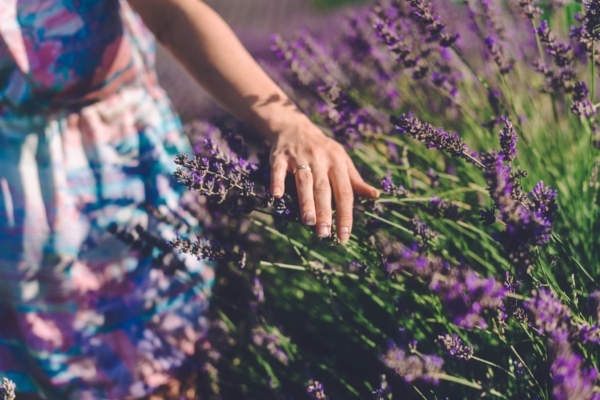

For thousands of years, plants have been woven into human ritual, medicine, and daily life. Long before laboratories existed, physicians, monks, perfumers, and community healers carefully observed how fragrant plants influenced the body and mind. Through generations of experience, cultures around the world discovered that aromatic plants could calm the nervous system, sharpen the mind, encourage restful sleep, support digestion, and uplift the spirit. This knowledge was passed down, from generation to generation, through oral storytelling and ancient texts, becoming the foundation of many traditional healing systems.
Yet somewhere along the way, much of this wisdom came to be viewed as “alternative.” Traditional plant medicine was often dismissed as folklore or a placebo. But that’s starting to change. As more human clinical research is conducted on aromatic plants, scientists are uncovering evidence that supports many of the uses documented by traditional healers hundreds (sometimes thousands) of years ago.
In this article, we’re digging into some of those stories, both ancient and modern. We'll explore 4 aromatic plants whose traditional uses have found support in modern scientific research, revealing how ancient wisdom and contemporary science can deepen our understanding of aromatic medicine.
Lavender (Lavandula spp.)
Traditional Uses of Lavender
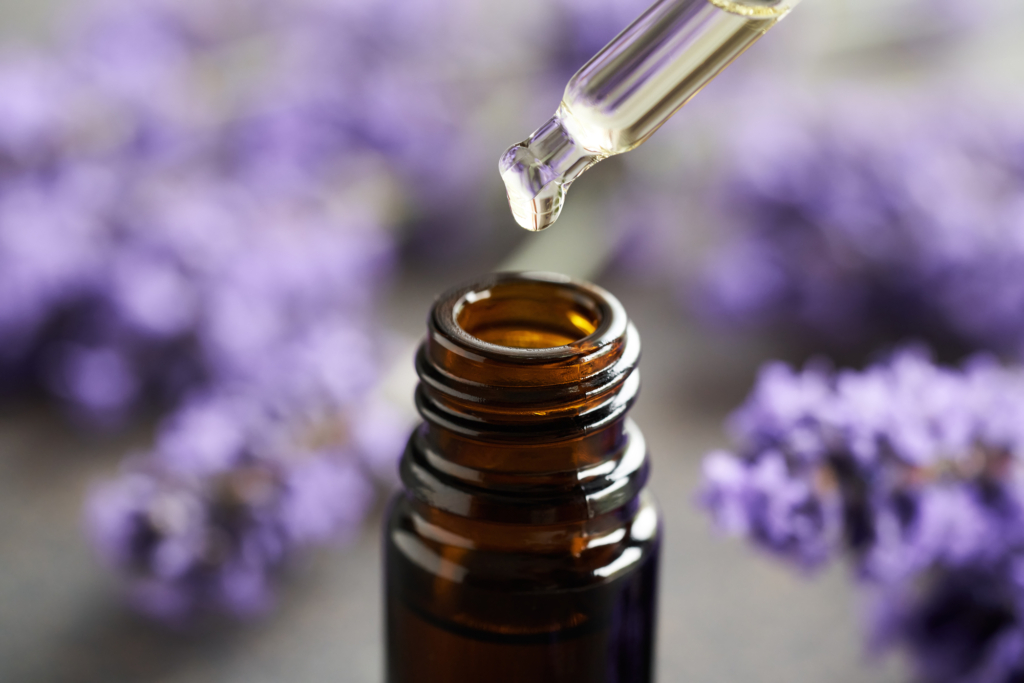
There's a nice bit of folk etymology around Lavender's botanical name: Lavandula is said to come from the Latin word lavare, "to wash" or "to cleanse," and it's tempting to think the name was also a nod to the plant's gift for washing worry out of the mind. For centuries, Lavender has been the herb people reach for to take the edge off stress and anxiety, promoting emotional balance when things feel overwhelming. Even the Roman scholar, Pliny the Elder, writing nearly 2,000 years ago, noted its mood-lifting effects on his patients.
By the time Nicholas Culpeper—an English botanist, herbalist, physician, and astrologer—was compiling his now-famous Culpeper’s Complete Herbal in 1652, Lavender's reputation had only deepened. He wrote that it was "of special good" for the griefs and pains of the head and brain, and went on to say that 2 spoonfuls of distilled Lavender water could help someone who'd lost their voice, steady trembling hands and a racing heart, and even revive a person from fainting, whether they drank it or simply held it to their temples and breathed it in.
Modern Research on Lavender
Lavender has drawn a fair amount of scientific attention in recent years, and the findings largely back up what herbalists and aromatherapists have known all along. One systematic review pooling 10 separate studies found that simply inhaling Lavender oil lowered participants' anxiety levels [1]. Researchers tracked this through vital signs like blood pressure, heart rate, respiratory rate, and oxygen saturation, not just self-reported mood. A separate systematic review and meta-analysis of 21 articles turned up similar results, concluding that Lavender can help reduce stress [2].
Rosemary (Salvia rosmarinus)
Traditional Uses of Rosemary
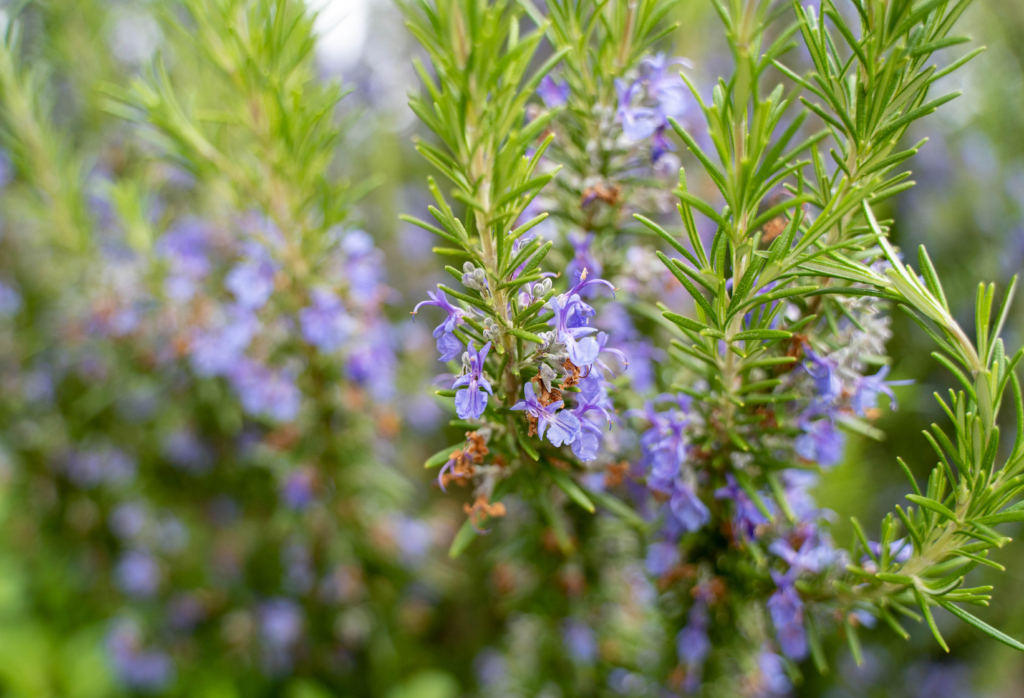
Few aromatic plants have made as many appearances in human culture as Rosemary. It shows up in the Bible, in 5 of Shakespeare's plays, and in poems across centuries, almost always in connection with memory. In the story of Hamlet, Ophelia says: “There’s Rosemary, that’s for remembrance; I pray you, love, remember,” a testament to how well-known this plant has been for promoting memory. Nicholas Culpeper wrote about it in the Pharmacopeia Londoniensis in 1653, scribing that Rosemary water is “an admirable cure-all remedy of all kinds,” recommending it for a “loss of memory.”
In ancient Greece, scholars are said to have tucked sprigs of Rosemary behind their ears while studying, believing it helped knowledge stick. Students wore Rosemary braided into garlands or woven into their hair during exams. Some placed it on their pillows at night, hoping it might do its work while they slept. If you've ever crushed a Rosemary leaf between your fingers and brought it to your nose, you probably don't need ancient texts to convince you there's something to all this. That immediate lift—the clearing and snap of attention—is hard to miss.
Modern Research on Rosemary
Scientific interest in Rosemary has ranged pretty widely, from its effects on cognitive function and memory to hair growth and even insect repellency. In one small study of 20 healthy adults, speed and accuracy on cognitive tasks improved in direct proportion to how long Rosemary oil had been diffusing in the room. Researchers pointed to a possible mechanism: inhaling Rosemary may help prevent the breakdown of acetylcholine, a brain chemical tied to thinking, concentration, and memory. Notably, the study also detected Rosemary compounds in participants' blood, suggesting the plant can make its way into the body through inhalation alone, not just ingestion [3].
A separate small study found that Rosemary essential oil significantly improved short-term memory in teenagers compared to a control group [4]. And in a more recent trial, patients with major depressive disorder who took Rosemary capsules for 8 weeks saw improvement in their symptoms, with researchers noting that memory improvement appeared as an additional benefit along the way [5].
Unlock Your Free Rosemary Issue Of...
🌿 The Aromatic Medicine Garden Membership 🌿
Are you ready for a deeper, holistic dive into the world of aromatic plants? See what our membership is all about with your free sneak peek issue on Rosemary, including an hour-long plant talk and a 21-page plant profile pdf full of recipes and insights.

Frankincense (Boswellia spp.)
Traditional Uses of Frankincense
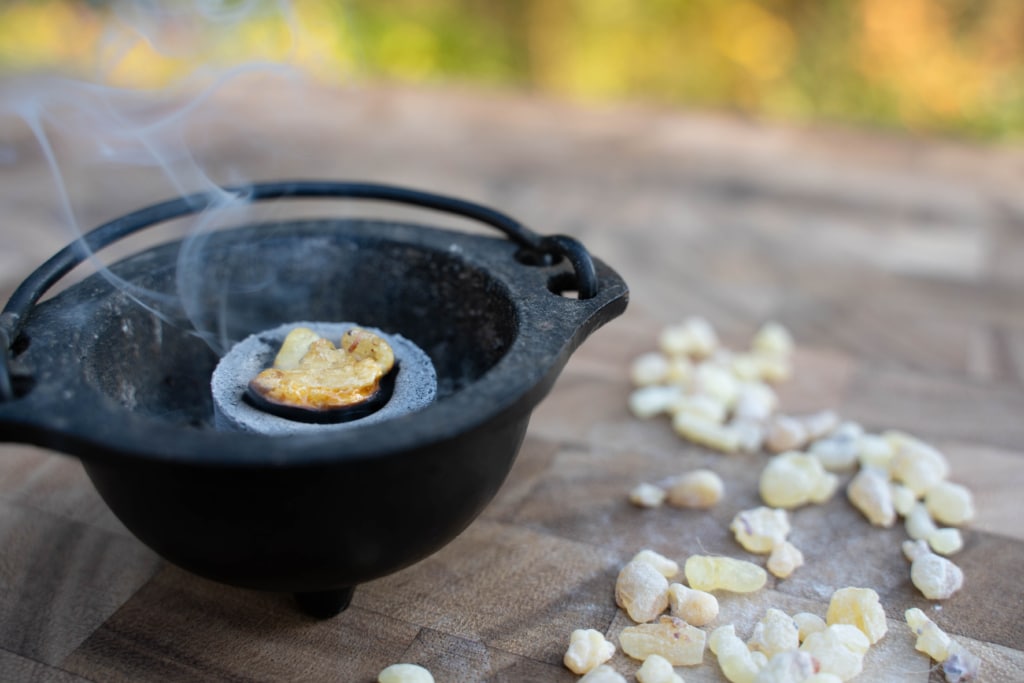
Frankincense is one of the oldest aromatic medicines used on the planet. For millennia, it has been traded across ancient civilizations and deeply rooted in spiritual practices from Judaism and Hinduism to Christianity and Islam and beyond. Its smoke has drifted through temples, churches, and ceremonial spaces for so long that the scent itself has become inseparable from the sacred. Frankincense was understood to cleanse, purify, and thin the veil between the ordinary and the divine. Burning it was a way of preparing a space and the mind for something beyond the everyday.
Aromatherapist Gabriel Mojay writes about Frankincense as carrying a grounding, earthen energy: calming and centering, steadying the body while quieting the mind [6]. It's that particular combination—soothing and clarifying at once—that has made Frankincense the natural companion to meditation, prayer, and contemplation across so many traditions. There's something about it that settles the noise and makes room for presence. (Learn more about the benefits of Frankincense in our blog here.)
Modern Research on Frankincense
Modern research on Frankincense and the nervous system is still early, but what's turned up so far is very fascinating. A 2008 study found that Frankincense resin produced anxiety-reducing and antidepressant-like effects in mice, a finding that pointed researchers toward the resin's Boswellia chemical compounds as the likely mechanism [7].
More recently, a human study looked at the aromatherapeutic effects of Frankincense and Lavender on patients preparing to undergo a medical procedure, comparing both against a placebo. Both aromatic inhalers offered anxiety relief, but Frankincense actually outperformed Lavender [8]. More research needs to follow, but it's an interesting finding for a resin that cultures have been reaching for in moments of stress and ceremony for thousands of years.
Lemon Balm (Melissa officinalis)

Traditional Uses of Lemon Balm
This sunny, invigorating herb has a long history in both aromatherapy and herbalism. Its uplifting yet relaxing qualities earned it the name "Elixir of Life" from the Swiss physician and alchemist Paracelsus in the 1500s, who prescribed it as a tonic for long life and vitality. A century later, Nicholas Culpeper wrote that Lemon Balm "causes the mind and heart to become merry," noting its use for melancholy and anxious thoughts, and something worth keeping on hand, in his view, for the sake of the mind as much as the body.
Lemon Balm is often described as an uplifting nervine, its scent working gently on the nervous system to calm and rebalance. Clinical herbalist Guido Masé calls it's tincture "liquid sunshine," a fitting name for a plant that seems to reach a dejected spirit and coax it back toward the light. Its bright, fresh aroma has a way of cutting through heaviness, easing sadness, and loosening worry, making room for something closer to peace.
Modern Research on Lemon Balm
Recent science is starting to back up what herbalists have long known about Lemon Balm. One study found that regular inhalation aromatherapy with Lemon Balm essential oil eased anxiety and related symptoms in hemodialysis patients [9]. Another found that new mothers who used Lemon Balm aromatherapy slept better [10] (which might be a great herbal hack given how disruptive those early months can be!).
What's especially interesting is that the benefits don't seem limited to solely essential oil inhalation. A study looking at consuming Lemon Balm extract found that participants who took it consistently for 3 weeks saw real improvements not just in anxiety and stress, but in depressive mood, emotional state, overall mental wellbeing, and quality of life [11]. Note: We don’t recommend consuming essential oils, as they can be irritating internally. Safe internal herbal preparations of Lemon Balm include tea, tinctures, glycerites, cordials, and oxymels.
Check out our Lemon Balm Herbal Popsicle recipe here (the perfect summer treat for both kids and adults!).

How to Use Aromas in Everyday Life
There's a reason a single breath of Lavender or Lemon Balm can shift your mood before you've even thought about it. Smell is the only one of our senses with a direct line to the limbic system, which is the part of the brain that governs emotion and memory. When aromatic molecules reach the olfactory receptors in your nose, the signal travels straight to the brain's emotional centers, skipping the usual relay point that sight, sound, and touch have to pass through first. That's the whole reason aromatic medicine works as quickly as it does. You don't have to wait for it to "kick in." It already has.
Here's how to bring that into the rhythm of an ordinary day:
Morning Ritual
Before the day begins, light a stick of incense or mist yourself with a hydrosol. It only takes a few seconds, and it sets the tone for the day (a small signal to your nervous system that the day is beginning on your terms).
Desk Companion
Keep a sprig of Rosemary or Lavender within reach at your desk. When that mid-afternoon fog rolls in, take a moment for a short reset and breathe it in.
Bring It With You
Tuck a bottle of essential oil into your bag or purse. No need to diffuse—just unscrew the cap and inhale deeply a couple of times whenever you need a moment to unwind.
Nightstand Routine
As you wind down for bed, step away from your screens and let scent take over instead. Light some incense, or switch on your diffuser, and create a nighttime ritual to signal to your brain and body that it’s time to rest. There's nothing like laying down as an evening stick of incense burns, peacefully reflecting on your day or life.
Ancient Wisdom Meets Modern Understanding
Since ancient times, aromatic plants have been allies in supporting our minds, bodies, and spirits. That's why their stories survived this long, passed down through song, folklore, and the written record, long before anyone needed a clinical trial to take them seriously. They're more than just a pleasant smell or a beautiful bloom; they have a real, measurable influence on how we feel and move through the world. It's easy for modern skepticism to wave all of this off as superstition or wishful thinking, but the plants—and now, increasingly, the research—say otherwise. Maybe aromatic plants can't solve all of our problems, but they sure do a great job of making the world feel a little more manageable.

Want to Go Deeper?
If this article has sparked your curiosity about the world of aromatic plants and ancient plant wisdom, you’ll love the Aromatic Medicine Garden, our online plant library dedicated to exploring the traditional uses, botany, science, folklore, and herbal and aromatherapy applications of aromatic plants from around the world.
Inside, you'll find in-depth plant videos, growing and harvesting tips, natural remedy recipes and tutorials, plant monographs, and a community of like-minded plant lovers all learning how to deepen their relationship with the aromatic world.
References
1. Yoo O, Park SA. Anxiety-Reducing Effects of Lavender Essential Oil Inhalation: A Systematic Review. Healthcare (Basel). 2023 Nov 17;11(22):2978. doi: 10.3390/healthcare11222978.
2. Tina Ghavami, Mohsen Kazeminia, Fatemeh Rajati. The effect of lavender on stress in individuals: A systematic review and meta-analysis. Complementary Therapies in Medicine, Volume 68, 2022. https://www.sciencedirect.com/science/article/pii/S0965229922000346
3. Moss M, Oliver L. Plasma 1,8-cineole correlates with cognitive performance following exposure to rosemary essential oil aroma. Ther Adv Psychopharmacol. 2012 Jun;2(3):103-13. doi: 10.1177/2045125312436573.
4. O.V. Filiptsova, L.V. Gazzavi-Rogozina, I.A. Timoshyna, O.I. Naboka, Ye.V. Dyomina, A.V. Ochkur. The essential oil of rosemary and its effect on the human image and numerical short-term memory. Egyptian Journal of Basic and Applied Sciences, Volume 4, Issue 2. 2017. Pages 107-111. https://doi.org/10.1016/j.ejbas.2017.04.002.
5. Saeed Azizi, Neda Mohamadi, Fariba Sharififar, Gholamreza Dehghannoudeh, Farzaneh Jahanbakhsh, Fatemeh Dabaghzadeh. Rosemary as an adjunctive treatment in patients with major depressive disorder: A randomized, double‐blind, placebo‐controlled trial. Complementary Therapies in Clinical Practice. Volume 49, 2022. https://doi.org/10.1016/j.ctcp.2022.101685.
6. Mojay, Gabriel. (1997). “Aromatherapy for Healing the Spirit: Restoring Emotional and Mental Balance with Essential Oils.” Healing Arts Press. Rochester, Vermont.
7. Burning Incense is Psychoactive: New Class of Antidepressants Might be Right Under Our Noses. (2008). Science Daily. www.sciencedaily.com/releases/2008/05/080520110415.htm
8. Barış Saylam, Ozan Efesoy, Erdem Akbay, Erim Erdem. The Effect of Inhaler Aromatherapy on Pain and Anxiety in Patients undergoing Shock Wave Lithotripsy. December 2021. Düzce Tıp Fakültesi Dergisi 23(3):318-322. doi: 10.18678/dtfd.1016219
9. Pasyar N, Aghababaei M, Rambod M, Zarshenas MM. The effectiveness of Melissa officinalis L. essential oil inhalation on anxiety and symptom burden of hemodialysis patients: a randomized trial study. BMC Complement Med Ther. 2025 Mar 13;25(1):103. doi: 10.1186/s12906-025-04840-y.
10. Masoumeh Sinaei, Roshank Salari, Reza Mohseni Birjandi, Rasoul Raesi, Tahereh Sadeghi. The Effect of Inhalation Aromatherapy with Lemon Balm (Melissa officinalis) Essential Oil on Sleep Quality in Mothers of Preterm Infants in the Neonatal Intensive Care Unit (A Randomized Clinical Trial Study). The Open Public Health Journal. Volume 17, 2024. https://doi.org/10.2174/0118749445280519240110075936.
11. Bano A, Hepsomali P, Rabbani F, Farooq U, Kanwal A, Saleem A, Bugti AA, Khan AA, Khalid Z, Bugti M, Mureed S, Khan S, Ujjan ID, Şahin S, Kara M, Khan A. The possible "calming effect" of subchronic supplementation of a standardised phospholipid carrier-based Melissa officinalis L. extract in healthy adults with emotional distress and poor sleep conditions: results from a prospective, randomised, double-blinded, placebo-controlled clinical trial. Front Pharmacol. 2023 Oct 19;14:1250560. doi: 10.3389/fphar.2023.
© 2026 The Northwest School of Aromatic Medicine. All rights reserved.
*The statements above have not been evaluated by the FDA, and are for educational purposes only. This article is not intended to diagnose, treat, cure, or prevent any disease. This article should not be taken as medical advice. Please consult your physician before you use this information for health purposes.
