
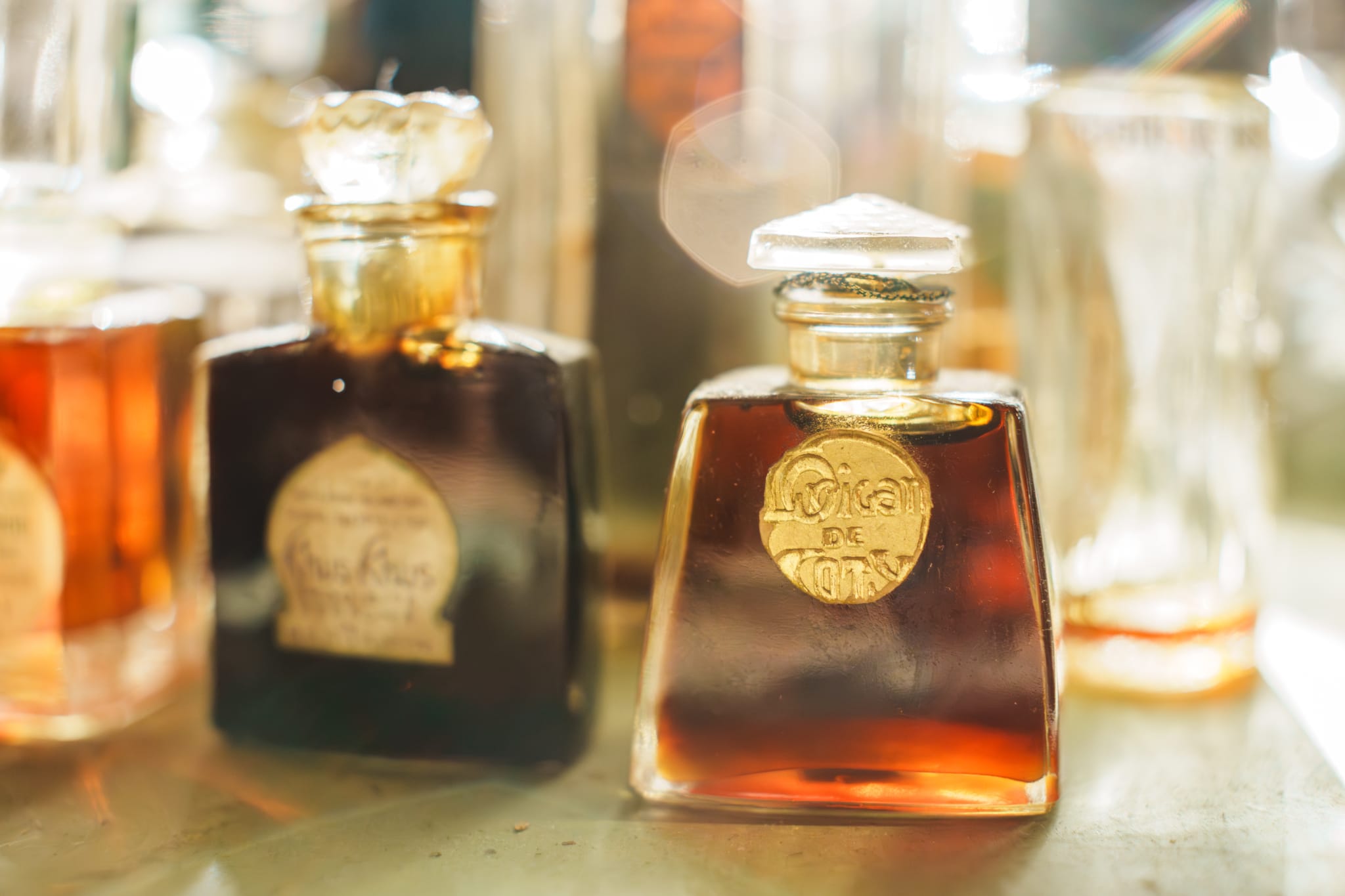
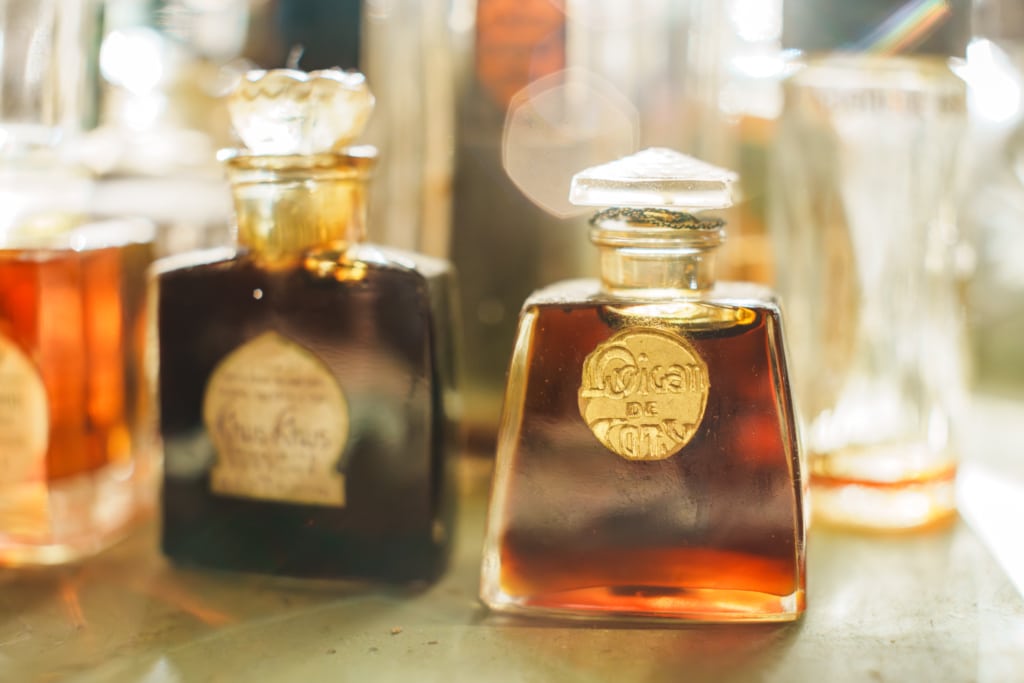
Most modern perfumes are diluted with alcohol, but traditional attars are in a completely different category. Derived from an Arabic word that translates to "scent,” attars have been crafted for centuries using precious woods, flowers, resins, and aromatic oils in techniques that long predate modern perfumery. Rich and concentrated, these oil-based perfumes offer a very different scent experience from the alcohol-based fragrances most people are familiar with.
Few people have devoted themselves to preserving and advancing this tradition quite like master perfumer JK DeLapp. Over the past decade, he's traveled the world, built relationships with distillers, established his own extraction operations in Southeast Asia, and worked with some of the rarest aromatic materials on earth.
We recently sat down with him to talk about how he got here, what scents still stop him in his tracks after all these years, and why he thinks beginners are more ready for crafting perfumes than they realize.
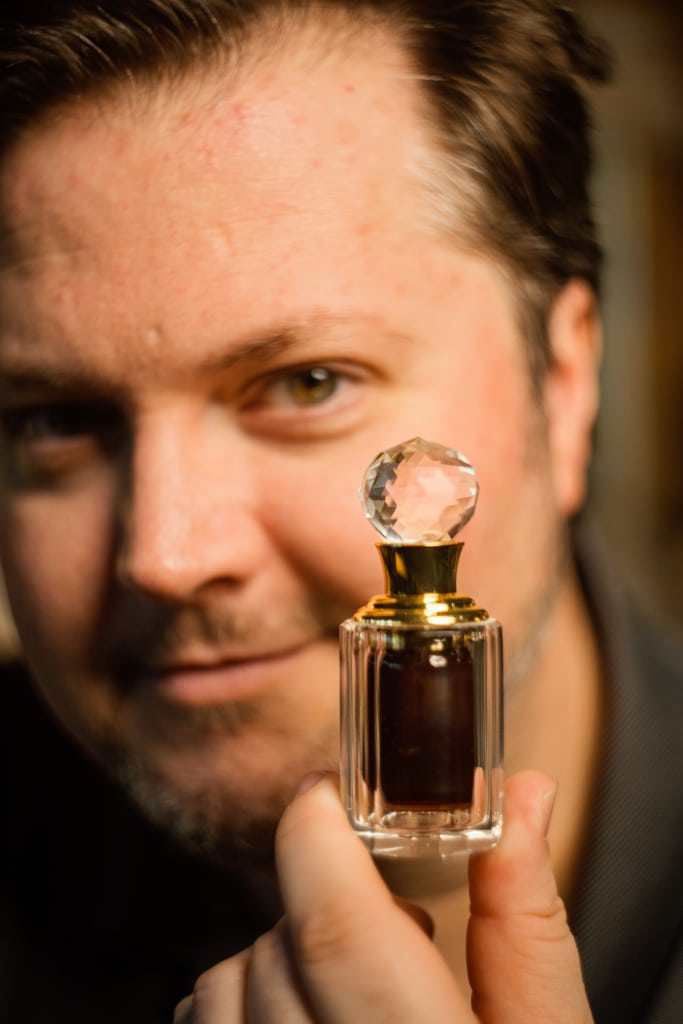
"I Wanted to Be a Doctor... And."
Long before he became known for his natural perfumes, JK was immersed in the worlds of medicine, herbs, and pharmacy. "I've long used incense and essential oils," he says. "To freshen up a space, aromatherapeutically, and simply for the pleasure of them."
While attending Traditional Chinese Medical school, his path took an unexpected turn. As he studied pharmacy compounding and medicinal plants, he realized herbs and aromatic oils were not only medicines, but the foundation of entire industries: pharmaceuticals, cosmetics, flavor, fragrance, and even global trade.
Those discoveries also connected with memories from his childhood. "My father and grandfather both worked in advertising and marketing," JK explains. "Growing up, I had a front-row seat to how products shape culture and people's lives."
The more he learned, the more he realized how everything was interconnected. "I decided I could be a doctor, or I could be a doctor and... I wanted to explore the 'and.'" That curiosity eventually opened the door into the world of natural perfumery, and it was far too enticing not to begin walking down this path.
He laughs, "And so I became Doctor Smell Good."
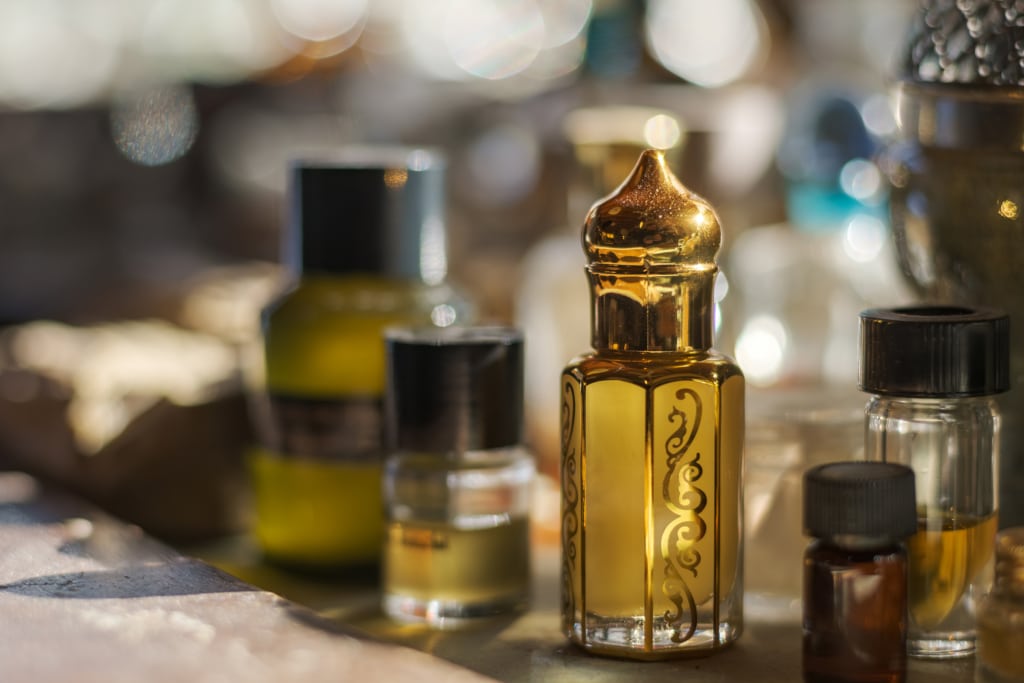
So, What Exactly is an Attar?
If you've only worn modern perfume, you're probably used to fragrance being carried by alcohol. Spray it on, and the alcohol quickly evaporates (and the aromas are likely from synthetic origins).
Attars work differently. Rather than relying on alcohol, they're built entirely from aromatic materials. Every drop is part of the fragrance itself, creating a perfume that's dense and concentrated, designed to wear close to the skin. The result is an intimate scent that develops gradually and often lingers for hours with only a tiny application.
Historically, the word attar referred to distilled aromatic oils, though over time it also came to describe fragrances distilled or compounded into another aromatic material, most famously Sandalwood or Khus (Vetiver). Today, JK uses the term a little differently.
"My attars are typically compounded into one of my Sandalwoods, Oud, or another aromatic material," he explains. "They're fully aromatic fragrances without alcohol, and usually without fixed vegetable oils." This realization became a turning point in his own perfumery journey. "I think what really started to click for me was when I realized perfumes don't need alcohol."
He had originally begun making spray perfumes in the French tradition, using alcohol as the carrier. Eventually, he experimented with Sandalwood oil as a base instead. Only later did he discover he had unknowingly stepped into one of perfumery's oldest traditions. "I realized later that's how traditional attars were constructed."
What Makes an Attar Feel Luxurious?
Attars make top-shelf aromatics accessible. How? "The density," JK shares. Unlike many commercial perfumes, attars are highly concentrated, allowing even tiny amounts to create a lasting aromatic experience. “Attars are so compact that you can use rare or expensive materials with abandon since you need less of them than in an alcohol-based fragrance. They remain dense and wear differently. They work, and people love them.”
That concentration makes it possible to work with extremely rare and high-quality aromatics. Small-batch production, vintage oils, and exceptional raw ingredients all contribute to the character of an attar. "I have materials nearly two centuries old that make their way into some of my products," JK says.
The Aromatic That Never Stops Surprising Him
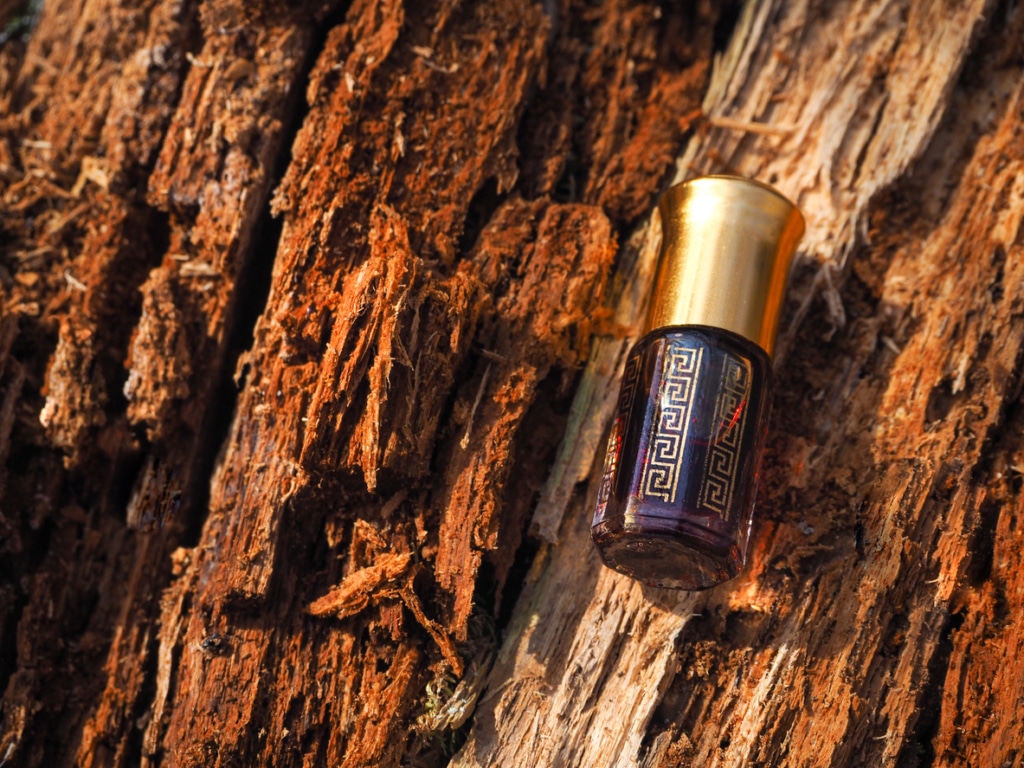
Ask JK which aromatic material continues to amaze him, and he doesn't hesitate. "Oud." Also known as Agarwood, Oud is a rich, slightly sweet, resinous wood formed only when Aquilaria trees (native to Southeast Asia) are wounded by a specific fungal species, and respond by producing resin deep within their heartwood. This slow, alchemical process can take many years, and only a small percentage of trees ever produce resin at all.
Oud possesses a remarkable range unlike almost anything else in perfumery. Like fine wine, the region it's grown in shapes its aroma, giving each piece a unique character. "Line up ten Roses, all different species, from ten different countries," JK says. "And with minor nuances, they all smell like Rose. But line up ten Oud oils from different species, regions, and distillation methods, and they can be so wildly different that you'd hardly believe they're all the same material."
When compared to other aromatics, Oud exhibits an unusually broad aromatic spectrum of notes. Sometimes Oud becomes the star of a fragrance. Other times, it's nearly invisible. "It can be center stage. It can be used in minute traces. It can function almost like umami, adding depth and character to everything around it."
For JK, that's part of its magic. "There's nothing else like Oud out there."
Can Anyone Learn to Make Attars?
The short answer: yes!
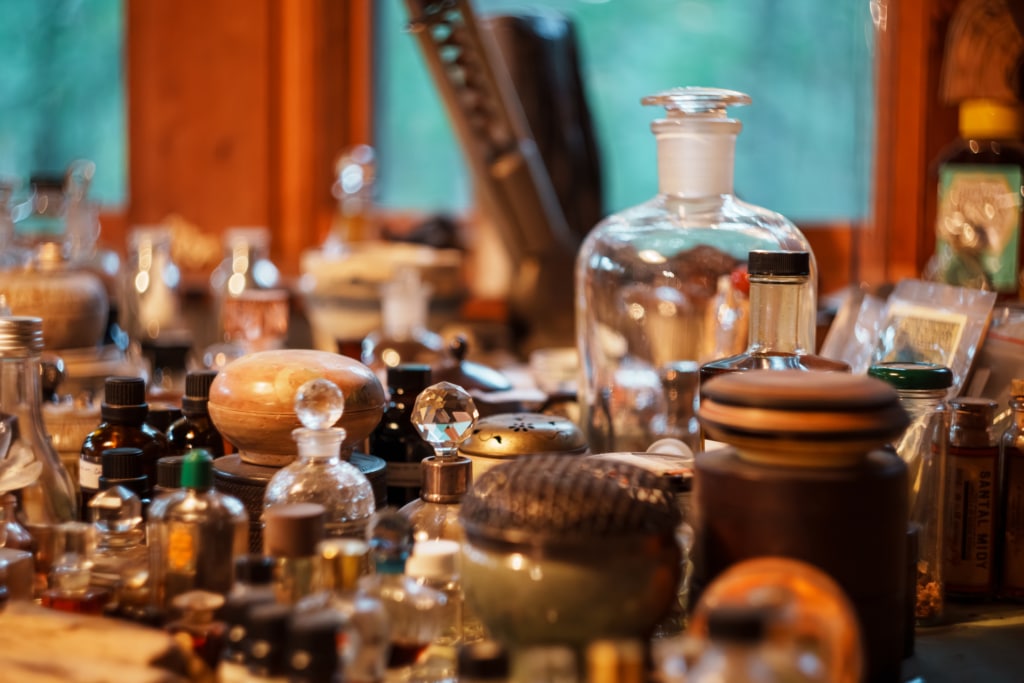
Natural perfumery often appears mysterious and intimidating, but JK believes it's far more approachable than most people think. "It's as difficult and as accessible as cooking," he says. "I know a lot of people that can't boil water. But I also know a lot of great cooks. It just comes down to learning how to do it. Practice—and a little timely guidance—makes perfect."
One of the biggest misconceptions beginners have, he says, is assuming the same aromatic materials commonly used in herbalism and aromatherapy will translate directly into perfumery. "You won't find much Oregano in perfumery," he jokes.
While there is certainly some overlap, perfumery has its own palette of woods, resins, florals, spices, and other aromatic materials, each chosen not only for its individual beauty but for how it interacts with everything around it. Perfumery opens the door to a whole new realm of aromatics, expanding your toolkit tenfold. And once you have the aromatic formula foundation down, it can extend to any aromatic craft you can dream of, from body oils and face serums to soaps and salves. Like any creative craft, developing that intuition takes time.
Explore this topic more in our article, "Natural Perfumery & Aromatherapy: Where Scent Becomes Medicine."
What do you Hope Students Experience Through This Ancient Art?
Joy.
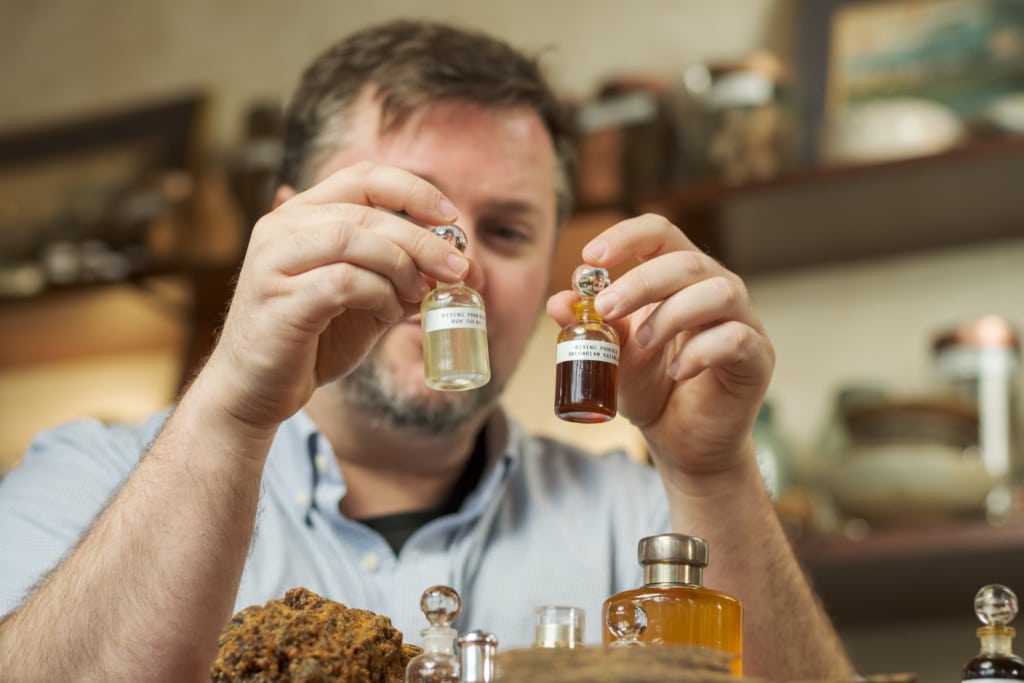
"I think everyone craves a creative outlet," JK says. For many people, music, painting, or sculpture can sometimes feel out of reach. But natural perfumery offers another path. "It became an artistic expression that I could enjoy myself and then share enthusiastically with others––and be met with enthusiasm and appreciation."
He compares it to cooking for friends and family. "I love to cook, and just like the joy I get from feeding another, through perfumery, I feed souls and imagination. It's incredibly gratifying."
Perhaps that's what makes attars so compelling. One tiny bottle contains a rich story distilled into scent, bringing together plants, art, history, culture, connection, and creativity in a way that invites us to experience the world a little differently.
If you're curious about natural perfumery or how these timeless fragrances are crafted, you have the opportunity to learn directly from JK.
In our Crafting Supreme Attars Mini-Course, JK shares the foundations of traditional attar-making, explores the aromatic materials that define this ancient art, and guides you through creating your own attar perfumes.
And if you've been thinking about joining us, keep an eye on your inbox next week—we have something special to share.
(Not on our email list? Drop your email below!)
© 2026 The Northwest School of Aromatic Medicine. All rights reserved.
*The statements above have not been evaluated by the FDA, and are for educational purposes only. This article is not intended to diagnose, treat, cure, or prevent any disease. This article should not be taken as medical advice. Please consult your physician before you use this information for health purposes.
