Skip to content
The Northwest School of Aromatic Medicine
  • About
  • Courses
  • Resources
    • The Aromatic Medicine Blog
    • Video Library
  • Shop
  • Contact
  • Close Search Form
    Open Search Form
  • facebook
  • instagram
  • youtube
Student Login
Category

Herbal Medicine

Aromatherapy
Bio-Regional Aromatic Medicine
Herbal Medicine
Human/Plant Connection
Incense Crafting
Natural Perfumery
Ritual
May 22, 20250Comments

The Energy You Bring to the Craft: Intention as an Ingredient

Have you ever followed a recipe exactly, only to have it fall flat, while someone else makes the same thing and it comes alive? Or crafted an herbal or aromatic
by NW School of Aromatic Medicine
Aromatherapy
Aromatic History & Lore
Herbal Medicine
Plant Profiles
April 25, 20250Comments

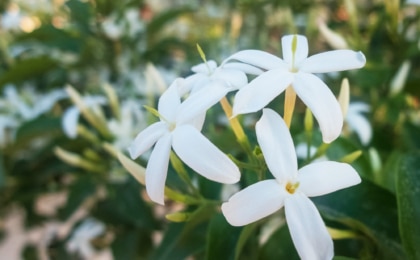
Jasmine Benefits for the Mind, Body, and Soul

The alluring aroma of Jasmine is more than just a scent – it’s an experience that lingers in the soul. Ethereal, intoxicating, and deeply evocative, Jasmine carries an almost sacred
by NW School of Aromatic Medicine
Aromatherapy
Aromatic History & Lore
Aromatic Recipes
Herbal Medicine
Incense as Medicine
Plant Profiles
Topical Medicine
February 20, 20250Comments

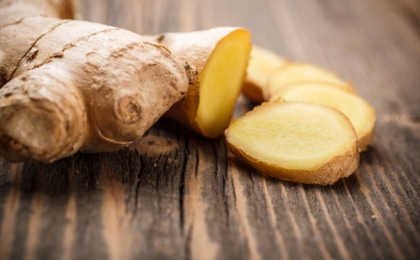
Ginger Root Benefits and Uses

Imagine walking through an ancient spice market, where the air is thick with the scent of exotic herbs and roots. Among the vibrant displays, one root stands out with its
by NW School of Aromatic Medicine
Aromatherapy
Aromatic History & Lore
Herbal Medicine
Incense as Medicine
Ritual
Topical Medicine
January 16, 20250Comments

Tree Resins: Unlock the Power of this Underappreciated Natural Remedy

There’s something very magical about tree resins. These golden, aromatic droplets are born from a tree’s natural healing process – a protective substance that seals wounds, guards against infection, and
by NW School of Aromatic Medicine
Aromatherapy
Bio-Regional Aromatic Medicine
Herbal Medicine
Incense as Medicine
Plant Profiles
Sustainability
Topical Medicine
January 9, 20250Comments

The Benefits of Pine Resin & How to Harvest It

I will never forget meeting my friend Sam (name changed to spare them any embarrassment), a budding herbalist radiating excitement and curiosity about the wonders of the natural world. One
by NW School of Aromatic Medicine
Aromatic Recipes
Herbal Medicine
January 3, 20250Comments

8 Warming Aromatic Herbs for Winter Wellness + Fire Cider Recipe

As winter settles in, so do the challenges of staying warm, energized, and healthy. The cold weather can leave us feeling sluggish, prone to seasonal sniffles, and craving comfort. But
by NW School of Aromatic Medicine
Aromatherapy
Aromatic History & Lore
Herbal Medicine
Human/Plant Connection
Incense as Medicine
Plant Profiles
Ritual
Sustainability
Topical Medicine
December 19, 20240Comments

The Power of Frankincense: Boosting Immunity and Overall Well-Being

Thousands of years ago, in ancient kingdoms, the air was thick with the rich, aromatic smoke of Frankincense. This sacred resin, harvested from Boswellia trees, played a central role in
by NW School of Aromatic Medicine
Aromatherapy
Aromatic History & Lore
Aromatic Recipes
Herbal Medicine
Plant Profiles
Topical Medicine
December 9, 20240Comments

The Many Benefits of Jasmine

If you’ve ever had the pleasure of smelling Jasmine, you know how captivating its scent is. Beyond its delightful fragrance and ornamental appeal, Jasmine offers a treasure trove of health
by NW School of Aromatic Medicine
Ayurveda
Herbal Medicine
December 3, 20240Comments

Aromatic Herbs for Digestion

If you’ve ever had a stomachache, you know how much it can derail your day. Our digestive system is a cornerstone of our health and vitality, responsible for breaking down
by NW School of Aromatic Medicine
Aromatherapy
Aromatic Recipes
Herbal Medicine
Ritual
November 26, 20240Comments

Herbal Tea Blending for Stress Relief

Have you ever sipped an herbal tea so delightful it felt like a warm hug in a cup? Or struggled to finish one that tasted more like murky pond water
by NW School of Aromatic Medicine
« Older Articles Newer Articles »

aromatic_medicine

🌿 Follow us on Instagram for daily inspiration, plant knowledge, aromatic wisdom, and one-of-a-kind courses 🌿

How long do essential oils last? The answer depen How long do essential oils last?

The answer depends on how it’s made. Essential oils are produced in mainly 3 different ways: steam distillation, solvent extraction, and cold press distillation. 

Most essential oils are made using steam distillation, with an exception of Citrus oils which are primarily created using cold press distillation (also known as expression). In this process, mechanical pressure is used to rupture the volatile oil-containing glands in the plant material, then the resulting mixture is filtered to obtain just the essential oil. 

Absolutes are made using solvent extraction, where plant materials are submerged in a solvent such as ethanol, hexane, or carbon dioxide, to release their aroma, and then the solvent is removed, leaving behind the volatile oils.

Most steam-distilled essential oils generally have a shelf life of 3 years.

Citrus oils have the shortest shelf-life, about 2 years. 

And absolutes have a shelf-life of around 5 years.

There are a few plants that are an exception to this rule and actually get better with age – like a fine wine – such as Patchouli and Vetiver. The older these plant oils get, the more the aroma shifts and expands over time. 

To get the most out of your essential oils, always store them in amber-colored bottles and away from direct sunlight. The standard recommendation is to store the bottles in a cool, dark place like a cabinet or closet. Always keep the lids on to reduce oxidation. 

____________
#essentialoils #aromatherapy  #essentialoils101 #essentialoileducation  #absolutes  #co2extract #naturalperfumery
Chamomile has an energetic influence on our solar Chamomile has an energetic influence on our solar plexus – the complex network of nerves located in your stomach area. Lying halfway between the area where we get our “gut instinct” and the empathetic heart, the solar plexus represents the center of our psychological needs and wants. 

It’s an important part of your sympathetic nervous system, which controls your body’s “fight or flight” response to danger or stress. 

Chamomile has an affinity for soothing nervous tension and anxiety felt in the solar plexus, particularly in times when our emotional needs and wants feel intensified or unmet. This can come out in many ways, such as actions of overbearing, over-controlling, self-criticism, irritability, frustration, depression, or resentment. 

Chamomile is the plant of calm composure and easy embrace. Chamomile can help us let go of fixed expectations, calmly see and acknowledge our limitations, and open up to receive the support that others have to give. 

Just as the flower resembles the sun, it inspires a more sunny disposition inside our emotional and mental realms. 

______________
#chamomile  #chamomileoil #chamomilebenefits  #chamomiletea #ChamomileCalm #aromatherapy #aromaticmedicine
In the cold winter months here in the Pacific Nort In the cold winter months here in the Pacific Northwest, life naturally turns inward. We spend more time indoors, tending the hearth, the home, and our inner landscapes.

One of my favorite winter rituals is a stovetop herbal steam. Across many cultures and household traditions, aromatic plants have long been simmered gently to freshen and uplift the home, invite warmth and positivity, offer subtle spiritual protection, and serve as simple medicine for the immune and respiratory system, especially during the darker months of the year. 

Here’s a DIY Aromatic Winter Herbal Steam you can make at home. Feel free to adapt it to what you have on hand or what feels good to add. 

🌿 Ingredients
 8 slices of Citrus (Orange, Lemon, or Grapefruit)
 1 sliced apple
 1 cup evergreen needles (Fir, Pine, Spruce, or Cedar)
 5 Cinnamon sticks
 10 whole Cloves
 5 Star Anise
 A thumb-sized piece of fresh Ginger

🔥 Directions
 
Add all ingredients to a stovetop pot and cover with water. Bring to a gentle boil, then reduce to a slow simmer. Allow it to steam for several hours, filling your home with warmth, fragrance, and quiet magic.

These small seasonal rituals remind us that tending our spaces is also a form of medicine—one that nourishes the body, lifts the spirit, and keeps us in relationship with plants. 🌲✨

For another similar recipe, check out our Herbal Steaming blog post. Link in bio. 

__________
#herbalsteaming #diyherbalism  #aromatherapy #aromaticmedicine  #herbalsteam #herbalsteamingblends
“Spring passes and one remembers one’s innocence. “Spring passes and one remembers one’s innocence.
Summer passes and one remembers one’s exuberance.
Autumn passes and one remembers one’s reverence.
Winter passes and one remembers one’s perseverance.”

– Yoko Ono

__________
#yokoono  #yokoonoquotes  #inspiringquotes  #winterweather  #inspirationalquotes
When’s the best time of year to harvest resin? N When’s the best time of year to harvest resin? 

Now!

✨ The wintertime is ideal for resin harvesting. It can be harvested any time of year, but a tree’s energies are condensed inside its wood and resin most in winter, making it more potent in many ways. 

🌲 The types of trees with resin easiest to find in North America are conifers like Pine, Fir, Cypress, Spruce, and Cedar.

✨ How to harvest: Find a Conifer tree with some resin on its surface, make sure to properly identify the tree, and harvest by scraping the outer layer of resin off the tree using a knife. Glass containers are best for storage, but plastic or ceramic work too.

🌲  Keep in mind that resin is the tree's defense mechanism, so don’t take too much or you’ll risk harming the tree.

✨ It’s easiest to harvest hardened resin. In colder weather, it may be hard enough to simply break off, rather than scrape it. If harvesting fresh resin, use foil or something similar to help you collect it, and let it dry for several weeks to months, depending on the resin species and climate you’re in. 

Curious how to work with tree resin? Explore our Aromatic Medicine Blog for more tips! Link in bio. 🌲

__________
#treeresin #incenseresin  #sustainableharvesting #resin #wildharvesting #aromaticmedicine
DIY Pine Tip tea (and why you should drink it)… P DIY Pine Tip tea (and why you should drink it)…

Pine Needles have many medicinal benefits, both aromatically and internally.

They’re high in antioxidants and Vitamin C, providing support to your immune system and decreasing your risk for serious health issues. They help boost mental clarity and relieve depression, in addition to easing respiratory ailments like a sore throat, cough, and chest congestion, making it a great Wintertime herbal tea.

Making Pine Tip tea is quite simple…

🌲 Forage for Pine Needles by going for a nature walk with some garden clippers. Make sure to properly identify a Pine Tree, then snip off some needles. The fresher tips will be fresher and might have a lighter green color compared to the older growth.

🌲 Boil some water and pour it over your Pine Needles. Cover it to keep in the medicinal aromatics and leave to infuse for 20-30 minutes, then strain and serve.

🌲 You can enjoy it on its own, or add it to your favorite herbal tea. I love mixing it with chai spices to make Forest Chai tea!

✨ Learn more about the history, harvesting, and health benefits of Pine Tip tea in our blog: Pine Needle Tea Benefits, Harvesting Tips + Recipe! Link in bio.

_________
#pine #pineneedles  #pineneedletea  #pinetree #aromatherapy #herbaltea #tearecipe
Have you ever tried burning Bay leaves? Bay Laur Have you ever tried burning Bay leaves? 

Bay Laurel, also known as Sweet Laurel or Sweet Bay, is an important historical tree for prophecy and divination.

In Ancient Greece, the psychic priestesses at the Oracle of Delphi, known as the Pythia, chewed Bay Laurel leaves and inhaled the incense of burned leaves to support their visionary trances. Pythia were highly regarded and it was believed that they channeled prophecies from the Greek god Apollo while deep in a dreamlike state.

The ritual to interpret the word of Apollo started with the Pythia bathing in the Castalian Spring, sacrificing a goat, then entering a special chamber beneath a temple which was filled with the aroma of burning Laurel leaves. She would sit in the center of the temple, on a covered cauldron over a deep well-like chasm, enveloped by vapors and shaking Bay branches. 

From here, the Pythia would fall into a trance state and channel the prophecy of Apollo. Those seeking the help of Apollo and his priestess would bring offerings of Laurel branches, money, and animal sacrifices.

 #baylaurel #Apollo #pythia #aroma #aromaticplants #herbalmedicine
Attar: an Arabic word that translates to “scent.” Attar: an Arabic word that translates to “scent.” Attars are traditional natural perfume oils that originate from the Middle East and South Asia, where they’ve been used for centuries. 

Attars are crafted exclusively from 100% pure essential oils and aromatic materials, without any carrier oils for dilution, making them intensely concentrated perfumes known for their potency and rich aroma.

Traditional attar makers often distill aromatic plants directly into a base of Sandalwood essential oil, a practice still revered today for its meticulous craftsmanship. 

Attars are prized for their rich and complex scents and are typically applied sparingly on the skin or clothing for a long-lasting aroma.

Have you ever used or crafted an attar before? What’s your favorite attar scent profile?

 #attar #attars #perfume #perfumery #naturalperfume
Follow on Instagram

OFFERINGS

  • Aromatic Medicine Garden Membership
  • Incense Crafting Course
  • Botanical Resins & Gums Course
  • Materia Aromatica Ebook

QUICK LINKS

  • About
  • Courses
  • The Aromatic Medicine Blog
  • The School
  • Evan Sylliaasen
  • Contact
  • Privacy Policy
  • Terms & Conditions

FOLLOW US

  • Facebook
  • Instagram
  • Youtube

OUR NEWSLETTER

Stay in the know on new releases and special offers

Loading

support@aromaticmedicineschool.com

© 2026 The Northwest School of Aromatic Medicine, All rights reserved.