Skip to content
The Northwest School of Aromatic Medicine
  • About
  • Courses
  • Resources
    • The Aromatic Medicine Blog
    • Video Library
  • Shop
  • Contact
  • Close Search Form
    Open Search Form
  • facebook
  • instagram
  • youtube
Student Login
Tag

resins

Aromatherapy
Aromatic History & Lore
Incense as Medicine
Natural Perfumery
Plant Profiles
Ritual
Topical Medicine
May 1, 20241Comments

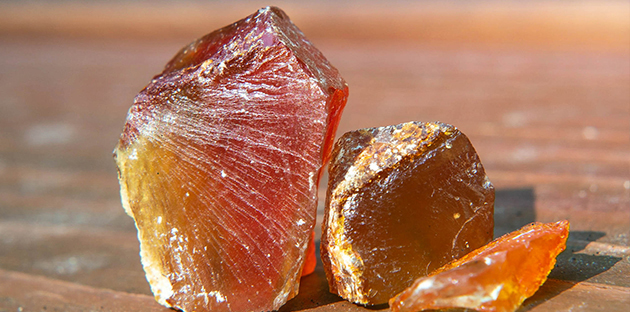
Labdanum (Cistus) Resin – The Champion of Perfume

If I were to name the top 3 most tantalizing and exotic-smelling aromatics in the world, Labanum would surely be on that list. The mystique of this rich, sweet, animalic,
by NW School of Aromatic Medicine
Aromatherapy
Aromatic History & Lore
Aromatic Recipes
Bio-Regional Aromatic Medicine
Herbal Medicine
Incense as Medicine
Plant Profiles
Sustainability
Topical Medicine
January 24, 20240Comments

Medicine of the Evergreens: Our Greatest Winter Allies

In the heart of winter's icy grip exists a steadfast symbol of endurance and resilience – the magnificent evergreen trees. With autumn behind us, many plants have shed their leaves
by NW School of Aromatic Medicine
Aromatic Recipes
Topical Medicine
January 5, 20240Comments

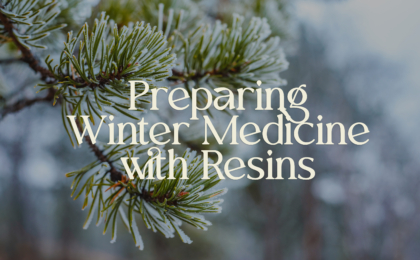
Preparing Winter Medicine with Tree Resins

Guest Article Written By Dan Riegler, founder of Apothecary's GardenAs we enter another winter here in the Northern hemisphere, questions about chest rubs, cough and cold syrups, salves, and liniments for
by NW School of Aromatic Medicine
Aromatherapy
Aromatic History & Lore
Aromatic Recipes
Bio-Regional Aromatic Medicine
Incense as Medicine
Plant Profiles
Topical Medicine
December 21, 20229Comments

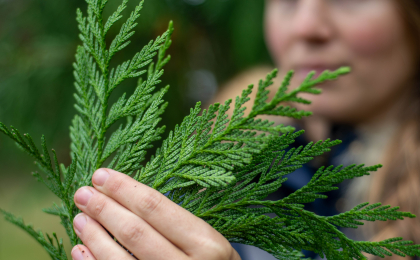
The Magic and Medicine of Douglas Fir

With autumn behind us, many plants have shed their leaves in preparation for winter and wild-harvesting opportunities can feel sparse. But there is one particular type of plant you can
by NW School of Aromatic Medicine
Aromatic History & Lore
Plant Profiles
March 10, 202011Comments

Copal Plant Profile – Ancient Incense & Mystical Medicine

Copal, it's one of the most well-known and oldest names in the world of incense. If you're into incense, surely you've heard of it and likely have burned some before.
by NW School of Aromatic Medicine
Aromatic Recipes
Bio-Regional Aromatic Medicine
Herbal Medicine
Plant Profiles
Topical Medicine
March 3, 20201Comments

Making Poplar Bud Medicine: Harvesting, Infusions, & Salves

As I write this, the snow in the foothills of the Pacific Northwest has vanished, signs of life begin to sprout from the earth, the first blossoms of the year
by NW School of Aromatic Medicine
Aromatic History & Lore
Incense as Medicine
Incense Crafting
Topical Medicine
April 25, 20180Comments

The Magic & Medicine of Aromatic Tree Resins, Part II

The aromatic tree resins of the world are some of the most potent healing materials on Earth, used in folk medicine, indigenous medicine, and many of the more established systems
by NW School of Aromatic Medicine
Aromatic History & Lore
Incense as Medicine
Sustainability
March 19, 20180Comments

The Magic & Medicine of Aromatic Tree Resins

Tree resins have been a major part of human history and have been used in nearly every culture on Earth for thousands of years. Whether used in natural perfumery, as
by NW School of Aromatic Medicine
Newer Articles »

aromatic_medicine

🌿 Follow us on Instagram for daily inspiration, plant knowledge, aromatic wisdom, and one-of-a-kind courses 🌿

There’s something about natural perfumery that rea There’s something about natural perfumery that reaches us beyond words. It’s not just the fragrance, but the emotional and energetic effect it carries. Natural perfumes are made up of the same essential oils traditionally used in aromatherapy for their uplifting and stress-soothing qualities – which can shape our psyche in subtle but deeply meaningful ways.

But many people who are pulled into the natural perfumery world find that their first creations feel flat, fleeting, or empty. The missing ingredient is balance. 

Natural perfumery is a form of aromatic architecture – the art of composing time, not just smell. It is a doorway into a deeper relationship with plants, with the body, and with beauty itself. When we understand how scent is built, layered, and anchored, we begin to understand why certain perfumes feel whole… and why others do not.

When a perfume feels complete, it has foundation, body, and lift. It projects, lingers, and evolves. It speaks to the nervous system, stirs memory, and invites ritual into the moment. 

A natural perfume is never a single note – it is a sequence, a symphony of aromas unfolding in intentional harmony. 

In our new blog, you’ll discover:

🌿 Exactly how a natural perfume is structured and balanced (+ what it’s made of)
🌿 What top, heart, and base notes are, and the role each one plays in a formula
🌿 The truth about synthetics (and why they’re not the secret to longevity)
🌿 Why fixatives are often the missing link in long-lasting natural perfume formulas
🌿 How a blend becomes a living symphony of aromas in harmony

✨ Read the full blog at the link in our bio.

____________
#naturalperfume #naturalperfumery #perfume #essentialoils
 #howtomakeperfume #naturalperfumer #naturalperfumeoils
Some scents linger in the memory like a song that Some scents linger in the memory like a song that never quite finishes; others vanish the moment after we notice them. But why?

When it comes to natural perfumery, why do some fragrances feel flat, fleeting, or empty, while others unfold like a story: dimensional, alive, and utterly satisfying? The difference isn’t synthetic additives. It’s balance.

In our newest blog, we explore the architecture of natural perfume: how top, heart, and base notes work together, why some scents feel empty while others feel whole, and how plants themselves teach us about balance, memory, and beauty.

If you’ve ever felt drawn to scent, ritual, perfumery, or the poetry of plants… this one is for you.

 ✨ Read “Creating Harmony: The Composition of Natural Perfumes” by clicking the link in our bio.

---------

 #naturalperfume #aromaticplants #aromatherapy #aromaticmedicine #naturalperfumery
Enfleurage: such a whimsical term for a truly beau Enfleurage: such a whimsical term for a truly beautiful tradition. Enfleurage is a time-honored and gentle method used to extract essential oils from fragile flowers, particularly those with volatile oils that can be damaged by the high heat required in traditional steam distillation.

A lengthy labor of love, this extraction method utilizes odorless vegetable or animal fats to capture aroma and essential oils. 

Fresh aromatic flowers are placed on a thin layer of highly purified fat or oil, such as lard, tallow, or coconut oil in a glass or ceramic plate. Over time, the fat absorbs the aromatic compounds from the flowers, which can take a few hours up to several days to fully extract.

Once the flowers release their fragrance into the fat, they’re removed and replaced with fresh ones to continue the extraction process. On average, flowers are replaced at least 35 times, but sometimes it can be up to 50 times!

Then, the fat is either scraped off and kept as an enfleurage pomade to be used as solid perfume, or dissolved in alcohol to extract the aromatic compounds. The alcohol is then evaporated, leaving behind a highly concentrated floral essence, which may undergo further processing or dilution before being used in perfumery.

While enfleurage was once a popular method for extracting essential oils, it’s not commonly used today due to its labor-intensive nature. Many enfleurage absolutes are expensive because they’re very time-consuming, however, it’s an effective form of extraction that matches closely with the floral itself.

Some commonly enfleuraged flowers include Jasmine, Tuberose, Rose, Gardenia, and Orange Blossom. This gentle and ancient extraction process effectively preserves these gorgeous and delicate fragrances.

 #enfleurage #enfleurageperfume #jasmine #roseenfleurage #naturalperfume #perfumery
What is Oud? (Pronounced “ood,” like “food” withou What is Oud? (Pronounced “ood,” like “food” without the “f”) Oud is used extensively in natural perfumery, incense, and traditional aromatic medicine due to its rich aroma and therapeutic properties.

But where does it come from? 

Oud is a highly revered essential oil derived from the resinous heartwood of Agarwood, or Aloeswood, from various Aquilaria species native to Southeast Asia. 

The tree produces a resinous substance in response to fungal infections, insect infestations, or other natural stresses. This pleasantly fragrant secretion gradually accumulates and darkens the surrounding wood, resulting in the formation of oil-dense Agarwood. The wood itself is often burned in many forms in various incense traditions. 

Oud oils are also extracted through various methods, including steam distillation, hydro-distillation, and solvent extraction.

In perfumery, Oud oils are highly valued for their exotic aroma, as well as for their longevity and depth. They’re often used as base notes or accords in fragrance compositions, adding richness, complexity, and a sense of opulence to perfumes. The aroma of Oud oils is multi-layered, often described as woody, resinous, balsamic, and slightly animalic. 

Oud oils vary in scent profile, reliant on factors such as the species of Agarwood tree, the region of origin, the age of the wood, and the extraction method used. This results in unique and subtle nuances and differences between each type of Oud oil out there.

Have you ever encountered Oud oils? What’s your favorite Oud?
Did you know that most natural perfumes are made w Did you know that most natural perfumes are made with essential oils and absolutes?

Essential oils are considered to be the soul or essence of a plant, according to ancient alchemical wisdom. When you inhale the essential oil, or soul of a plant, you’re entering into direct communication with the plant’s energy – it interacts with your spirit on a deep level. 

Many modern perfumes contain synthetic ingredients that are not good for us or the planet. 

Natural perfume captures the essence of aromatic plants and embodies the ancient roots of aromatic traditions, offering the potential to influence us on mental, emotional, spiritual, and physical levels.

Here are 5 common plants used in natural perfumery:

Rose: Prized for its sweet, floral scent, Rose is often used as a top or heart note in natural perfumes.

Citrus: Fruits and peels from Bergamot, Lemon, Lime, Orange, and Grapefruit are popular choices in perfumes, often serving as top notes to provide a bright and refreshing opening to fragrance compositions.

Sandalwood: This ancient wood possesses a creamy, woody aroma and is often used as a base note in perfumes, imparting a lingering, sensual scent. It’s also commonly used as a carrier oil for attars, a traditional natural perfume from India and the Middle East.

Jasmine: This flower emits a rich, mysterious floral fragrance and is commonly used as a top or middle note in perfumes.

Myrrh resin: Valued for its rich, warm, and slightly sweet aroma, Myrrh is often used as a base note to add depth, warmth, and complexity to fragrances, and it's prized for its ability to enhance the overall composition of a perfume.

There are actually hundreds of different types of aromatic plant materials used in natural perfumery, many of which are not commonly used in aromatherapy – this list just scratches the surface!
Did you know there are different types of natural Did you know there are different types of natural perfumes? Natural fragrance comes in many forms: alcohol-based, oil-based, attars, and solid perfumes. 

Most of us have heard of spray perfumes (alcohol-based) and oil perfumes, but solid perfumes are not as commonplace. 

Solid fragrances have a solid-like consistency like a balm or paste, instead of a liquid, and are typically made with a combination of waxes like beeswax or carnauba wax, and carrier oils such as jojoba or coconut oil, and other aromatic materials. 

They can be longer-lasting on the skin compared to some traditional liquid perfumes due to the slow evaporation of the wax and oil base.

Solid perfumes, with their deep roots in various cultures, are making a comeback due to their use of natural botanical ingredients, portability, longevity, and overall convenience.

 #naturalfragrances #naturalperfumery #essentialoils #aromatherapy #solidperfume
Something we often don’t talk about in aromatherap Something we often don’t talk about in aromatherapy is the concept that pleasure itself is medicine. 🍂 When you encounter a scent that brings genuine delight – whether it's the smell of rain on earth; bread baking in the oven; Pine in fresh, forest air; or your grandmother's perfume – your nervous system responds. The body shifts out of a stress response and into a state of safety and ease. This is a form of medicine.

We see this in research on forest bathing, on the comforting power of familiar scents, and on how pleasant aromas regulate the autonomic nervous system. If something reliably brings the body into a state of ease, that’s a form of medicine. 

Beauty and pleasure are not separate from healing. They’re a pathway into it.

This is where natural perfumery becomes a powerful ally to aromatherapy: it reminds us that remedies can – and perhaps should – be beautiful. That healing can be sensorial. 

Natural perfumery and aromatherapy are simply two expressions of the same ancient aromatic plants – one speaking in poetry, the other in physiology. And together, they offer a fuller vocabulary for the beautiful healing potential of scent. 

In our new blog, we’ll explore this idea and journey through the realms of natural perfumery and aromatherapy, exploring their differences, their shared roots, and the ways they deepen and enrich one another.

🌿 Read the full article “Natural Perfumery & Aromatherapy: Where Scent Becomes Medicine” at the link in our bio.

_____________
#naturalperfumery #aromatherapy #aromaticplants #aromaticmedicine #naturalperfume #perfumery #pleasureismedicine
There was a time when the same plants were used fo There was a time when the same plants were used for prayer, beauty, medicine, and ritual.

In our newest blog, we explore how aromatherapy and natural perfumery grew from the same roots, how they became divided in modern culture, and why bringing them back together matters for healing, beauty, and our relationship with plants.

This article came from a simple question we kept returning to: What if scent was never meant to be divided into “medicine” and “beauty”?

What if it was always both?

Scent has never belonged to a single lane. It has always spoken simultaneously to the body, the heart, and the psyche.

✨ Read the full article “Natural Perfumery & Aromatherapy: Where Scent Becomes Medicine” at the link in our bio.

________________
#naturalperfumery #aromatherapy #perfume #aromaticplants #essentialoils #aromaticmedicine #cleanbeauty
Follow on Instagram

OFFERINGS

  • Aromatic Medicine Garden Membership
  • Incense Crafting Course
  • Botanical Resins & Gums Course
  • Materia Aromatica Ebook

QUICK LINKS

  • About
  • Courses
  • The Aromatic Medicine Blog
  • The School
  • Evan Sylliaasen
  • Contact
  • Privacy Policy
  • Terms & Conditions

FOLLOW US

  • Facebook
  • Instagram
  • Youtube

OUR NEWSLETTER

Stay in the know on new releases and special offers

Loading

support@aromaticmedicineschool.com

© 2026 The Northwest School of Aromatic Medicine, All rights reserved. | Designed by QeRetail