Skip to content
The Northwest School of Aromatic Medicine
  • About
  • Courses
  • Resources
    • The Aromatic Medicine Blog
    • Video Library
  • Shop
  • Contact
  • Close Search Form
    Open Search Form
  • facebook
  • instagram
  • youtube
Student Login
Category

Topical Medicine

Aromatherapy
Herbal Medicine
Sustainability
Topical Medicine
November 25, 20250Comments

Herbal Holiday Gift Guide

As the holiday season approaches, it's the perfect moment to celebrate the magic of small businesses. Beyond the glittering lights and busy crowds, these herbal businesses offer handcrafted remedies and
by NW School of Aromatic Medicine
Aromatherapy
Aromatic Recipes
Herbal Medicine
Topical Medicine
November 13, 20250Comments

DIY Aromatic Gifts: 8 Recipes for a Heartfelt Holiday

As the holiday season approaches, what better way to share the spirit of warmth and love than through handmade, aromatic herbal gifts? In this DIY holiday gift blog, we've compiled a
by NW School of Aromatic Medicine
Aromatherapy
Aromatic Recipes
Topical Medicine
July 7, 20250Comments

Top Essential Oil Blends for Bug Repellent

Summer is finally here! And with it, the sweet return of long, golden days spent outdoors. Whether you're hiking through sunny trails, swimming in crystal-clear lakes, camping under the stars,
by NW School of Aromatic Medicine
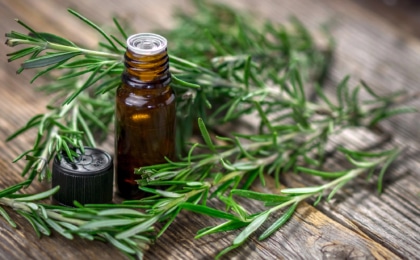
bottle of Rosemary essential oil
Aromatherapy
Herbal Medicine
Incense as Medicine
Plant Profiles
Topical Medicine
June 20, 20250Comments

How to Use Rosemary for Holistic Health

Sure, Rosemary makes a great addition to roasted potatoes and Mediterranean dishes, but its true power lies far beyond the kitchen. For centuries, healers, herbalists, and aromatherapists have turned to
by NW School of Aromatic Medicine
Aromatherapy
Aromatic Recipes
Herbal Medicine
Ritual
Topical Medicine
May 30, 20250Comments

Making Your Own Aromatic & Herbal Remedies

As a plant person, you likely already know this: Aromatic plants and herbs hold incredible healing potential. Beneath their beautiful scents and vibrant leaves lies a world of medicine, just
by NW School of Aromatic Medicine
Aromatherapy
Aromatic History & Lore
Aromatic Recipes
Herbal Medicine
Incense as Medicine
Plant Profiles
Topical Medicine
February 20, 20250Comments

Ginger Root Benefits and Uses

Imagine walking through an ancient spice market, where the air is thick with the scent of exotic herbs and roots. Among the vibrant displays, one root stands out with its
by NW School of Aromatic Medicine
Aromatherapy
Aromatic Recipes
Incense as Medicine
Topical Medicine
February 11, 20250Comments

Aromatherapy Blends for Respiratory Health

It starts with a tickle in your throat, then a stuffy nose. Before you know it, you’re wrapped in blankets, battling congestion that makes it hard to breathe. Whether it’s
by NW School of Aromatic Medicine
Aromatherapy
Aromatic History & Lore
Herbal Medicine
Incense as Medicine
Ritual
Topical Medicine
January 16, 20250Comments

Tree Resins: Unlock the Power of this Underappreciated Natural Remedy

There’s something very magical about tree resins. These golden, aromatic droplets are born from a tree’s natural healing process – a protective substance that seals wounds, guards against infection, and
by NW School of Aromatic Medicine
Aromatherapy
Bio-Regional Aromatic Medicine
Herbal Medicine
Incense as Medicine
Plant Profiles
Sustainability
Topical Medicine
January 9, 20250Comments

The Benefits of Pine Resin & How to Harvest It

I will never forget meeting my friend Sam (name changed to spare them any embarrassment), a budding herbalist radiating excitement and curiosity about the wonders of the natural world. One
by NW School of Aromatic Medicine
Aromatherapy
Aromatic History & Lore
Herbal Medicine
Human/Plant Connection
Incense as Medicine
Plant Profiles
Ritual
Sustainability
Topical Medicine
December 19, 20240Comments

The Power of Frankincense: Boosting Immunity and Overall Well-Being

Thousands of years ago, in ancient kingdoms, the air was thick with the rich, aromatic smoke of Frankincense. This sacred resin, harvested from Boswellia trees, played a central role in
by NW School of Aromatic Medicine
« Older Articles

aromatic_medicine

🌿 Follow us on Instagram for daily inspiration, plant knowledge, aromatic wisdom, and one-of-a-kind courses 🌿

With all the AI content lately (AI herbalists, AI With all the AI content lately (AI herbalists, AI teachers, AI everything), it’s starting to feel like you can’t scroll for more than 30 seconds without bumping into another perfectly generated “expert.”

Last week, we released a blog, “Living in the Age of the AI Herbalist,” to talk honestly about it (see recent posts).

And the funniest thing happened the day before we released it, someone accused me of looking like AI on one of our reels!

So I’m here to say I, Evan Sylliaasen, am not a robot… (& here are a few crazy things about my very human life):

🪵 If I weren’t teaching or crafting incense, I’d probably be building furniture. Woodworking is my favorite hobby.

🎵 In my teens, I played drums in a few bands. In my early 20s, I recorded a one-man bluegrass album playing guitar, banjo & mandolin, called Black & Bluegrass. I used to be really good (Now… debatable!).

👖 I was a “child star.” Sort of, not really. I appeared in a Sur La Table magazine at 5 years old in a tie-dye shirt while my fake magazine family wore Canadian tuxedos. I’ve been the black sheep from the beginning.

🎓 I was suspended in junior high once. And no, I’m not telling you why.

💻 I had crippling stage fright as a kid & teen. The irony of teaching online now is not lost on me.

🎨 Before becoming my own boss, I worked 15+ different jobs: dog grooming, land surveying, painting, construction, lead catering, selling SEO, landscaping… I’ve always been willing to get my hands dirty.

🌱 My mom taught me to garden when I was young. Since age 20, I’ve kept my own food & herb garden wherever I’ve lived. That’s where all of this really began.

My life has been shaped by years in the garden, working through awkward teenage stage fright, playing music & long days of hard work on construction sites...

Real experiences, big mistakes, great mentors, amazing people & real plants.

And that’s exactly why I care about what’s happening in our space right now.

Thanks for trusting me, and everything my team (also real people) & I have built at the NW School of Aromatic Medicine since 2014.
We’re dedicated to you & teaching aromatic medicine from places of real human experience & tradition.
Here on the Olympic Peninsula, the evergreens are Here on the Olympic Peninsula, the evergreens are some of the only strong aromatics available this time of year. In the quieter months, they become steady companions.

I’ll often take a slow walk through the forest, or drive into the mountains closeby, pausing to breathe in the scent of freshly fallen Cedar branches, letting the aroma wake my senses and reconnect me to this land we call home.

Cedar has been my favorite tree for as long as I can remember. From early childhood, wandering moss-covered forests and rain-soaked trails of the Pacific Northwest, it has been a constant presence: grounding, familiar, and comforting.

For Indigenous peoples along the coast, from Washington all the way to Alaska, Cedar has long been held as one of the most sacred plants. It was everything: warmth from fire, shelter and clothing, tools for weaving and art, canoes for travel, incense for ceremony, and powerful medicine for healing. 

To many Northwest tribes, Cedar remains the true “tree of life,” woven into nearly every aspect of living.

Sometimes I imagine what it would feel like if a single plant touched every layer of our lives today, from the material to the spiritual. 

Perhaps then we would truly understand what it means to call a plant an ally. 🌲

___________
#cedar  #treeoflife  #plantally  #plantsareteachers  #sacredplants  #plantsaremagic
Natural remedies are trending now more than ever. Natural remedies are trending now more than ever. And alongside this resurgence, something new has emerged: the “AI herbalist.”

We’re witnessing an explosion of AI-generated herbal blogs, books, and courses, often created by so-called “experts,” often with no education, clinical training, or lived relationship with the plants.

Here’s the problem: herbal and aromatic medicine is nuanced, individualized, and deeply contextual. It cannot be reduced to algorithmic AI-pattern recognition or “input symptom, output herb.”

True plant medicine is a lived experience. It unfolds in the kitchen, the garden, the apothecary, and the clinic. It engages the senses and touches the spirit.

In a world where algorithms can generate polished content in seconds, human expertise matters more than ever. 

Real herbalists and aromatherapists know the plants intimately. They understand the delicate balance of body, mind, and spirit. They’ve walked this path, felt the plant resin on their fingers, inhaled the deep aroma of incense smoke, and seen the subtle ways plants work.

And they pass their knowledge on through mentorship, ensuring plant medicine continues to thrive as a living tradition rather than a recycled dataset.

Let us not lose sight of the heart and soul of plant wisdom. 

In our latest blog, Living in the Age of the AI Herbalist, you’ll learn:

🌱 Why AI is often wrong with plant medicine
🌱 How it doubles down on errors with absolute confidence
🌱 Why trained herbalists and aromatherapists frequently disagree with AI answers
🌱 How to spot an AI herbalist
🌱 How to protect the heart and soul of plant medicine

✨ Click the link in our bio to read the full blog.

_____________
#aicontent #plantmedicine #herbalmedicine #herbalist #aromatherapist #herbalism
How can you tell the difference between AI-assembl How can you tell the difference between AI-assembled herbal information and real plant wisdom? 

It’s honestly getting harder to spot. The branding is clean and polished, and the tone is confident. That’s what makes it so convincing.

Natural remedies are trending like never before, and with that surge comes a new problem: the “AI herbalist.” In recent years, AI-generated blogs, social media “experts” with no clinical experience, and even AI-written herbal books and courses have flooded the marketplace.

This is especially concerning now that Instagram and Facebook stopped independent fact-checking in early 2025, and about 20% of TikTok content contains misinformation. Confident-sounding advice can spread faster than ever… even when it’s wrong.

In our latest blog, Living in the Age of the AI Herbalist, we reveal some shocking examples: last year’s #1 Amazon bestseller in “Herbal Remedies” was written by AI (with a completely made-up author), and roughly 82% of new herbal books on Amazon were at least partially AI-generated.

You’ll also learn:
🌱 Why AI is often wrong with plant medicine
🌱 How it doubles down on errors with absolute confidence
🌱 Why trained herbalists and aromatherapists frequently disagree with AI answers
🌱 How to spot an AI herbalist
🌱 How to protect the heart and soul of plant medicine

✨ Click the link in our bio to read the full blog.

_______________
#AI #ageofai #herbalism #herbalist #plantmedicine #plantwisdom 
 #herbaleducation #herbalmedicine
Did you know that over 80% of new herbal books on Did you know that over 80% of new herbal books on Amazon in 2025 were likely written by AI? 🤯 Polished, confidently written, and trending, but with no human experience, no clinical training, and no heart behind them.

Herbal and aromatic medicine is not just data. It’s intuition, experience, and relationship with plants. One wrong recommendation can cause real harm… and AI doesn’t understand nuance, energetics, or safety.

If real plant wisdom is important to you and you want to know how to spot “AI herbalists” before it’s too late, read our latest blog: Living in the Age of the AI Herbalist. 

🌱✨ Click the link in our bio to read the full blog.

_______________
 #aiherbal #artificial_intelligence #herbalism #herbalist #misinformation #ageofai
A common misconception during the dead of Winter i A common misconception during the dead of Winter is that there’s nothing to wild-harvest… However, careful observation of the plant life cycle reveals that’s not necessarily true! 

As plants lose their leaves, they send their energy into their roots, getting ready to sustain themselves for a long winter. 

During this time, the life force of plants is concentrated within the woods, roots, and aromatic resins. 

In the winter months, the plant’s energy is highly concentrated in its root system, before moving back upwards and outwards in the spring and summer to produce more leaves, flowers, fruits, and seeds.

That’s why this is the best time of year to harvest roots, woods, gums, and resins. 

Plants have a rhythm with how they move their life force according to the seasons and the environment.

Don’t let the lack of new growth in the winter deceive you! There’s always abundance in the forest. 🌲

Have you harvested anything new lately??

_____________
#wildharvest #wildharvesting  #sustainableharvest  #wildcrafting  #treeresins  #harvesting #incenseresin
Did you know that essential oils should always be Did you know that essential oils should always be diluted before applying to your skin? 💧 Many people skip this step, which can lead to irritation, rashes, or even sensitization – a delayed allergic reaction that develops after repeated exposure.

Not sure how to dilute safely? We’ve got you covered! 

Our free Dilution Chart & Reference Guide breaks down exact ratios for everything from face and body care to herbal baths and first-aid use.

✨ Comment “DILUTION” below, and we’ll send the guide straight to your DMs!

Here’s to safe, happy, and effective essential oil use! 🌿

___________
#essentialoil  #essentialoilsafety  #essentialoildilution  #essentialoiltips #essentialoiltipsandtricks  #essentialoiluses #aromatherapy
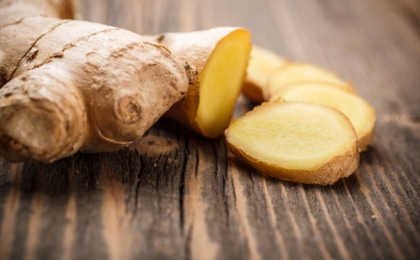
Ginger (Zingiber officinale) is a tropical perenni Ginger (Zingiber officinale) is a tropical perennial from the same botanical family as Turmeric and Cardamom. And here’s a fun fact: what we all know as Ginger root isn’t actually a root at all – it’s a rhizome (a horizontal underground stem that sends up new shoots and spreads the plant outward). 🌱

Even more fascinating? Culinary Ginger is considered a cultigen, meaning it exists only through its thousands of years of human cultivation. This species doesn’t grow wild anywhere in the world, though its cousin, Wild Ginger, does. 

The plant reaches about 3-4 feet tall with glossy, lance-shaped leaves, and its rhizomes are harvested once the foliage yellows and dies back (about 8-10 months after planting). From there, Ginger can be used fresh or is transformed into dried slices, powder, preserves, or essential oil.

This classic aromatic spice has been used for thousands of years across cultures – there’s evidence of it being used in China and India over 2,000 years ago! 

Ginger is one of the only herbal remedies seen in the main 4 ancient traditional medicine systems: Chinese, Ayurvedic, Unani Tibb, and Greek. All 4 systems recognize Ginger as a warming herb traditionally used to support cold conditions in the body. That kind of universal consensus is rare in herbal history.

🔥 Swipe through to explore the aromatic medicine of this fiery, fragrant spice.
Follow on Instagram

OFFERINGS

  • Aromatic Medicine Garden Membership
  • Incense Crafting Course
  • Botanical Resins & Gums Course
  • Materia Aromatica Ebook

QUICK LINKS

  • About
  • Courses
  • The Aromatic Medicine Blog
  • The School
  • Evan Sylliaasen
  • Contact
  • Privacy Policy
  • Terms & Conditions

FOLLOW US

  • Facebook
  • Instagram
  • Youtube

OUR NEWSLETTER

Stay in the know on new releases and special offers

Loading

support@aromaticmedicineschool.com

© 2026 The Northwest School of Aromatic Medicine, All rights reserved.