Skip to content
The Northwest School of Aromatic Medicine
  • About
  • Courses
  • Resources
    • The Aromatic Medicine Blog
    • Video Library
  • Shop
  • Contact
  • Close Search Form
    Open Search Form
  • facebook
  • instagram
  • youtube
Student Login
Category

Topical Medicine

Aromatherapy
Aromatic Recipes
Incense as Medicine
Topical Medicine
November 29, 20215Comments

Holiday Spices: Warming, Uplifting Medicines for Cold Winter Months

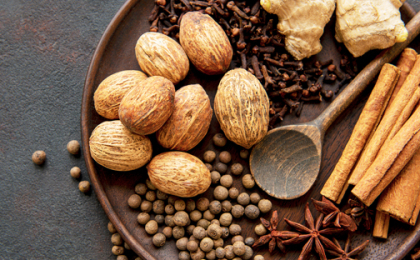
Bring Warmth To Your Holiday Season With Aromatic Kitchen Spices Fall and winter are the time to get cozy, nourish yourself with warmth, and support your body through the changing seasons. Warming
by NW School of Aromatic Medicine
Aromatherapy
Topical Medicine
September 15, 202116Comments

How Carrier Oils Do More Than Just Carry

In the herbal and aromatherapy world, you might often hear the phrase “just use a carrier oil” with no explanation. But what does that mean? Herbalists, aromatherapists, and crafters of
by NW School of Aromatic Medicine
Alchemy
Aromatherapy
Aromatic Recipes
Topical Medicine
June 21, 20210Comments

Hydrosol: Flower Waters for Healing, Beauty, and Enjoyment

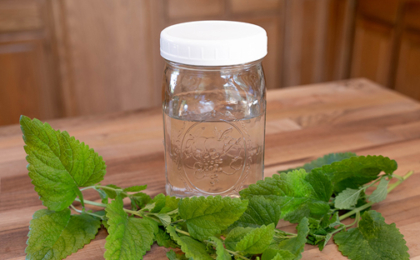
What is a Hydrosol?Hydrosols, Hydrolats, Flower water, Floral water – there are many names that over time have all come to refer to generally the same botanical product – aromatic and
by NW School of Aromatic Medicine
Ritual
Topical Medicine
April 10, 20216Comments

Aphrodisiacs – More Than Just Sexy

Aphrodisiacs have a strong reputation for influencing our sexual desires. While this may be true, they can do so much more for you! Herbal aphrodisiacs also support our sexual health, self-love, and
by NW School of Aromatic Medicine
Aromatic Recipes
Bio-Regional Aromatic Medicine
Herbal Medicine
Plant Profiles
Topical Medicine
March 3, 20201Comments

Making Poplar Bud Medicine: Harvesting, Infusions, & Salves

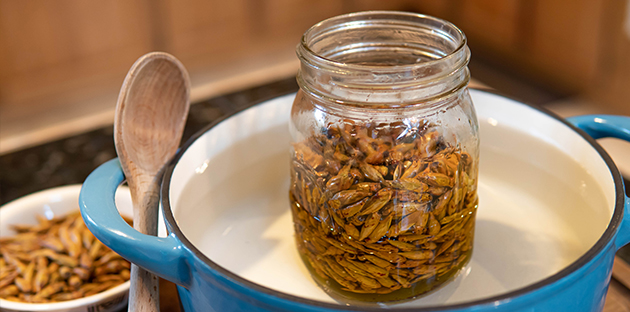
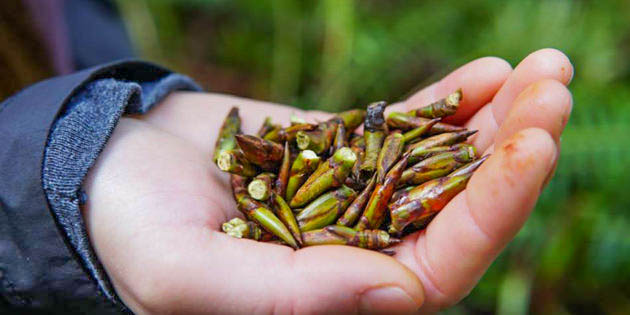
As I write this, the snow in the foothills of the Pacific Northwest has vanished, signs of life begin to sprout from the earth, the first blossoms of the year
by NW School of Aromatic Medicine
Aromatic History & Lore
Plant Profiles
Ritual
Topical Medicine
January 1, 20190Comments

Balm of Gilead, Comfort for the Soul

Considered to be among the most sacred of herbs throughout many ancient Eastern cultures, the renowned Balm of Gilead was once used in various forms of holy incense and anointing
by NW School of Aromatic Medicine
Aromatic History & Lore
Incense as Medicine
Incense Crafting
Topical Medicine
April 25, 20180Comments

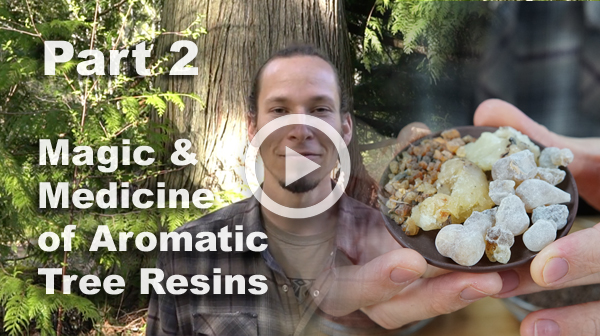
The Magic & Medicine of Aromatic Tree Resins, Part II

The aromatic tree resins of the world are some of the most potent healing materials on Earth, used in folk medicine, indigenous medicine, and many of the more established systems
by NW School of Aromatic Medicine
Newer Articles »

aromatic_medicine

🌿 Follow us on Instagram for daily inspiration, plant knowledge, aromatic wisdom, and one-of-a-kind courses 🌿

Attar: an Arabic word that translates to “scent.” Attar: an Arabic word that translates to “scent.” Attars are traditional natural perfume oils that originate from the Middle East and South Asia, where they’ve been used for centuries. 

Attars are crafted exclusively from 100% pure essential oils and aromatic materials, without any carrier oils for dilution, making them intensely concentrated perfumes known for their potency and rich aroma.

Traditional attar makers often distill aromatic plants directly into a base of Sandalwood essential oil, a practice still revered today for its meticulous craftsmanship. 

Attars are prized for their rich and complex scents and are typically applied sparingly on the skin or clothing for a long-lasting aroma.

Have you ever used or crafted an attar before? What’s your favorite attar scent profile?

 #attar #attars #perfume #perfumery #naturalperfume
Incense is the foundation of perfumery. The orig Incense is the foundation of perfumery. 

The origin of the word perfume reflects the ancient practice of using aromatic plants as incense to create pleasing scents to permeate through the air. In some ancient cultures, the words perfume and incense were interchangeable. 

Many cultures believe burning incense is like a rising prayer, as the fragrant smoke drifts up to the heavens, serving as a bridge that links the material and spiritual worlds. 

This same reverence translated to the world of perfumery. Initially reserved for rituals for the gods, religious rites, or royalty in ancient Egypt, perfume gradually became associated with purifying and spiritually cleansing the body.

As time progressed, perfume found diverse applications, serving purposes ranging from aesthetic enhancement to practical functionality, spiritual enrichment, and even sometimes medicinal uses.

In the beginning, original perfumes and incense were made only using pure, natural aromatic plants. Unfortunately, modern perfumery has drifted from these ancient roots, as most perfumes available today are laden with synthetic chemicals. 

It falls upon us to remember and honor the genuine origins of these ancient aromatic traditions, preserving their legacy for future generations to come.
We live in a world saturated with scent. Our air f We live in a world saturated with scent. Our air fresheners, laundry detergents, cosmetics, body products, and even most perfumes are infused with synthetic fragrance compounds designed to imitate nature. 

But these ingredients are not only far removed from the living world, but many of them are also harmful to ecosystems and toxic to our bodies. 

It’s no surprise that so many of us are feeling the pull back to our roots, toward scent as nature intended.

There’s something about natural perfumery that reaches us beyond words. It’s not just the fragrance, but the emotional and energetic effect it carries. Natural perfumes are made up of the same essential oils traditionally used in aromatherapy for their uplifting and stress-soothing qualities – which can shape our psyche in subtle but deeply meaningful ways.

Still, a persistent myth lingers in the perfumery world: that natural perfumes can’t compete. That they’re too unpredictable, too soft, too fleeting—that they won’t project or last beyond an hour. And this can be true… when a perfume is built without structure or foundation.

In our new blog, you’ll discover:

🌿 Exactly how a natural perfume is structured and balanced (+ what it’s made of)
🌿 What top, heart, and base notes are, and the role each one plays in a formula
🌿 The truth about synthetics (and why they’re not the secret to longevity)
🌿 Why fixatives are often the missing link in long-lasting natural perfume formulas
🌿 How a blend becomes a living symphony of aromas in harmony

✨ Read the full blog at the link in our bio.

_______________
#neroli #naturalperfume #naturalperfumery #naturalperfumes #naturalperfumer #naturalperfumeoils #cleanbeautyproducts
There’s something about natural perfumery that rea There’s something about natural perfumery that reaches us beyond words. It’s not just the fragrance, but the emotional and energetic effect it carries. Natural perfumes are made up of the same essential oils traditionally used in aromatherapy for their uplifting and stress-soothing qualities – which can shape our psyche in subtle but deeply meaningful ways.

But many people who are pulled into the natural perfumery world find that their first creations feel flat, fleeting, or empty. The missing ingredient is balance. 

Natural perfumery is a form of aromatic architecture – the art of composing time, not just smell. It is a doorway into a deeper relationship with plants, with the body, and with beauty itself. When we understand how scent is built, layered, and anchored, we begin to understand why certain perfumes feel whole… and why others do not.

When a perfume feels complete, it has foundation, body, and lift. It projects, lingers, and evolves. It speaks to the nervous system, stirs memory, and invites ritual into the moment. 

A natural perfume is never a single note – it is a sequence, a symphony of aromas unfolding in intentional harmony. 

In our new blog, you’ll discover:

🌿 Exactly how a natural perfume is structured and balanced (+ what it’s made of)
🌿 What top, heart, and base notes are, and the role each one plays in a formula
🌿 The truth about synthetics (and why they’re not the secret to longevity)
🌿 Why fixatives are often the missing link in long-lasting natural perfume formulas
🌿 How a blend becomes a living symphony of aromas in harmony

✨ Read the full blog at the link in our bio.

____________
#naturalperfume #naturalperfumery #perfume #essentialoils
 #howtomakeperfume #naturalperfumer #naturalperfumeoils
Some scents linger in the memory like a song that Some scents linger in the memory like a song that never quite finishes; others vanish the moment after we notice them. But why?

When it comes to natural perfumery, why do some fragrances feel flat, fleeting, or empty, while others unfold like a story: dimensional, alive, and utterly satisfying? The difference isn’t synthetic additives. It’s balance.

In our newest blog, we explore the architecture of natural perfume: how top, heart, and base notes work together, why some scents feel empty while others feel whole, and how plants themselves teach us about balance, memory, and beauty.

If you’ve ever felt drawn to scent, ritual, perfumery, or the poetry of plants… this one is for you.

 ✨ Read “Creating Harmony: The Composition of Natural Perfumes” by clicking the link in our bio.

---------

 #naturalperfume #aromaticplants #aromatherapy #aromaticmedicine #naturalperfumery
Enfleurage: such a whimsical term for a truly beau Enfleurage: such a whimsical term for a truly beautiful tradition. Enfleurage is a time-honored and gentle method used to extract essential oils from fragile flowers, particularly those with volatile oils that can be damaged by the high heat required in traditional steam distillation.

A lengthy labor of love, this extraction method utilizes odorless vegetable or animal fats to capture aroma and essential oils. 

Fresh aromatic flowers are placed on a thin layer of highly purified fat or oil, such as lard, tallow, or coconut oil in a glass or ceramic plate. Over time, the fat absorbs the aromatic compounds from the flowers, which can take a few hours up to several days to fully extract.

Once the flowers release their fragrance into the fat, they’re removed and replaced with fresh ones to continue the extraction process. On average, flowers are replaced at least 35 times, but sometimes it can be up to 50 times!

Then, the fat is either scraped off and kept as an enfleurage pomade to be used as solid perfume, or dissolved in alcohol to extract the aromatic compounds. The alcohol is then evaporated, leaving behind a highly concentrated floral essence, which may undergo further processing or dilution before being used in perfumery.

While enfleurage was once a popular method for extracting essential oils, it’s not commonly used today due to its labor-intensive nature. Many enfleurage absolutes are expensive because they’re very time-consuming, however, it’s an effective form of extraction that matches closely with the floral itself.

Some commonly enfleuraged flowers include Jasmine, Tuberose, Rose, Gardenia, and Orange Blossom. This gentle and ancient extraction process effectively preserves these gorgeous and delicate fragrances.

 #enfleurage #enfleurageperfume #jasmine #roseenfleurage #naturalperfume #perfumery
What is Oud? (Pronounced “ood,” like “food” withou What is Oud? (Pronounced “ood,” like “food” without the “f”) Oud is used extensively in natural perfumery, incense, and traditional aromatic medicine due to its rich aroma and therapeutic properties.

But where does it come from? 

Oud is a highly revered essential oil derived from the resinous heartwood of Agarwood, or Aloeswood, from various Aquilaria species native to Southeast Asia. 

The tree produces a resinous substance in response to fungal infections, insect infestations, or other natural stresses. This pleasantly fragrant secretion gradually accumulates and darkens the surrounding wood, resulting in the formation of oil-dense Agarwood. The wood itself is often burned in many forms in various incense traditions. 

Oud oils are also extracted through various methods, including steam distillation, hydro-distillation, and solvent extraction.

In perfumery, Oud oils are highly valued for their exotic aroma, as well as for their longevity and depth. They’re often used as base notes or accords in fragrance compositions, adding richness, complexity, and a sense of opulence to perfumes. The aroma of Oud oils is multi-layered, often described as woody, resinous, balsamic, and slightly animalic. 

Oud oils vary in scent profile, reliant on factors such as the species of Agarwood tree, the region of origin, the age of the wood, and the extraction method used. This results in unique and subtle nuances and differences between each type of Oud oil out there.

Have you ever encountered Oud oils? What’s your favorite Oud?
Did you know that most natural perfumes are made w Did you know that most natural perfumes are made with essential oils and absolutes?

Essential oils are considered to be the soul or essence of a plant, according to ancient alchemical wisdom. When you inhale the essential oil, or soul of a plant, you’re entering into direct communication with the plant’s energy – it interacts with your spirit on a deep level. 

Many modern perfumes contain synthetic ingredients that are not good for us or the planet. 

Natural perfume captures the essence of aromatic plants and embodies the ancient roots of aromatic traditions, offering the potential to influence us on mental, emotional, spiritual, and physical levels.

Here are 5 common plants used in natural perfumery:

Rose: Prized for its sweet, floral scent, Rose is often used as a top or heart note in natural perfumes.

Citrus: Fruits and peels from Bergamot, Lemon, Lime, Orange, and Grapefruit are popular choices in perfumes, often serving as top notes to provide a bright and refreshing opening to fragrance compositions.

Sandalwood: This ancient wood possesses a creamy, woody aroma and is often used as a base note in perfumes, imparting a lingering, sensual scent. It’s also commonly used as a carrier oil for attars, a traditional natural perfume from India and the Middle East.

Jasmine: This flower emits a rich, mysterious floral fragrance and is commonly used as a top or middle note in perfumes.

Myrrh resin: Valued for its rich, warm, and slightly sweet aroma, Myrrh is often used as a base note to add depth, warmth, and complexity to fragrances, and it's prized for its ability to enhance the overall composition of a perfume.

There are actually hundreds of different types of aromatic plant materials used in natural perfumery, many of which are not commonly used in aromatherapy – this list just scratches the surface!
Follow on Instagram

OFFERINGS

  • Aromatic Medicine Garden Membership
  • Incense Crafting Course
  • Botanical Resins & Gums Course
  • Materia Aromatica Ebook

QUICK LINKS

  • About
  • Courses
  • The Aromatic Medicine Blog
  • The School
  • Evan Sylliaasen
  • Contact
  • Privacy Policy
  • Terms & Conditions

FOLLOW US

  • Facebook
  • Instagram
  • Youtube

OUR NEWSLETTER

Stay in the know on new releases and special offers

Loading

support@aromaticmedicineschool.com

© 2026 The Northwest School of Aromatic Medicine, All rights reserved. | Designed by QeRetail