Skip to content
The Northwest School of Aromatic Medicine
  • About
  • Courses
  • Resources
    • The Aromatic Medicine Blog
    • Video Library
  • Shop
  • Contact
  • Close Search Form
    Open Search Form
  • facebook
  • instagram
  • youtube
Student Login
Tag

cardamom

Aromatic Recipes
May 7, 20260Comments

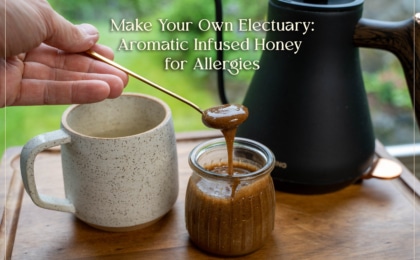
Aromatic Herbal Honey for Allergies

Spring is one of my favorite times of year: tulips, lilacs, cherry blossoms, and that particular quality of sunlight that makes it hard to stay indoors. But alongside all that
by NW School of Aromatic Medicine
Aromatherapy
Aromatic History & Lore
Human/Plant Connection
Incense as Medicine
Ritual
Sustainability
December 18, 20250Comments

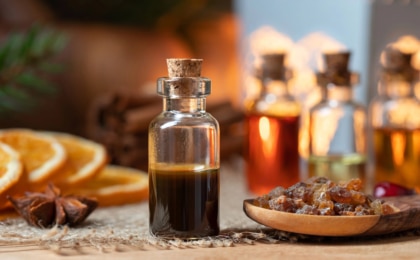
The Sacred Scents of the Season: Frankincense, Myrrh & Beyond

The scents of Cinnamon, Clove, Nutmeg, and Ginger drift from the oven. Fresh Pine fills the living room from the Christmas tree and evergreen boughs framing the fireplace. Dried Oranges
by NW School of Aromatic Medicine
Aromatherapy
Aromatic History & Lore
Ayurveda
Herbal Medicine
Incense as Medicine
Incense Crafting
Natural Perfumery
Plant Profiles
November 7, 20256Comments

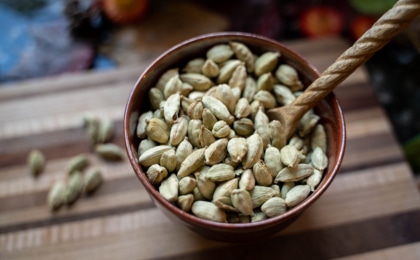
Cardamom Benefits: The Ancient Spice for Digestion, Clarity, and Vitality

Imagine a single seed pod, no larger than your fingertip, holding within it the power to kindle digestive fire, clear stagnant breath from congested lungs, and lift the fog of
by NW School of Aromatic Medicine
Aromatic Recipes
Herbal Medicine
January 3, 20250Comments

8 Warming Aromatic Herbs for Winter Wellness + Fire Cider Recipe

As winter settles in, so do the challenges of staying warm, energized, and healthy. The cold weather can leave us feeling sluggish, prone to seasonal sniffles, and craving comfort. But
by NW School of Aromatic Medicine
Ayurveda
Herbal Medicine
December 3, 20240Comments

Aromatic Herbs for Digestion

If you’ve ever had a stomachache, you know how much it can derail your day. Our digestive system is a cornerstone of our health and vitality, responsible for breaking down
by NW School of Aromatic Medicine
Aromatherapy
Aromatic Recipes
Ayurveda
Herbal Medicine
Topical Medicine
November 14, 20230Comments

Fall Self-care Practices to Nourish Body, Mind & Soul

As the air turns crisp, leaves transform into a vibrant tapestry of warm hues and Earth’s critters prepare for the cold – the environment invites us to turn our awareness
by NW School of Aromatic Medicine
Aromatic Recipes
Ayurveda
Topical Medicine
August 16, 20223Comments

Cooling Herbs for Summer

In the heat of summer, you can reach for an ice cream to help you cool off temporarily, but the beauty of plants is that they go beyond the gastrointestinal
by NW School of Aromatic Medicine
Aromatherapy
Aromatic Recipes
Incense as Medicine
Topical Medicine
November 29, 20215Comments

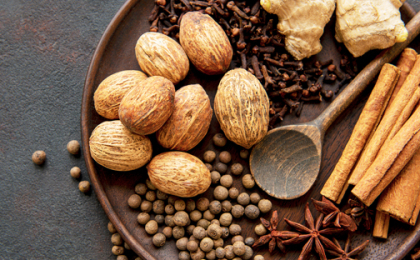
Holiday Spices: Warming, Uplifting Medicines for Cold Winter Months

Bring Warmth To Your Holiday Season With Aromatic Kitchen Spices Fall and winter are the time to get cozy, nourish yourself with warmth, and support your body through the changing seasons. Warming
by NW School of Aromatic Medicine
Aromatherapy
Aromatic History & Lore
December 20, 20200Comments

Holiday Smells: Aromatic Traditions from Winters Past

Fresh cut Pine and Spruce trees, Cedar boughs, pots of evergreen needles steaming on the wood stove. Aromas of Cinnamon and Clove rising from the oven. Orange peel and Star
by NW School of Aromatic Medicine

aromatic_medicine

🌿 Follow us on Instagram for daily inspiration, plant knowledge, aromatic wisdom, and one-of-a-kind courses 🌿

Modern herbal education often begins with utility: Modern herbal education often begins with utility: What is this herb good for? What are its actions? What symptoms does it address? 

While these are important questions, they can also unintentionally shape the way we relate to plants, reducing them to products or commodities existing solely for human use. 

But deep down, we know plants are far more than that.

Plants are living, intelligent beings participating in vast and intricate ecosystems. They communicate with one another, adapt to their surroundings, nourish ecosystems, stabilize soil, create oxygen, and sustain countless forms of life — including us.

When we begin to see plants only through the lens of “What can this do for me?”, we risk losing sight of this. 

The moment we stop viewing plants only through utility, we create space for relationship to emerge. We move away from commodity and into connection. We begin to approach the plant kingdom with curiosity, presence, humility, and wonder. 

We shift from consumer to student, with plants as our teachers. 

And perhaps that is where true herbal wisdom begins. 🌱

✨ Explore ways you can deepen your relationship with plants in our new video blog. Link in bio.

_______
#plantwisdom #herbaleducation #plantsareteachers #herbalwisdom #plantsaremedicine #herbalist #herbalmedicine #aromaticmedicine
In a world that often treats plants as products or In a world that often treats plants as products or commodities, aromatic medicine invites us into something deeper: relationship. 🌿

Plants are not simply resources for human use, they are living, intelligent beings participating in vast ecosystems, sustaining countless forms of life –– including us. 

When we only ask, “What can this plant do for me?” we risk losing sight of who the plant truly is.

Just like human relationships, plant relationships require curiosity, presence, respect, and reciprocity. Plants deserve more than commodification; they deserve reverence.

When we shift from asking “What is this plant good for?” to “Who is this plant?”, we move away from commodity and into connection. ✨

Watch the full video blog at the link in bio.

*This video features clinical herbalist & aromatherapist Erika Galentin, who guides students inside the Aromatic Medicine Garden, our immersive online education hub for deepening relationship with plants.
What if the most important thing a plant could tea What if the most important thing a plant could teach you… couldn’t be found in a textbook? 🌿

In our plant studies, it’s easy to get caught up in memorizing actions, constituents, and recipes. But true plant wisdom often runs much deeper than that.

Plants cannot walk away from their environment — the places they grow and thrive reveal something about who they are. Their adaptations tell a story.

Juniper, for example, flourishes in harsh, dry climates where many other species struggle to survive, reflecting its traditional use in aromatic medicine as a symbol of resilience, protection, and inner strength.

Vetiver sends deep roots into the earth and is often used for erosion control and restoring damaged soil. It’s no coincidence that Vetiver’s rich, grounding aroma helps us feel rooted and steady amid life’s turbulence.

Lemon Balm, on the other hand, thrives in lush gardens with gentle sunlight and rich soil, mirroring its soothing nature and long-standing reputation for calming the nervous system and lifting the spirit. 

Observing plants in nature is just one of the many ways we can begin building deeper relationships with them and learning the subtle ways they support the psyche.

In our new video + blog, clinical herbalist & aromatherapist Erika Galentin explores:
✨ Ways to truly connect with plants through observation, aroma, taste, and presence
✨ How sensory experience deepens herbal knowledge
✨ Why plants deserve more than commodification
✨ How plant education is a lifelong journey, not a destination

Read + watch the full piece at the link in bio. 🍃

__________
#plantwisdom #aromatherapist #herbalist #herbaleducation #plantconnection #herbalmedicine
Plants have an intelligence and measurable life fo Plants have an intelligence and measurable life force, able to communicate with other plants and with humans on various levels. 

Highly attuned to their surroundings, plants demonstrate sensitivity and cooperation within their communities. They actively assess available resources, respond to environmental cues, and even warn neighboring plants of impending threats. 

Through the emission of volatile aromatic compounds, such as terpenes, they orchestrate a symphony of communication, signaling danger and nurturing collective resilience.

Plants work together to keep each other and the forest alive and healthy. This intricate web of plant communication highlights their collaborative efforts in sustaining the health and vitality of our ecosystems. 

These very same volatile oils are what we humans breathe in as we burn incense, diffuse essential oils, or simply stroll through nature – they swirl and glide through the air in forests and parks, adding to the sensory experience of our surroundings.

If plants use these volatile oils to communicate with each other, imagine the messages they impart to us as we inhale their aromatic essences…

✨ Musings inspired by lessons in our Aromatic Medicine Garden. Learn more at the link in bio.

___________
 #plantintelligence #plantsareteachers #aromatherapy #aromaticmedicine #herbalism #natureisawesome #plantsaremagic
These days, Bay Laurel is mostly seen as a culinar These days, Bay Laurel is mostly seen as a culinary kitchen spice; however, this aromatic plant has a rich history of use, in both physical and spiritual realms, extending far back to ancient times. 

In Ancient Greece, the Bay Laurel was an important historical tree for prophecy and divination. The psychic priestesses at the Oracle of Delphi (known as the Pythia) chewed Bay Laurel leaves and inhaled the incense of burned leaves to support their visionary trances. Pythia were highly regarded, and it was believed that they channeled prophecies from the Greek god Apollo while deep in a dreamlike state.

The ritual to interpret the word of Apollo started with the Pythia bathing in the Castalian Spring, sacrificing a goat, and then entering a special chamber beneath a temple that was filled with the aroma of burning Laurel leaves. She would sit in the center of the temple, on a covered cauldron over a deep, well-like chasm, enveloped by vapors and shaking Bay branches. 

From here, the Pythia would fall into a trance state and channel the prophecy of Apollo. Those seeking the help of Apollo and his priestess would bring offerings of Laurel branches, money, and animal sacrifices.

The aroma of Bay, also called “Sweet Laurel,” has been known to offer inspiration, insight, and help boost self-esteem. The Ancient Greeks would place leaves under their pillows at night to call in dreams of divination. Bay Laurel was a symbol of purification to the ancient Greeks and has long been associated with burning rituals and ceremonies. 

Bay leaves have been commonly burned as incense for cleansing and purification, both physically and spiritually. It was used to purify the air during times of plague, but it was also used to cleanse or clear out evil energy or spirits from people and places. The plant itself is anti-infective, so when burned as incense, it helps to cleanse and purify the atmosphere, killing airborne bacteria and pathogens.

✨ This is an excerpt from our Bay Laurel Plant Talk + monograph inside the Aromatic Medicine Garden. 

Learn more about our educational hub at the link in bio. 

_________
#baylaurel #bayleaf #aromatherapy #herbalism #herbaleducation
Did you know that before you can even identify a s Did you know that before you can even identify a scent, your body is already having an emotional reaction to it? 

Our instructor Erika Galentin explores how the powerful connection between our sense of smell and the limbic system can be harnessed for emotional healing through aromatic plants. 

Erika leads the teachings inside our online educational hub, the Aromatic Medicine Garden.

🌿✨ Explore the Garden at the link in bio.
Myth is medicine ✨ Folklore, myth, and storytell Myth is medicine ✨ 

Folklore, myth, and storytelling of aromatic plants are medicine to the psyche, creating a profound connection between us and the plant kingdom. 

Historical stories about plants go beyond mere anecdotes; they serve as a source of meaning, contributing to the fabric of the human experience and how plants become our allies. 

The stories told about plants carry a wealth of information about their medicinal properties, providing a holistic understanding of their potential benefits. These stories bring valuable gifts to the table, offering not only insights into the practical applications of plants but also nurturing a deeper connection between ourselves and the natural world.

Through folklore and myth, plants are endowed with symbolic meanings and attributes that resonate with our emotions. These stories offer a bridge between the tangible and intangible, providing a language through which we can navigate and express our emotional landscapes. 

The symbolism and stories that come with certain plants, rooted in cultural narratives, enable us to draw on the wisdom embedded in these stories to not only support our physical health but also find balance in our emotional and spiritual realms. 

This is how plants become allies in the emotional realm, the psyche, and the physical body.

✨ Musings inspired by our Aromatic Medicine Garden. 

Learn more about our online educational hub at the link in bio.

__________
 #mythology #ancientfolklore  #herballore #herbalism #herbalmedicine #aromaticmedicine  #herbalhistory
DIY Aromatic Herbal Honey for Allergies 🍯🌸 Sprin DIY Aromatic Herbal Honey for Allergies 🍯🌸 

Spring is one of our favorite times of year: tulips, lilacs, cherry blossoms, and that particular quality of sunlight that makes it hard to stay indoors. 

There’s a sense of renewal in the air that invites fresh energy, new rhythms, and a return to the natural world.

But alongside all that beauty comes something less welcome: pollen. Lots and lots of pollen.

For a lot of people, the first warm weeks of spring mean watery eyes, a scratchy throat, and sneezing that just won't quit.

These are the signs of an immune system working a little too hard against harmless particles floating in the air.

But this is where aromatic herbs truly shine. With their affinity for the respiratory system and rich volatile oils, they offer soothing support during allergy season.

In our latest blog, we’re sharing our favorite aromatic herbal honey recipe for allergies, also known as an electuary (and honestly, it might become your new daily ritual!).

It's a simple food-as-medicine remedy that's easy to make, truly delicious, and versatile enough to stir into tea, swirl into oatmeal, or blend into mocktails and beyond…

🌷 Get the recipe + full guide at the link in bio.

___________
#electuary #herbalhoney #DIYherbalremedy #naturalremedy #allergyseason #herbalrecipe #naturalallergyrelief
Follow on Instagram

OFFERINGS

  • Aromatic Medicine Garden Membership
  • Incense Crafting Course
  • Botanical Resins & Gums Course
  • Materia Aromatica Ebook

QUICK LINKS

  • About
  • Courses
  • The Aromatic Medicine Blog
  • The School
  • Evan Sylliaasen
  • Contact
  • Privacy Policy
  • Terms & Conditions

FOLLOW US

  • Facebook
  • Instagram
  • Youtube

OUR NEWSLETTER

Stay in the know on new releases and special offers

Loading

support@aromaticmedicineschool.com

© 2026 The Northwest School of Aromatic Medicine, All rights reserved.