Skip to content
The Northwest School of Aromatic Medicine
  • About
  • Courses
  • Resources
    • The Aromatic Medicine Blog
    • Video Library
  • Shop
  • Contact
  • Close Search Form
    Open Search Form
  • facebook
  • instagram
  • youtube
Student Login
Tag

frankincense

Alchemy
Natural Perfumery
January 15, 20260Comments

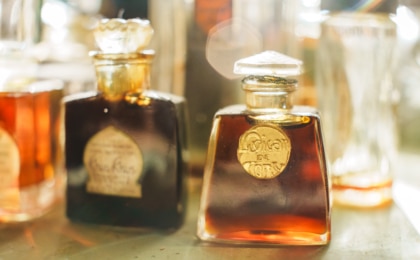
Creating Harmony: The Composition of Natural Perfumes

We live in a world saturated with scent. Our air fresheners, laundry detergents, cosmetics, body products, and even most perfumes are infused with synthetic fragrance compounds designed to imitate nature.
by NW School of Aromatic Medicine

Aromatherapy
Aromatic History & Lore
Human/Plant Connection
Incense as Medicine
Ritual
Sustainability
December 18, 20250Comments

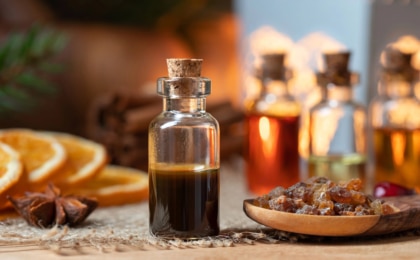
The Sacred Scents of the Season: Frankincense, Myrrh & Beyond

The scents of Cinnamon, Clove, Nutmeg, and Ginger drift from the oven. Fresh Pine fills the living room from the Christmas tree and evergreen boughs framing the fireplace. Dried Oranges
by NW School of Aromatic Medicine
Aromatherapy
Aromatic History & Lore
Aromatic Recipes
Incense as Medicine
Ritual
December 11, 20250Comments

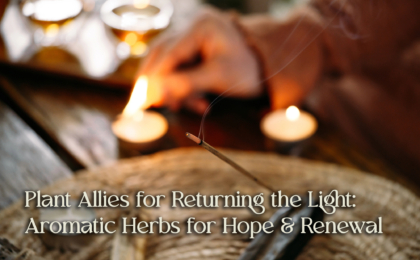
Plant Allies for Returning the Light: Aromatic Herbs for Hope & Renewal

On the morning of the Winter Solstice, something subtle – but powerful – happens. The world seems to slow down. The sun lingers at its lowest point on the horizon,
by NW School of Aromatic Medicine
Aromatherapy
Human/Plant Connection
Incense as Medicine
Ritual
December 4, 20250Comments

Aromatic Rituals for Holiday Stress, Boundaries & Nervous System Support

You’re standing in your childhood kitchen when it begins: your mother casually asking why you’re still single (again), your sister spiraling about seating arrangements, and your uncle launching into opinions
by NW School of Aromatic Medicine
Aromatherapy
Aromatic Recipes
Herbal Medicine
Topical Medicine
November 13, 20250Comments

DIY Aromatic Gifts: 8 Recipes for a Heartfelt Holiday

As the holiday season approaches, what better way to share the spirit of warmth and love than through handmade, aromatic herbal gifts? In this DIY holiday gift blog, we've compiled a
by NW School of Aromatic Medicine
bundle of fresh mugwort herbs for dreamwork
Aromatherapy
Human/Plant Connection
Incense as Medicine
Ritual
June 10, 20250Comments

Aromatic Plants and Dreams: Scents for Deep Sleep and Inner Wisdom

Have you ever woken from a dream so vivid it blurred the line between memory and imagination? Dreams can be fun, strange, symbolic, emotional, or eerily real. They arise most often
by NW School of Aromatic Medicine
Bottles of essential oil with frankincense resin and candles
Aromatherapy
Incense as Medicine
April 10, 20250Comments

Aromatherapy for Stress Relief & Relaxation

Turn on the news, scroll through social media, or simply glance at your to-do list, and it’s clear – stress has become an unavoidable part of modern life. From the
by NW School of Aromatic Medicine
Aromatherapy
Aromatic History & Lore
Herbal Medicine
Incense as Medicine
Ritual
Topical Medicine
January 16, 20250Comments

Tree Resins: Unlock the Power of this Underappreciated Natural Remedy

There’s something very magical about tree resins. These golden, aromatic droplets are born from a tree’s natural healing process – a protective substance that seals wounds, guards against infection, and
by NW School of Aromatic Medicine
Aromatherapy
Aromatic History & Lore
Herbal Medicine
Human/Plant Connection
Incense as Medicine
Plant Profiles
Ritual
Sustainability
Topical Medicine
December 19, 20240Comments

The Power of Frankincense: Boosting Immunity and Overall Well-Being

Thousands of years ago, in ancient kingdoms, the air was thick with the rich, aromatic smoke of Frankincense. This sacred resin, harvested from Boswellia trees, played a central role in
by NW School of Aromatic Medicine
Aromatherapy
Aromatic History & Lore
Aromatic Recipes
Human/Plant Connection
Incense as Medicine
Incense Crafting
Ritual
October 1, 20240Comments

Incense 101: Aromatic Medicine Beyond Incense Sticks

The scented swirls of incense smoke carry a profound story – the life cycle of each botanical ingredient, the journey from seedling to thriving herb, nurtured by the sun and
by NW School of Aromatic Medicine
« Older Articles

aromatic_medicine

🌺Aromatic Plant Medicine
🌿Artisan Incense Crafting
🌼Natural Perfumery
Learn Online:

Some scents linger in the memory like a song that Some scents linger in the memory like a song that never quite finishes; others vanish the moment after we notice them. But why?

When it comes to natural perfumery, why do some fragrances feel flat, fleeting, or empty, while others unfold like a story: dimensional, alive, and utterly satisfying? The difference isn’t synthetic additives. It’s balance.

In our newest blog, we explore the architecture of natural perfume: how top, heart, and base notes work together, why some scents feel empty while others feel whole, and how plants themselves teach us about balance, memory, and beauty.

If you’ve ever felt drawn to scent, ritual, perfumery, or the poetry of plants… this one is for you.

 ✨ Read “Creating Harmony: The Composition of Natural Perfumes” by clicking the link in our bio.

---------

 #naturalperfume #aromaticplants #aromatherapy #aromaticmedicine #naturalperfumery
Enfleurage: such a whimsical term for a truly beau Enfleurage: such a whimsical term for a truly beautiful tradition. Enfleurage is a time-honored and gentle method used to extract essential oils from fragile flowers, particularly those with volatile oils that can be damaged by the high heat required in traditional steam distillation.

A lengthy labor of love, this extraction method utilizes odorless vegetable or animal fats to capture aroma and essential oils. 

Fresh aromatic flowers are placed on a thin layer of highly purified fat or oil, such as lard, tallow, or coconut oil in a glass or ceramic plate. Over time, the fat absorbs the aromatic compounds from the flowers, which can take a few hours up to several days to fully extract.

Once the flowers release their fragrance into the fat, they’re removed and replaced with fresh ones to continue the extraction process. On average, flowers are replaced at least 35 times, but sometimes it can be up to 50 times!

Then, the fat is either scraped off and kept as an enfleurage pomade to be used as solid perfume, or dissolved in alcohol to extract the aromatic compounds. The alcohol is then evaporated, leaving behind a highly concentrated floral essence, which may undergo further processing or dilution before being used in perfumery.

While enfleurage was once a popular method for extracting essential oils, it’s not commonly used today due to its labor-intensive nature. Many enfleurage absolutes are expensive because they’re very time-consuming, however, it’s an effective form of extraction that matches closely with the floral itself.

Some commonly enfleuraged flowers include Jasmine, Tuberose, Rose, Gardenia, and Orange Blossom. This gentle and ancient extraction process effectively preserves these gorgeous and delicate fragrances.

 #enfleurage #enfleurageperfume #jasmine #roseenfleurage #naturalperfume #perfumery
What is Oud? (Pronounced “ood,” like “food” withou What is Oud? (Pronounced “ood,” like “food” without the “f”) Oud is used extensively in natural perfumery, incense, and traditional aromatic medicine due to its rich aroma and therapeutic properties.

But where does it come from? 

Oud is a highly revered essential oil derived from the resinous heartwood of Agarwood, or Aloeswood, from various Aquilaria species native to Southeast Asia. 

The tree produces a resinous substance in response to fungal infections, insect infestations, or other natural stresses. This pleasantly fragrant secretion gradually accumulates and darkens the surrounding wood, resulting in the formation of oil-dense Agarwood. The wood itself is often burned in many forms in various incense traditions. 

Oud oils are also extracted through various methods, including steam distillation, hydro-distillation, and solvent extraction.

In perfumery, Oud oils are highly valued for their exotic aroma, as well as for their longevity and depth. They’re often used as base notes or accords in fragrance compositions, adding richness, complexity, and a sense of opulence to perfumes. The aroma of Oud oils is multi-layered, often described as woody, resinous, balsamic, and slightly animalic. 

Oud oils vary in scent profile, reliant on factors such as the species of Agarwood tree, the region of origin, the age of the wood, and the extraction method used. This results in unique and subtle nuances and differences between each type of Oud oil out there.

Have you ever encountered Oud oils? What’s your favorite Oud?
Did you know that most natural perfumes are made w Did you know that most natural perfumes are made with essential oils and absolutes?

Essential oils are considered to be the soul or essence of a plant, according to ancient alchemical wisdom. When you inhale the essential oil, or soul of a plant, you’re entering into direct communication with the plant’s energy – it interacts with your spirit on a deep level. 

Many modern perfumes contain synthetic ingredients that are not good for us or the planet. 

Natural perfume captures the essence of aromatic plants and embodies the ancient roots of aromatic traditions, offering the potential to influence us on mental, emotional, spiritual, and physical levels.

Here are 5 common plants used in natural perfumery:

Rose: Prized for its sweet, floral scent, Rose is often used as a top or heart note in natural perfumes.

Citrus: Fruits and peels from Bergamot, Lemon, Lime, Orange, and Grapefruit are popular choices in perfumes, often serving as top notes to provide a bright and refreshing opening to fragrance compositions.

Sandalwood: This ancient wood possesses a creamy, woody aroma and is often used as a base note in perfumes, imparting a lingering, sensual scent. It’s also commonly used as a carrier oil for attars, a traditional natural perfume from India and the Middle East.

Jasmine: This flower emits a rich, mysterious floral fragrance and is commonly used as a top or middle note in perfumes.

Myrrh resin: Valued for its rich, warm, and slightly sweet aroma, Myrrh is often used as a base note to add depth, warmth, and complexity to fragrances, and it's prized for its ability to enhance the overall composition of a perfume.

There are actually hundreds of different types of aromatic plant materials used in natural perfumery, many of which are not commonly used in aromatherapy – this list just scratches the surface!
Did you know there are different types of natural Did you know there are different types of natural perfumes? Natural fragrance comes in many forms: alcohol-based, oil-based, attars, and solid perfumes. 

Most of us have heard of spray perfumes (alcohol-based) and oil perfumes, but solid perfumes are not as commonplace. 

Solid fragrances have a solid-like consistency like a balm or paste, instead of a liquid, and are typically made with a combination of waxes like beeswax or carnauba wax, and carrier oils such as jojoba or coconut oil, and other aromatic materials. 

They can be longer-lasting on the skin compared to some traditional liquid perfumes due to the slow evaporation of the wax and oil base.

Solid perfumes, with their deep roots in various cultures, are making a comeback due to their use of natural botanical ingredients, portability, longevity, and overall convenience.

 #naturalfragrances #naturalperfumery #essentialoils #aromatherapy #solidperfume
Something we often don’t talk about in aromatherap Something we often don’t talk about in aromatherapy is the concept that pleasure itself is medicine. 🍂 When you encounter a scent that brings genuine delight – whether it's the smell of rain on earth; bread baking in the oven; Pine in fresh, forest air; or your grandmother's perfume – your nervous system responds. The body shifts out of a stress response and into a state of safety and ease. This is a form of medicine.

We see this in research on forest bathing, on the comforting power of familiar scents, and on how pleasant aromas regulate the autonomic nervous system. If something reliably brings the body into a state of ease, that’s a form of medicine. 

Beauty and pleasure are not separate from healing. They’re a pathway into it.

This is where natural perfumery becomes a powerful ally to aromatherapy: it reminds us that remedies can – and perhaps should – be beautiful. That healing can be sensorial. 

Natural perfumery and aromatherapy are simply two expressions of the same ancient aromatic plants – one speaking in poetry, the other in physiology. And together, they offer a fuller vocabulary for the beautiful healing potential of scent. 

In our new blog, we’ll explore this idea and journey through the realms of natural perfumery and aromatherapy, exploring their differences, their shared roots, and the ways they deepen and enrich one another.

🌿 Read the full article “Natural Perfumery & Aromatherapy: Where Scent Becomes Medicine” at the link in our bio.

_____________
#naturalperfumery #aromatherapy #aromaticplants #aromaticmedicine #naturalperfume #perfumery #pleasureismedicine
There was a time when the same plants were used fo There was a time when the same plants were used for prayer, beauty, medicine, and ritual.

In our newest blog, we explore how aromatherapy and natural perfumery grew from the same roots, how they became divided in modern culture, and why bringing them back together matters for healing, beauty, and our relationship with plants.

This article came from a simple question we kept returning to: What if scent was never meant to be divided into “medicine” and “beauty”?

What if it was always both?

Scent has never belonged to a single lane. It has always spoken simultaneously to the body, the heart, and the psyche.

✨ Read the full article “Natural Perfumery & Aromatherapy: Where Scent Becomes Medicine” at the link in our bio.

________________
#naturalperfumery #aromatherapy #perfume #aromaticplants #essentialoils #aromaticmedicine #cleanbeauty
Across cultures and centuries, aromatic plants hav Across cultures and centuries, aromatic plants have lived at the crossroads of beauty and healing, ritual and emotion, devotion and daily life. 

Ancient temples burned Frankincense as an offering and antiseptic. Egyptian priests formulated Kyphi incense to honor the gods and ease the mind into sleep. Medieval monasteries distilled Rose water for prayer and for healing wounds.
Scent was never just one thing – it was always beauty and medicine, devotion and pragmatism.

Yet somewhere along the way, modern culture drew a line: aromatherapy became "functional healing" and perfumery became "luxury vanity." One became clinical, the other cosmetic. One earned respect among healers, the other raised eyebrows.

But what if that division was never meant to be? What if natural perfumery and aromatherapy are simply two expressions of the same ancient aromatic plants – one speaking in poetry, the other in physiology?

In our latest blog, we explore:
✨ How natural perfumery and aromatherapy enrich one another
✨ Why beauty and healing were never meant to be separate
✨ Why pleasure itself is a form of medicine
✨ The problem with synthetic fragrance (and why transparency matters)
✨ How learning scent formulation transforms all your remedies

The Rose that calms anxiety in an aromatherapy blend is the same Rose that evokes beauty in a natural perfume. 

The plant doesn't know the difference. The body doesn't either.

🌿 Read the full article at the link in our bio.

_____________
#naturalperfume #aromatherapy #syntheticfragrance #perfume 
 #naturalperfumery #aromaticplants #aromaticmedicine
What lay within the depths of a pharaoh's burial c What lay within the depths of a pharaoh's burial chamber? Imagine spending years scouring the Valley of the Kings, a rugged landscape where Egyptian pharaohs were buried for centuries, all in search of a secret hidden tomb.

In 1922, archaeologists finally unearthed a small step buried in the sand, eventually digging away the dirt that covered the most famous ancient Egyptian discovery of all time: the tomb of Pharaoh Tutankhamun. 

This tomb had been sealed for 3,000 years, its contents shrouded in mystery. Archaeologists faced uncertainty about what lay within; many tombs in the area had fallen victim to looting, often leaving them practically empty.

Luckily, ancient valley guards had protected the nearly 5,000 treasures resting inside, placed there to accompany Pharaoh Tutankhamun in his afterlife. 

Pharaoh's tombs were adorned with lavish wall paintings, statues, and heaps of glittering gold artifacts. Ancient Egyptians believed pharaohs should be surrounded by all they would need in the afterlife, including everyday items like clothing and food; ceremonial statues and jewelry; along with magical and spiritual pieces.

One of the most interesting finds: alabaster perfume vases extravagantly decorated with Egyptian art and statues. These vessels held fragrant perfume oils used for religious ceremonies, personal adornment, aromatherapy, and as offerings to the gods.

Perfumes were considered a luxury in ancient Egypt, where they had both practical and spiritual benefits. These perfumes were typically made from natural materials such as flowers, herbs, spices, and resins. Common aromatic plants found in Egyptian perfume include Myrrh, Frankincense, Lotus, Rose, Lily, Cinnamon, and Cedarwood.

Ancient Egyptians believed that perfumes had the power to purify, protect, and please the gods, as well as enhance one’s beauty and health. They also believed these aromatic treasures were there to guide people in the afterlife, which is why they were commonly buried with pharaohs.
If you’re feeling down, the aromatherapeutic quali If you’re feeling down, the aromatherapeutic qualities of Ylang-Ylang might be just the thing you need.

Ylang-Ylang is the ultimate mood booster, and is traditionally used for relieving stress and depression.

​​Several scientific studies have shown that this aromatic plant can not only help reduce anxiety, but also boost self-esteem.

Have you ever experienced the emotional and mental benefits this magical plant has to offer?

__________
 #ylangylang #ylangylangoil #ylangylangessentialoil #ylangylangbenefits #aromatherapy #naturalmoodbooster
Brrr – it’s time to heat things up! 🔥 Warming herb Brrr – it’s time to heat things up! 🔥 Warming herbs are plants known for their ability to literally turn up our internal temperature – they help increase circulation and heat in your body so that you feel warmer. 

These types of herbs and spices are ideal for the freezing temperatures we get this time of year here in the Pacific Northwest.

My top 5 favorite warming aromatic herbs: 

✨ Cinnamon: sweet and spicy; exotic, warming and energizing aroma known to help boost the immune system.

🔥 Cardamom: sweet and spicy scent with woody-citrus undertones, it’s believed to help open up the airways and may help increase airflow to your lungs and improve breathing. 
 
✨ Clove: spicy, warming, and energizing aroma that’s known to help counteract fatigue. 

🔥 Ginger: sharp, spicy scent that has strengthening qualities, commonly used internally to help support healthy digestion. 

✨ Nutmeg: warm and spicy aroma known to be both stimulating and sedating – perfect for exhausting stress because it’s both calming and uplifting. 

___________
 #warmingherbs #aromaticherbs #aromaticspices #winterspices #winterherbs #herbalism #aromaticmedicine
The sweet, sacred Frankincense resin we know and l The sweet, sacred Frankincense resin we know and love is a rich terpenoid oleoresin harvested from Boswellia trees, a group of about 24 species in the Torchwood family, alongside other aromatic icons like Elemi and Myrrh. 

Known as “tears” for the way they drip from the bark, these golden drops are the tree’s natural defense system: when injured, the bark releases this resin to seal the wound, protect against infection, and guard against pests.

Frankincense is one of the oldest aromatic medicines on the planet. For thousands of years, it has been traded across ancient civilizations and deeply rooted in spiritual practices from Judaism and Hinduism to Christianity and Islam and beyond. 

Its role in rituals of cleansing and renewal reflects a universal human desire to connect to the sacred. This enduring resin transcends cultural boundaries, offering a sense of balance and grounding that has resonated across generations.

Its name comes from the medieval French word franc (“pure”) and the Latin word incensium (“to smoke”), echoing its ancient role as “pure smoke” used for purification, protection, and connection to the divine. 

Across cultures and religions, the rising smoke of Frankincense has symbolized prayers carried to the heavens and the bridge between the material and spiritual realms. 

🔥 Swipe through to explore the aromatic and therapeutic gifts of this sacred resin.

✨ P.S. Our sister company, Higher Mind Incense, carries 4 different species of sustainably sourced Frankincense resin! You can find them at the link in our bio.

____________
#frankincense #incense #incenseresin #naturalincense  #frankincenseoil #frankincenseresin #FrankincenseBenefits
If you tend to feel a little stuck and stagnant in If you tend to feel a little stuck and stagnant in the Winter months, try burning incense to help freshen up your home environment. Being indoors for long periods of time can be stifling, but burning incense can help to bring new energy to a space. 

Aromatic herbs like Cedar, Sagebrush, and Juniper are traditionally burned to energetically clear negative energy from a space – but did you know they also physically clean the air? 

These specific herbs are antimicrobials that act like air purifiers and can reduce airborne bacteria in a space. 

Try burning your favorite aromatics to help transform your energy and your home, both physically and energetically. ✨

__________
#juniper #cedar #sage #sagebrush #incense #naturalincense #aromaticmedicine
Is this the year you say YES to your plant path? 🌱 Is this the year you say YES to your plant path? 🌱 

As we step into the new year, we want to ask you: What are you envisioning for yourself in this next chapter? What are you cultivating? Calling in? Committing to?

Do you see yourself growing into a more confident herbalist…
a knowledgeable aromatherapist…
a deeply connected plant person who trusts their intuition and wisdom?

Imagine if you could:

🌿 Feel confident in your plant path: no more second-guessing or overwhelm
🌿 Immerse yourself in inspiring, expert-led plant talks that weave aromatherapy & herbalism together
🌿 Experience each plant holistically, supporting physical, emotional & spiritual well-being
🌿 Explore every layer of plant wisdom – medicinal uses, folklore, energetics, recipes & spiritual gifts – all in one place
🌿 Learn through all your senses; not just studying plants, but experiencing & embodying them
🌿 Step into a welcoming, supportive community, guided by over 2 decades of trusted clinical experience & lived plant connection

This is exactly what the Aromatic Medicine Garden was created for.

And for the next 48 hours only, we’re opening the gate with a special invitation:
✨ Join the Aromatic Medicine Garden Annual Plan and receive 2 full months FREE

When you join today, you’ll unlock instant access to:

🌼 Deep Plant Talks & Plant PDFs (+1 added monthly!):
Inspiring explorations of a single aromatic plant, covering traditional herbal uses, aromatherapy, energetics, folklore, recipes, botany, cultivation tips & more.

🌼 Live Q&A Calls (every other month)
Learn directly and ask questions with expert clinical herbalist & aromatic medicine practitioner Erika Galentin.

🌼 Core Teachings Library
Foundational lessons on energetics, body systems, sustainability, sourcing, theory & formulation.

🌼 Step-by-Step Remedy Tutorials 
Create tinctures, glycerites, cordials, oil infusions, salves, distillations, electuaries & more.

⏳​​​​​​​ Don’t wait too long – this 48-flash sale ends January 3 at midnight PST.

2026 is your year. Everything you need to deepen your aromatic medicine practice is right here.

🌱 Click the link in our bio to start your journey + claim your 2 FREE months!
DIY Herbal Chai Tea 🫖✨ This time of year, I love b DIY Herbal Chai Tea 🫖✨ This time of year, I love brewing up big batches of aromatic herbal beverages to sip while relaxing, reading, writing, or winding down from the day. One of my favorites is Chai tea, the traditional way, using whole aromatic herbs. 

If you’re a chai lover like me, but you’ve only had chai from Starbucks or a Yogi tea bag, you gotta try this recipe!

Ingredients:

One handful of sliced fresh Ginger (start with a few chunks and add more if you like it spicy)
Handful of Cardamom pods
Handful of Cinnamon sticks
½ handful of Fennel
¼ handful Black Peppercorns 
1-2 pieces of Clove (any more and it can be bitter!)
Touch of Vanilla
Touch of honey or sweetener of your choice

Directions:

Add all ingredients to a big pot of boiling water, cover, and reduce to a simmer. It’s important to keep it covered so you don’t lose any potent health-promoting aromatics and essential oils!

Allow to simmer for 1-3 hours. The longer it simmers, the stronger the tea! 

Place a tea strainer in your mug and ladle in your chai. Add cream or nut milk if you’d like! Enjoy. 🍵

__________
#chaitea #herbalchai  #chairecipe #herbaltea #chaitearecipe #aromaticherbs #wintertea
The New Year is a time for ritual and resolutions. The New Year is a time for ritual and resolutions. ✨ It’s a symbolic time to cleanse the things we no longer need to make way for the things we want to cultivate in our lives. 

One of my favorite New Year's rituals is to light a fire and set intentions for the New Year. 

There are many different aromatic plants known to help cleanse the energy of people and spaces. I like to throw a loose incense blend of these plants into the fire to help reinforce and manifest these intentions. 

Try making this loose incense blend recipe containing some of my favorite energy-cleansing aromatics:

🔥 New Year's Cleansing Incense Recipe 🔥 

Ingredients:
½ cup Cedar leaves
½ cup Juniper leaves or berries
¼ cup Lavender flowers
¼ cup Mugwort leaves

Directions:
Combine ingredients into a bowl and gently mix with a spoon or your hands. Store in an airtight container away from sunlight (be sure your incense is 100% dry beforehand, or it can mold when stored). Burn it on incense charcoal, or sprinkle it into a ritual fire, and enjoy! ✨

___________
#newyears #newyearsritual #incenserecipe #incenseritual #incense #naturalincense  #intentionsetting
Happy New Year! 🎉🌟 As we bid farewell to this year Happy New Year! 🎉🌟 As we bid farewell to this year and welcome the next, let’s take a moment to reflect on all that we’ve experienced—the blessings, the challenges, and the growth they’ve brought. Take some time to celebrate your wins and all that you've accomplished this year, big or small.

Every day is a chance to begin again. Let’s welcome the opportunity for fresh beginnings and brighter days ahead.

Burn some incense today and take time to contemplate your vision for the year to come:
✨ Celebrate your milestones: what brought you joy this year?
✨ What inspires you as you look forward?
✨ What clutter, whether physical or emotional, can you let go of?

This is a time to honor the beauty of the season, celebrate old traditions, or create new ones. Decorate your space with sacred plants like evergreens, light candles to symbolize hope and renewal, and burn incense as you set intentions for the coming year.

What aromatics are you burning today? What plants are calling to you?

Here’s to a year filled with growth, connection, and inspiration. 

From all of us at The Northwest School of Aromatic Medicine, Happy New Year! 🌿✨

_____________
#happynewyear #newyearrituals #incense #naturalincense #sacredscents #newyear
The Smudging Nights of Northern Europe and Scandin The Smudging Nights of Northern Europe and Scandinavia: The Incense of Winter ❄🔥

“Our ancestors called the 12 days between December 25 and January 6 – the time between the first day of Christmas and Epiphany (the day of the holy kings) – the 'raw nights.' They are now more generally known as the 12 nights of Christmas. They also recognized 4 'smudging nights' during which the people smudged their homes and stables with herbs to protect against evil influences. 

Old tradition has it that during these nights – especially the nights before St. Thomas Day, Christmas, New Year’s Day, and Epiphany – the spirits are out, haunting. In these dark times, ruled by elemental powers, the spectral army of Wotan’s [Odin’s] wild hunt hurried through the clouds, uncanny spirit beings fighting the battle between light and darkness.

Rituals were to ward off the demonic influences and to conjure a rebirth of the sun after the dark days. At nightfall, ‘house and stable were smudged with healing herbs: Mugwort, Juniper, Milk Thistle, Fir resin’ (Storl 2000b, 150). Because of these smudging rituals (originally pagan and later performed by Catholic priests), these nights were known as 'smudging nights.' 

People burned Juniper and many other aromatic substances to drive out demons. The smoke transformed the aromatic woods and herbs into a scent that was supposed to implore the gods to take mercy on human beings and to keep away all evil. They also placed various combinations of magical herbs (called the 9 Herbs) in their beds for protection and mixed them into their animals’ food. 

The smudging nights are still taken seriously in Scandinavia.” 

– Excerpt from “Pagan Christmas “ by Christian Ratch and Claudia Muller-Ebeling

___________
#paganchristmas #pagan #christmas  #12nightsofchristmas  #smudging #rituals  #smudgingherbs
According to old Northern European folklore, dark According to old Northern European folklore, dark spirits come out during the “Twelve Nights of Christmas” between December 25 and January 6. Traditionally, those living during this time practiced what they called “smudging nights'' in the depths of winter, where they burned aromatic plants in their homes and stables for 4 nights in a row to protect against evil spirits and influences. 

These rituals, originating from Pagan cultures and later performed by Catholic priests, were used to ward off demons and to summon the rebirth of the sun, welcoming warmth and light after the dark days.

__________
#pagan #12nightsofchristmas #smudging #ancientfolklore #aromaticplants #winterrituals
Winter is my favorite season for incense. There’s Winter is my favorite season for incense. There’s nothing quite like burning incense on a cozy Winter night, sitting by the fireplace. 

This time of year, I gravitate towards warming aromatics, like Cinnamon, Cloves, and Ginger. Or, burning any type of Evergreen plant or resin to bring the spirit of Winter inside our home. 

What’s your favorite type of incense to burn this season?

__________
#incense #naturalincense #winterincense #evergreens #cinnamon #cloves #ginger
Follow on Instagram

OFFERINGS

  • Aromatic Medicine Garden Membership
  • Incense Crafting Course
  • Botanical Resins & Gums Course
  • Materia Aromatica Ebook

QUICK LINKS

  • About
  • Courses
  • The Aromatic Medicine Blog
  • The School
  • Evan Sylliaasen
  • Contact
  • Privacy Policy
  • Terms & Conditions

FOLLOW US

  • Facebook
  • Instagram
  • Youtube

OUR NEWSLETTER

Stay in the know on new releases and special offers

Loading

support@aromaticmedicineschool.com

© 2026 The Northwest School of Aromatic Medicine, All rights reserved. | Designed by QeRetail