Skip to content
The Northwest School of Aromatic Medicine
  • About
  • Courses
  • Resources
    • The Aromatic Medicine Blog
    • Video Library
  • Shop
  • Contact
  • Close Search Form
    Open Search Form
  • facebook
  • instagram
  • youtube
Student Login
Tag

incense history

Aromatherapy
Aromatic History & Lore
Human/Plant Connection
Incense as Medicine
Ritual
Sustainability
December 18, 20250Comments

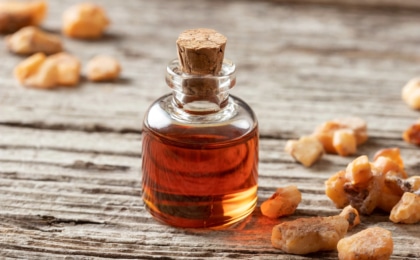
The Sacred Scents of the Season: Frankincense, Myrrh & Beyond

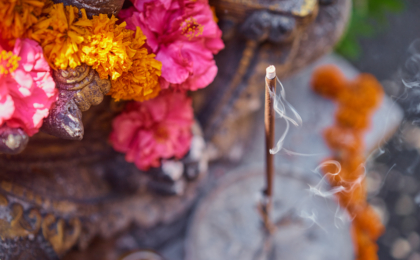
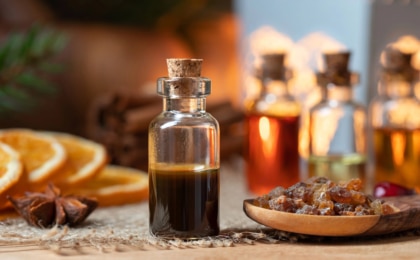
The scents of Cinnamon, Clove, Nutmeg, and Ginger drift from the oven. Fresh Pine fills the living room from the Christmas tree and evergreen boughs framing the fireplace. Dried Oranges
by NW School of Aromatic Medicine
Aromatherapy
Aromatic History & Lore
Ayurveda
Herbal Medicine
Incense as Medicine
Incense Crafting
Natural Perfumery
Plant Profiles
November 7, 20256Comments

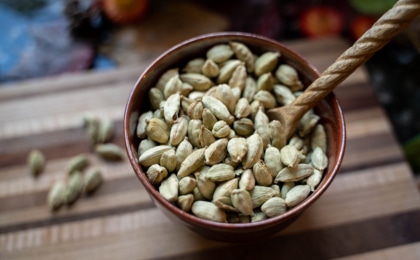
Cardamom Benefits: The Ancient Spice for Digestion, Clarity, and Vitality

Imagine a single seed pod, no larger than your fingertip, holding within it the power to kindle digestive fire, clear stagnant breath from congested lungs, and lift the fog of
by NW School of Aromatic Medicine
Incense as Medicine
October 16, 20250Comments

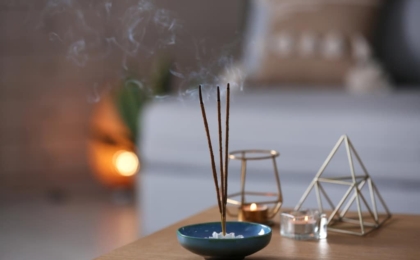
5 Common Myths About Incense (and the Truth Behind Them)

Lighting incense has a way of transforming not just the space around you, but the atmosphere within you. The match strikes, the incense tip glows amber-red, and within moments the
by NW School of Aromatic Medicine
Incense Crafting
October 9, 20250Comments

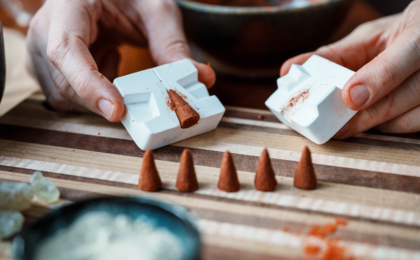
4 Powerful Reasons to Make Your Own Incense

Close your eyes for a moment and imagine: a thin ribbon of smoke rising from a hand-rolled cone of incense, its earthy-sweet scent unfurling through the room like a gentle
by NW School of Aromatic Medicine
glass cork bottle of benzoin oil next to benzoin resin on a counter
Aromatherapy
Aromatic History & Lore
Incense as Medicine
Incense Crafting
Natural Perfumery
Plant Profiles
Ritual
August 13, 20250Comments

Why Benzoin Resin Belongs in Your Apothecary: Benefits & Ritual Uses

Imagine something that looks like a beautiful golden rock, but upon closer inspection, you're greeted with sweet, balsamic, resinous notes, with hints of vanilla that feel like a warm embrace.
by NW School of Aromatic Medicine
Aromatherapy
Aromatic History & Lore
Herbal Medicine
Incense as Medicine
Ritual
Topical Medicine
January 16, 20250Comments

Tree Resins: Unlock the Power of this Underappreciated Natural Remedy

There’s something very magical about tree resins. These golden, aromatic droplets are born from a tree’s natural healing process – a protective substance that seals wounds, guards against infection, and
by NW School of Aromatic Medicine
Aromatherapy
Aromatic History & Lore
Herbal Medicine
Human/Plant Connection
Incense as Medicine
Plant Profiles
Ritual
Sustainability
Topical Medicine
December 19, 20240Comments

The Power of Frankincense: Boosting Immunity and Overall Well-Being

Thousands of years ago, in ancient kingdoms, the air was thick with the rich, aromatic smoke of Frankincense. This sacred resin, harvested from Boswellia trees, played a central role in
by NW School of Aromatic Medicine
Aromatherapy
Aromatic History & Lore
Aromatic Recipes
Herbal Medicine
Plant Profiles
Topical Medicine
December 9, 20240Comments

The Many Benefits of Jasmine

If you’ve ever had the pleasure of smelling Jasmine, you know how captivating its scent is. Beyond its delightful fragrance and ornamental appeal, Jasmine offers a treasure trove of health
by NW School of Aromatic Medicine
Aromatherapy
Aromatic History & Lore
Aromatic Recipes
Human/Plant Connection
Incense as Medicine
Incense Crafting
Ritual
October 1, 20240Comments

Incense 101: Aromatic Medicine Beyond Incense Sticks

The scented swirls of incense smoke carry a profound story – the life cycle of each botanical ingredient, the journey from seedling to thriving herb, nurtured by the sun and
by NW School of Aromatic Medicine
Eucalyptus Benefits for Sinus Congestion and Allergies
Aromatherapy
Aromatic History & Lore
Herbal Medicine
Incense as Medicine
Plant Profiles
Topical Medicine
August 22, 20240Comments

Eucalyptus Benefits for Sinus Congestion and Allergies

It’s the middle of the night, and you’re tossing and turning in bed, unable to sleep because you can’t breathe through your nose. Whether it's due to a cold, seasonal
by NW School of Aromatic Medicine
« Older Articles

aromatic_medicine

🌿 Follow us on Instagram for daily inspiration, plant knowledge, aromatic wisdom, and one-of-a-kind courses 🌿

Yarrow’s Latin name, Achillea millefolium, honors Yarrow’s Latin name, Achillea millefolium, honors Achilles, the great warrior of Greek myth who used Yarrow to tend his soldiers’ wounds in battle. 

Just as Yarrow helps seal physical wounds, it can strengthen energetic boundaries & support empaths who absorb others’ emotions.

But to truly understand Yarrow's emotional support, we have to go back to the myths that helped shape its name.

In Greco-Roman lore, Chiron, the wise centaur who taught Achilles about medicine, was struck by a poisoned arrow & (though immortal) was condemned to endless suffering. His pain became a lifelong teacher, shaping his ability to tend the wounds of others with unmatched compassion. He was known as the wounded healer.

Achilles, on the other hand, embodies the archetype of the wounded warrior. His mother dipped him in the River Styx to make him invincible, but his heel remained exposed and vulnerable – the famous “Achilles heel.” 

Through these stories, Yarrow became known as the herb of the wounded healer & wounded warrior: uniting strength & vulnerability, courage & compassion. 

So many people find their way to aromatic medicine and herbs through a similar story; drawn in, as Chiron was – sometimes not by choice but by necessity – to find healing. Through that search for relief and meaning, we learn not only how to mend ourselves but how to support others with hard-won understanding & skill. 

This is the essence of the wounded warrior-healer: wisdom earned through suffering, then generously shared.

Yarrow honors that inner transformation. It reminds us that to serve as a steady presence for others, to truly support others, we must continue tending to our own wounds, too (because that work is never truly finished). 

In our new video blog, we'll dive into the whole story of Yarrow together:

✨ The mythology & folklore behind its name
✨ How it supports digestion, circulation, skin & uterine health
✨ Its role in aromatic medicine (essential oil, hydrosol, incense, tea, tincture)
✨ Why so many empaths & healers feel called to work with it

🌿 Comment “YARROW” to get the full Yarrow vlog.

________
#yarrow  #herbalism #aromatherapy #empaths #herbalfolklore #greekmythology
Absolutes vs essential oils: what’s the difference Absolutes vs essential oils: what’s the difference?

Essential oils are extracted in various ways, most often through steam distillation, but also solvent extraction, and other methods. Steam distillation extracts the volatile oils from plant materials using a process of heating and cooling water vapor. The end products of this process are essential oils and hydrosol.

Absolutes, on the other hand, are highly concentrated aromatic substances similar to essential oils. They are obtained through a solvent extraction process instead of steam distillation. This method is typically used for delicate or highly fragrant plant materials that cannot be effectively distilled using steam distillation. 

In the solvent extraction process, plant materials are submerged in a solvent, such as ethanol, hexane, or carbon dioxide, to release their aroma. The solvent mixture dissolves the aromatic compounds of the plant and releases them into the liquid, and then the solvent is removed, leaving behind a fragrant, concentrated mixture known as an absolute. 

It's important to note that absolutes may or may not contain trace amounts of the solvent used in the extraction process. Some folks choose to avoid using absolutes for this reason, others feel the amount is too low to be impactful in any way. 

By definition, both absolutes and essential oils are highly concentrated liquid extracts containing volatile chemical compounds from medicinal and aromatic plants. 

Absolutes are often more expensive than essential oils due to the complexity of the extraction process and the amount of raw material required to produce them. Typically, you'll see bottles of essential oils and absolutes sold side by side in stores. 

To know whether it’s an essential oil or absolute, carefully read the label and look for the word “absolute,” and often you can also find the solvent that was used listed as well. Some examples of aromatic plants that are commonly processed into absolutes include Jasmine and Rose. 

__________
#essentialoils #absolutes #aromatherapy #essentialoileducation #aromaticmedicine #aromatherapytips #AromatherapyEducation
Have you ever had a physical symptom you knew was Have you ever had a physical symptom you knew was directly related to your emotions, thoughts, or something even spiritual?

Or maybe had an intuitive sense that the root cause of someone's problem wasn't exactly physical?

If you've ever wondered how to trace these relationships between the body, mind, and soul — to make it easier to use herbs to help people on these more subtle levels — you're in luck!

My good friend Sajah Popham just did all the hard work and put it all together in the Astro-Herbalism Mini-Course.

Ancient physicians and founding herbalists like Paracelsus and Nicolas Culpeper understood that the most effective path of healing with herbs was through the understanding of the stars and planetary bodies.

The School of Evolutionary Herbalism is carrying on this powerful tradition — offering important insights into exactly how astrology and herbalism correspond to each other in their free series.

You'll learn how to see the connections between the body, emotions, thoughts, and the evolutionary process of the soul — and how to translate these into finding the specific remedy, whether that's incense, essential oil, or herbs, that gets to the roots of our health problems.

If this speaks to you, sign up via the link in bio and start watching the first lesson now. You'll gain a higher perspective about your work with plants that will change everything. 🌿✨

This mini-course is only available for a limited time — if you're curious about the connection between the stars and the plant kingdom, now's your chance!

#herbalmedicine #astroherbalism #astrologyandherbalism #astrology #holistichealth
Forest Bathing at Home 🌲 You don’t need to visit Forest Bathing at Home 🌲

You don’t need to visit a forest to reconnect with nature.

Place a few sprigs of Pine, Cedar, or Fir in hot water on your stove, or a few drops of EO in your diffuser. Inhale deeply. Exhale fully. Repeat.

These aromatic evergreens can reduce stress, clear the mind, and uplift your spirit…all from the comfort of home.

What's your favorite forest scent?

_____________
#forestbathing #forestsmell #forestenergy #forestbathingtherapy #forestscent #pine #cedar #fir
Want to go deeper with Yarrow? In our newest vlog Want to go deeper with Yarrow?

In our newest vlog, we explore one of our favorite plants in depth. You’ll discover:

• The mythology of Achilles and Chiron
• Yarrow’s traditional uses across cultures
• How it supports digestion, circulation, the uterus & more
• Its role in aromatic medicine and emotional boundary work
• Why the essential oil is that stunning deep blue
• Practical ways to work with it as tea, tincture, essential oil, hydrosol, incense & more

Watch it through the link in our bio.
What if the “weed” growing along the roadside was What if the “weed” growing along the roadside was once carried into battle to save lives?

I still remember the first time I truly met Yarrow.

I was on a hike with one of my herbal teachers when he stopped, bent down, and brushed his hand across a patch of feathery leaves at our feet.

“This plant,” he said, “was carried into battle to slow bleeding from wounds. And if you’re ever hiking without a first-aid kit… or bleeding during the zombie apocalypse… a poultice of Yarrow should do the trick.”

I laughed…But I never forgot it!

Yarrow is a powerful plant of paradox.

It can slow bleeding… and move stagnant blood.
It can cool heat… and stimulate circulation.
It can protect boundaries… and open what’s stuck.

For centuries, it’s been called many names: Staunch Weed, Soldier’s Woundwort, Nosebleed, and Life Medicine.

Legend says Achilles used it on the battlefield to take care of his soldiers. Chinese divination traditions use their stalks to consult the I Ching. Herbalists call it the “master of blood.”

And beyond the physical, Yarrow has long been known as the herb of the wounded warrior and wounded healer – a plant for those who have had to become strong because they first had to survive something.

In our new video blog, you’ll learn:

• The mythology of Achilles and Chiron
• Yarrow’s traditional uses across cultures
• Its powerful support for digestion, circulation, skin issues and menstrual struggles
• How it works in aromatic medicine and emotional boundary work
• Practical ways to use it in tea, tincture, essential oil, hydrosol, incense & more

By the end, you may never look at this “common weed” the same way again. ✨

If you’ve ever felt called to understand this plant beyond just its benefits – to really know its story, its spirit, its intelligence – this one is for you.

🌿 Watch/read the full story of Yarrow at the link in our bio.

________
#yarrow #yarrowflower #aromaticmedicine #emotionalboundaries #boundarysetting #weedsaremedicine #herbalmonograph
Have you ever met a plant that seems to know exact Have you ever met a plant that seems to know exactly what your body needs?

For me, that plant is Yarrow.

Yarrow is a plant of opposites. It’s described as both cooling & warming, grounding & uplifting, moving & stabilizing, opening while protective. On a physical level, it can slow bleeding, yet it can also help move stagnant blood.

There’s something deeply reassuring about this paradox – a plant so attuned to the body that it responds to imbalance rather than forcing change in a single direction. That kind of intelligence is what makes Yarrow one of the most fascinating herbs I’ve ever encountered.

Its Latin name, Achillea millefolium, tells part of the story. “Millefolium” means “thousand-leaved,” referring to its feathery foliage, while “Achillea” honors Achilles, the great warrior of Greek myth who used Yarrow to tend his soldiers’ wounds in battle.

According to legend, Achilles’ mother, Thetis, tried to make him invulnerable by dipping him in the sacred River Styx. But she held him by his heel, the one place untouched by the protective waters. That small, forgotten place became his only weakness, and it was there that Paris’ arrow struck him. (This is where the phrase “Achilles heel” comes from!).

Over time, Yarrow became known as the herb of the wounded warrior.

And just as it helps seal physical wounds, it has long been associated with strengthening emotional and energetic boundaries. Yarrow is often called the herb for empaths, those who feel overwhelmed by external intensity or who absorb the emotions of others. Many healers see it as a boundary-setting herb for people who need help keeping their own energy separate and safe while supporting those around them.

In our new video blog, you’ll discover:

• The mythology of Achilles & Chiron
• Yarrow’s traditional uses across cultures
• Its powerful support for digestion, circulation & the uterus
• How it works in aromatic medicine & emotional boundary work
• Practical ways to use it as a tea, tincture, essential oil, hydrosol, incense & more

🌿 Watch/read the full Yarrow story at the link in our bio.

_____________
#yarrow #yarrowflower #empaths #emotionalboundaries #aromatherapy #herbalism
Did you know: What we call Juniper berries aren’t Did you know: What we call Juniper berries aren’t actually berries!

These “berries” are really fleshy cones called a galbulus, which take 2-3 years to ripen from green to deep blue-black.

Junipers are either male or female. Male trees produce tiny yellow cones, while female trees grow the bluish-green cones we know as “berries.”

Have you ever spotted a male vs. female Juniper? 🌿 

___________
#juniper #juniperberries  #junipertree  #botanynerd #aromaticmedicine #herbalism
Follow on Instagram

OFFERINGS

  • Aromatic Medicine Garden Membership
  • Incense Crafting Course
  • Botanical Resins & Gums Course
  • Materia Aromatica Ebook

QUICK LINKS

  • About
  • Courses
  • The Aromatic Medicine Blog
  • The School
  • Evan Sylliaasen
  • Contact
  • Privacy Policy
  • Terms & Conditions

FOLLOW US

  • Facebook
  • Instagram
  • Youtube

OUR NEWSLETTER

Stay in the know on new releases and special offers

Loading

support@aromaticmedicineschool.com

© 2026 The Northwest School of Aromatic Medicine, All rights reserved.