

Incorporating astrology into herbal medicine or aromatherapy can be a beautiful way to make your practice more holistic. Astrology shows us how to understand the archetypal forces of nature, which influence both people, herbs, and aromatic plants. Through this understanding, we’re offered a more precise and thorough approach for bringing plants and people together.
Historically, it was important for a physician to be well versed in astrology to classify and understand plants, classify diseases, and understand bodily constitutions. It has been used throughout history as a way to better understand the whole person and embrace holistic health.
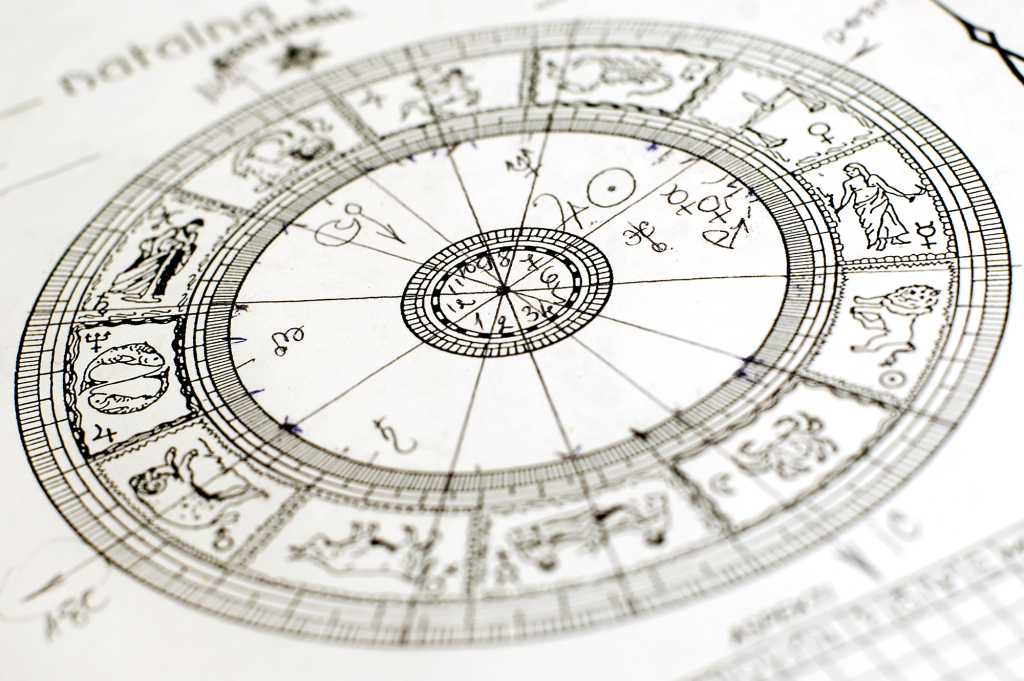
In the astrological birth chart, or natal chart, a reflection of the whole person is shown. The birth chart is a time-capture of exactly what was happening in the sky, above and below the horizon, at the moment, season, and place a person was born.
The astrological chart is more than a snapshot of personality traits; it can serve as a powerful framework for understanding patterns, constitution, and life themes. Unfortunately, it’s been flattened and oversimplified by pop culture, which has led to widespread misunderstanding of its true depth. But when you explore astrology more fully, it reveals itself as an incredibly rich tool for self-inquiry, one that can expand your relationship with plants and how you work with them.
In this article, we’ll explore how a birth chart goes far beyond sun signs, how tuning into the energy of the cosmos can enhance the potency of plant preparations, and how astrology can deepen your understanding of herbal and aromatic practices.
The Holistic Nature of Astrological
Aromatherapy & Herbalism
Using the birth chart as a resource can help you get more specific with your herbal selections and create more holistic herbal or aromatic preparations. Rather than offering a simple “use this-for-that” remedy focused on treating a single symptom, the birth chart invites you to consider the deeper patterns shaping a person’s constitution. Seeing both the individual and the plants as whole systems opens the door to a much more intentional and targeted approach to your work with plants.
In this context, it becomes less about which remedy you give and more about how and why you give it. A preparation becomes holistic when the qualities and energetics of a plant are consciously synchronized with the physical, psychological, and spiritual layers of a person. This approach can look like using the alchemical method of preparing plant medicines, incorporating astrology into your practice, and aligning timing, energetics, and formulation with the individual’s unique configuration.
The alchemical tradition includes a model of medical astrology, offering a symbolic framework for understanding the relationship between people, plants, and the cosmos. Within this model, astrology becomes a way of recognizing patterns, like how elemental qualities express through the body, how planetary dynamics correlate with temperament, and how imbalance may show up across different layers of experience.
Jyotish, also called Vedic Astrology, is similarly used in connection with Ayurvedic medicine to see a more complete picture of the client. The signs, houses, and planets are interpreted as indicators of body constitution and potential predispositions. The 12 houses relate not only to areas of life, but also to corresponding sections of the body, while the planets are traditionally associated with different tissues and functional systems.
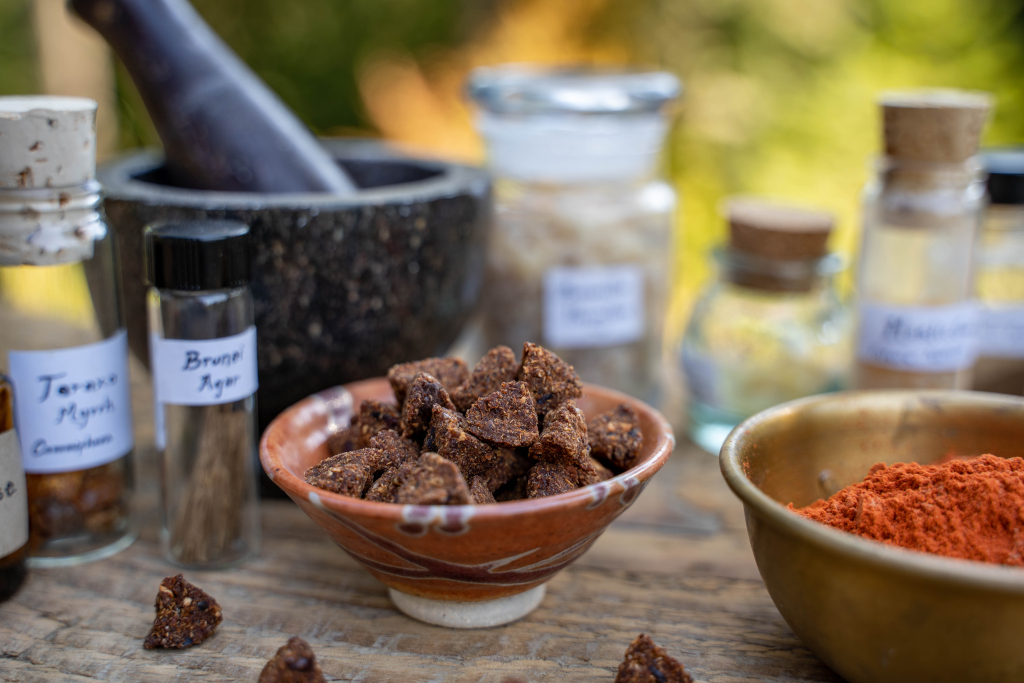
Dragon's Blood Tree & Planet Mars
Seeing the unique configuration of a client’s natal chart can help a practitioner understand their constitutional blueprint: body, psychology, and soul. This goes far beyond knowing someone’s sun, moon, and rising sign. Every planet, house, and sign interacts dynamically within the chart, painting a nuanced picture of that person’s tendencies and strengths.
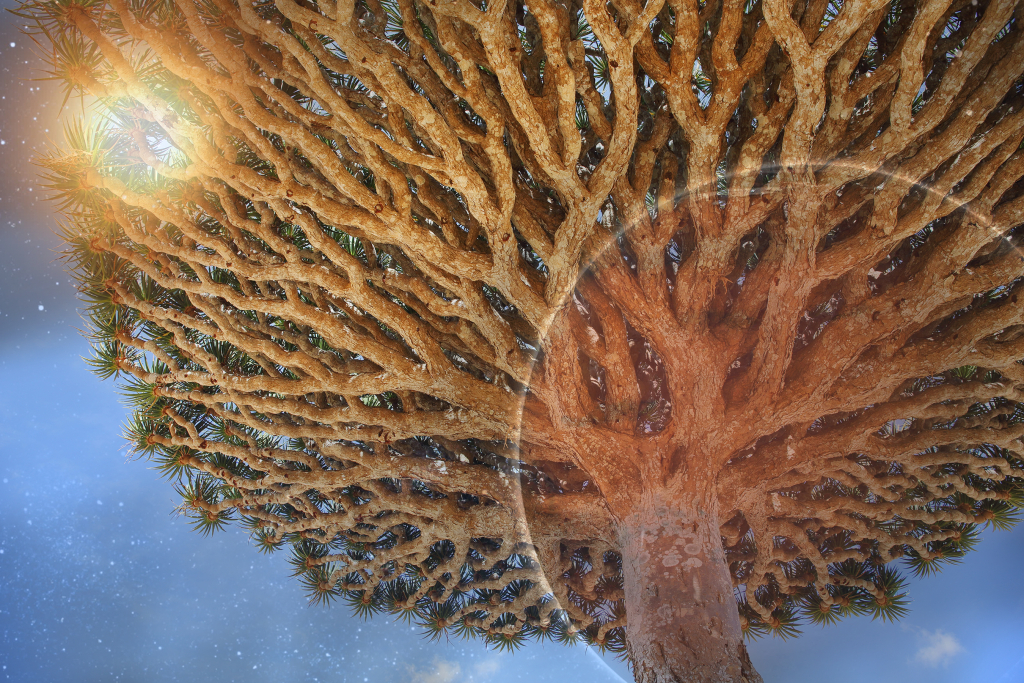
Each planet holds rulership over certain energies, which, when in excess or deficiency, may express through recognizable patterns in the body, mind, or emotions. Mars in excess, for example, is traditionally associated with inflammation, excess heat, and irritation. Emotionally, it corresponds to “hot” states such as anger, frustration, irritability, and rage. Recognizing these correlations can offer guidance when selecting plants whose energetics help balance those qualities.
In this way, astrology does not replace herbal knowledge – it amplifies it. It provides another lens through which to understand the individual, allowing plant work to become more personalized and intentional.
Unlock Your Free Issue Of...
🌿 The Aromatic Medicine Garden Membership 🌿
Are you ready for a deeper, holistic dive into the world of aromatic plants? See what our membership is all about with your free sneak peek issue, including an hour-long plant talk and a 21-page plant profile pdf full of recipes and insights.

Understanding Planetary Correspondences of Plants
The patterns of the cosmos shape not only people, but the plants around us as well. By observing a plant – its qualities, relationship to the environment, and its effects on the body – we can gain insight into its astrological correspondences. Paying attention to factors such as a plant’s habitat, morphology, taste, energetic actions, parts used in preparations, and organ affinities helps reveal which planets it resonates with and why.
This is the second half of medical astrology. Once we use the lens of the natal chart to uncover a person’s health needs, we can then choose the best botanical candidate based on its own unique astrological influences. Within that celestial matchmaking, balance and healing can be achieved on a deep, personal level through using essential oils, incense, tinctures, or other botanical preparations.
On top of this, there is more than one way to match a plant to a person astrologically. For example, one could potentially use a Mars plant for someone with a strong Mars presence in their chart (which might seem counterintuitive). But in the tradition of alchemy, the doctrine of sympathetic medicine uses "like for like." Meaning that when a planet is causing a health problem, that same planet is selected through a plant or remedy. In this way, a planet is used to address its own disease, to bring balance to itself within the human organism. At the same time, the use of opposing qualities can be the answer.
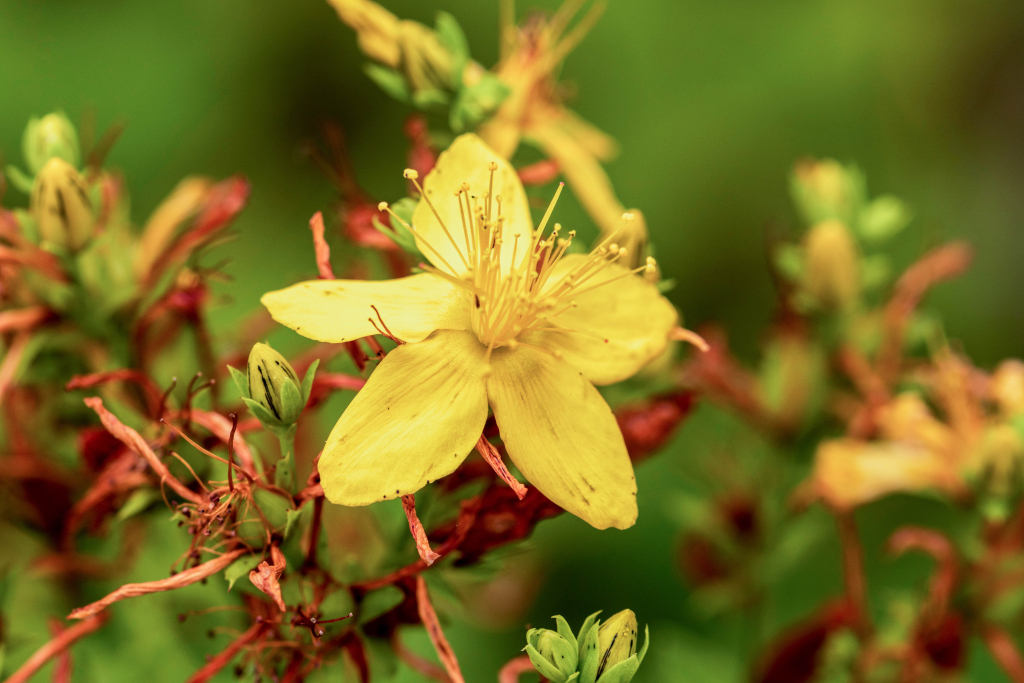
A beautiful example of witnessing planetary patterns within a plant is represented in St. John's Wort's relationship to the sun. St. John’s Wort has vibrant yellow flowers that embody the energy of sunshine, bringing brightness to the mind. And like sunshine, St. John’s Wort offers its presence in abundance, in many parts of the world, often growing in open meadows and along roadways. It prefers hot and dry climates, and also likes to grow on southern-facing slopes where it receives the most direct sunlight [3].
In terms of its actions and herbal properties, St. John’s Wort is predominantly warming in its energetics. It brings a lightness to the consciousness, dispelling depression and darkness with its rays of yellow, strengthening our inner sun and stoking the fire of our confidence and courage, helping us to be ourselves and overcome the cold, dark feelings of loneliness, disconnection, and isolation. There’s no wonder that it is used in cases of seasonal depression during the long, sun-deprived months of winter!
There are many ways one could look at this to match plants to a person. Planetary correspondences are not always fixed, and a single plant could also reflect multiple planets. To discover planetary correspondences requires deep observation. It is fun to explore these concepts and see what unfolds in our own observations of plants!
Reading a person’s chart and drawing planetary correspondences with aromatic plants is an art form. Over time, as you learn and grow within your studies, it will become clearer how to align plants with a person’s nature. This is the gift of using astrology with any plant practice.
Potentizing Herbal & Aromatic Medicines with Astrology: Timing & Cycles
Another way to enhance the potency of your herbal and aromatic preparations is to use astrological timing as a guide. Nature moves in rhythms and cycles, and the timing of everything is specific. Learning to craft natural remedies based on astrological timing can result in medicines or other botanical creations with higher potencies and specific celestial energies infused into them.
For instance, some artisan distillers of essential oil and hydrosol will start a plant distillation on a full moon, or on an equinox or solstice, which can help to pull out the highest level of constituents from the plant matter, and can also imbue the essential oils and hydrosols with lunar, or other planetary energies, depending on the celestial event of choice.
Another example of using timing lies in the days of the week. In astrology traditions, each day of the week is ruled by a planet: the Sun is ruled by Sunday, the Moon by Monday, Mars by Tuesday, Mercury by Wednesday, Jupiter by Thursday, Venus by Friday, and Saturn by Saturday. If you want to harness the force of a particular planet, you could harvest a plant or prepare your remedy (craft your incense, blend your essential oils, start a tincture, make a salve, etc.) on the day that corresponds to that planet.
The Beauty of Astrology & Plant Medicine
There are many ways to utilize astrology to complement your practice with plants, and ultimately, everyone's journey with it will be unique. Astrology is a vast and complex science within itself, and one could study it for a lifetime. However, learning some of these basics can help to transform how you interact with people, plants, and the world around you.
My teacher often says, “You are the world and the world is you.” Viewing life through the lens of astrology helps to expand our sense of identity. It allows us to discover that we are intimately connected to all in existence, and that it is safe to be exactly as we are – a wonderful, unique expression of cosmic consciousness.

Discover the profound wisdom of the elements, energetics, and constitution with our Foundational Mini-Course Bundle. Through these two mini-series, you'll learn how to align plant remedies with personal needs, harnessing nature’s elements for balanced health and personal growth. It also comes with a Personal Constitution Quiz!
Article Written By Dawn Gibson

References
1. Lad, V. & Frawley, D. (1986). The Yoga of Herbs: An Ayurvedic Guide to Herbal Medicine
2. Gladstar, R. (2012). Medicinal Herbs: A Beginner’s Guide.
3. Popham, S. (2019). Evolutionary Herbalism.
© 2026 The Northwest School of Aromatic Medicine. All rights reserved.
*The statements above have not been evaluated by the FDA, and are for educational purposes only. This article is not intended to diagnose, treat, cure, or prevent any disease. This article should not be taken as medical advice. Please consult your physician before you use this information for health purposes.
