Skip to content
The Northwest School of Aromatic Medicine
  • About
  • Courses
  • Resources
    • The Aromatic Medicine Blog
    • Video Library
  • Shop
  • Contact
  • Close Search Form
    Open Search Form
  • facebook
  • instagram
  • youtube
Student Login
Category

Sustainability

Aromatherapy
Aromatic History & Lore
Aromatic Recipes
Bio-Regional Aromatic Medicine
Herbal Medicine
Incense as Medicine
Plant Profiles
Sustainability
Topical Medicine
January 24, 20240Comments

Medicine of the Evergreens: Our Greatest Winter Allies

In the heart of winter's icy grip exists a steadfast symbol of endurance and resilience – the magnificent evergreen trees. With autumn behind us, many plants have shed their leaves
by NW School of Aromatic Medicine
Aromatherapy
Sustainability
November 29, 20228Comments

Herbal-Minded Holiday Gift Guide

The holiday season has arrived, and this is often a time when we think of giving something special to those we love and care for. However, the idea of picking
by NW School of Aromatic Medicine
Aromatherapy
Bio-Regional Aromatic Medicine
Human/Plant Connection
Sustainability
April 14, 202210Comments

13 Aromatic Plants You Can Easily Grow at Home

Have you thought about growing a garden this spring? Now is a great time to start preparing! Whether you're a complete beginner, or a master in aromatic medicine making, there is
by NW School of Aromatic Medicine
Aromatherapy
Human/Plant Connection
Sustainability
November 22, 202119Comments

Being A Conscious Essential Oil Consumer – Resist the EO Marketers!

This holiday time of year, there are great deals everywhere and multi-level marketing networks working overtime to sell essential oils. Don’t get me wrong – essential oils are amazing aromatic
by NW School of Aromatic Medicine
Aromatic History & Lore
Plant Profiles
Sustainability
October 27, 20219Comments

Saving Spikenard: The Sustainability Struggle

Some might say that the words sustainable and essential oil can never be in the same sentence. Essential oils have dynamic health benefits, however, they’re also resource-intensive products. Hundreds to
by NW School of Aromatic Medicine
Aromatic History & Lore
Human/Plant Connection
Ritual
Sustainability
July 19, 20210Comments

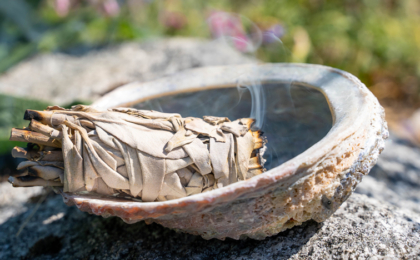
Smudging: An Issue of Ethics and Sustainability

Have you ever scrolled past a social media ad with an image of someone burning a smudge stick of White Sage with the caption reading something like, “Say Bye-Bye to
by NW School of Aromatic Medicine
Plant Profiles
Sustainability
November 25, 20190Comments

A Distress Call from the Sacred White Sage Plant

Oftentimes when trends spread like wildfire around the world, there is a great deal of misinformation or lack of understanding around them. Unfortunately, many trends these days include the use
by NW School of Aromatic Medicine
Aromatherapy
Aromatic Recipes
Incense as Medicine
Sustainability
August 19, 20190Comments

Incense & Aromatics for Mental Focus & Clarity

Do you experience issues with mental focus and clarity, brain fog, or trouble with your memory? The aromatic incense plants I talk about in the video above have been used
by NW School of Aromatic Medicine
Aromatherapy
Aromatic History & Lore
Ayurveda
Plant Profiles
Sustainability
January 23, 20180Comments

The Ancient Divinity and Healing of Sandalwood

One of the most widely used metaphysical plants in the world is the renowned Sandalwood tree. The use of this sacred tree in spirituality and ritual dates back thousands of
by NW School of Aromatic Medicine
Aromatherapy
Aromatic History & Lore
Incense as Medicine
Plant Profiles
Sustainability
September 11, 20170Comments

Palo Santo – Holy Wood

Palo Santo (Holy Wood) has been used throughout Central America and many northern territories of South America for thousands of years for purification and cleansing of the physical, energetic, and
by NW School of Aromatic Medicine
« Older Articles Newer Articles »

aromatic_medicine

🌿 Follow us on Instagram for daily inspiration, plant knowledge, aromatic wisdom, and one-of-a-kind courses 🌿

5 reasons being outside is good for you: 🌿 Your v 5 reasons being outside is good for you:

🌿 Your vitamin D levels rise, which helps increase your mood and strengthen your immune system. 

🌿 Allows you to take a break from the stressors of daily modern life.

🌿 Decreases blood pressure and levels of stress, anxiety, and depression.

🌿 Enhances inspiration, motivation, and creativity.

🌿 Supports healthy aging. According to a study in the Journal of Aging and Health, adults over 70 who spent time outdoors experienced fewer sleep difficulties, complained less about aches and pains, and enjoyed improved mobility and ability to perform daily activities.

What’s your favorite outdoor activity this time of year?

_________
#getoutandexplore #getoutdoors  #natureismedicine #vitaminD #naturalstressrelief  #healthyagingtips
Did you know it can take anywhere from 1 to 150 po Did you know it can take anywhere from 1 to 150 pounds of plant material to produce a single 15 mL (0.5 oz) bottle of essential oil?!

And that's only part of the story.

Behind every bottle are the plants, the soil, the sun, the rain, the growers, the harvesters, the distillers, and countless hours of care.

Honoring these sacred plants begins with awareness, and really seeing everything that goes into that small glass bottle.

Let's bring the sacred back into plant medicine. ✨🌿
Juniper: the desert elder 🌲 Juniper has been a sy Juniper: the desert elder 🌲

Juniper has been a symbol of strength and longevity for centuries.

In various cultures around the world, Juniper’s known as the Tree of Protection. Throughout its mythology, it has been found protecting travelers and sheltering those in danger. In the Biblical story, Jesus and his family hid under a Juniper tree when King Herod’s soldiers were pursuing them. 

Juniper’s magical quality of spiritual, energetic, and physical protection is known by every culture that has shared its native habitat, and many people still call on the spirit of this tree to protect themselves and others.

What's your favorite way to use this sacred tree?

___________
#juniper #junipertree #naturalincense #aromatherapy #aromaticmedicine #aromaticplants
Thyme (Thymus vulgaris) has a long and storied his Thyme (Thymus vulgaris) has a long and storied history, believed to have been used by the ancient Sumerians over 3,500 years ago, likely burned as an aromatic fumigant. 🌿

The ancient Egyptians, who called it “tham,” employed Thyme in their sacred embalming rituals. The Greeks used it not only to flavor their food and preserve meat but also to purify the air and help prevent the spread of disease. 

It’s thought that the Latin name, Thymus, traces back to the Greek word “thymon,” meaning “to fumigate,” “to make a burnt offering,” or “to sacrifice,” indicating its long history of use as incense and aromatic medicine.

Others believe that the name Thymus comes from the Greek verb meaning “soul” or “spirit.” 

Some scholars suggest an alternative origin, linking the name to the Greek word thymos, translating to "strength," or thumon, meaning "courage" – qualities the plant came to symbolize. 

Roman soldiers reportedly bathed in Thyme before going into battle to instill bravery, and during the Middle Ages, sprigs of Thyme were often woven into the scarves of knights setting out on Crusades, a fragrant emblem of valor.

Interestingly, the word Thymus also refers to the thymus gland, an organ in the human body essential to the development of T cells and the immune system, particularly during childhood when we're most vulnerable. While the thymus gland plays a less active role in adulthood, this connection offers a poetic nod to Thyme’s traditional role as an immunity herb.

As early as 500 AD, the renowned Greek physician Dioscorides recommended Thyme tea for illness, asthma, chest congestion, persistent coughs, and to stimulate circulation.

 🌿➡️ Swipe through to learn more about the health benefits of this powerful plant.

________
#thyme #aromaticherbs #aromaticspices #culinaryherbs #aromaticmedicine #aromatherapy
🌈✨ Have you ever seen a Rainbow Eucalyptus tree?! 🌈✨ Have you ever seen a Rainbow Eucalyptus tree?!

There are over 700 types of Eucalyptus trees, but the Rainbow tree is by far the most colorful. Eucalyptus deglupta, also known as Mindanao gum or rainbow gum, is the only Eucalyptus that lives in the rainforest and is one of only four species that are not native to Australia. It grows in the Philippines, Indonesia, and Papua New Guinea, where it can rise up to 250 feet tall!

The tree trunk takes on different colors as the bark sheds and the inner bark is exposed to the air.

As it sheds, it first reveals a bright green color, which changes over time, aging into different colors of blue, purple, orange, and maroon. The varied, colorful striations are a reflection of the tree bark shedding at different times throughout the year. 

The result is a stunning display that is in perpetual metamorphosis, a beautiful representation that the only constant in life is change. 

________
 #rainboweucalyptus #rainboweucalyptustree #eucalyptus #eucalyptustree #natureismagic #aromatics
As spring brings new life all around us, you might As spring brings new life all around us, you might be wondering what wild-harvesting opportunities lie outside your doorstep…

Just as the outside world affects us, the energies within plants also ebb and flow along with external influences. The changing seasons, elements, the sun, moon, stars, and planetary positions all affect how and when plants move their life force within their bodies.

Learning how to read these rhythms can help you understand when certain plants and their plant parts are the most potent, and when is the best time to harvest them.

Observing nature can teach us many things – you can actually oftentimes see where plants put their energy and how they move it. 

For example, in the spring, a dead-looking, bare branch will suddenly burst to life with a vibrant shoot or bud, eventually turning into a leaf or flower. In the summer, that flower might bloom and die, with a fruit ripening in its place. In the fall and winter, the plants move their energy into their bark, wood, and roots, preparing to hibernate as their leaves wither and fall.

When a plant is putting its energy into a particular plant part, it is usually most potent during that time, and likely at its peak potential for harvesting. For example, the spring is the most ideal time to harvest fresh shoots, leaves, buds, and early flowers; in the summer, foliage and flowers; in the fall, fruiting bodies, seeds, resins, gums; and in the winter, woods and roots.

Of course, this is a general rule of thumb. Many plant parts can also be harvested year-round if you can’t get to them at the most ideal time. Also, not all plants are on the same schedule. Remember, whenever wild-harvesting, to always harvest sustainably! 

To learn more about this topic, check out our vlog: Harvesting Your Own Aromatic Plants Along With the Seasons.

🌿 Link in bio.

_____________
#wildharvesting #wildharvested #wildcrafting #sustainableharvest #sustainability #aromaticplants
Terpenes from trees are nature’s aromatic medicine Terpenes from trees are nature’s aromatic medicine.

Recent studies have shown that exposure to the natural environment is beneficial to human health, and “forest bathing” has many beneficial health effects. 

Forest bathing, or forest therapy, generally means taking in the forest atmosphere using all of your senses. This is more than simply a walk in the woods, but also the conscious and contemplative practice of being immersed in the sights, sounds, and smells of the forest.

Forest air is full of terpenes, which are aerosols emitted by various plants and trees, particularly conifers. Terpenes aid in the defense mechanism of the plant against herbivores and the environment, as well as their developmental physiology.

Some observed benefits of terpenes on human health include: 

🌲 ​​mood boosting qualities
🌲 therapeutic effects in children with asthma and atopic dermatitis
🌲 strong anti-inflammatory properties 
🌲 anti-tumorigenic effects
🌲 neuroprotective effects

Just a few more reasons to spend some time in forests!

Here’s a link to a scientific study if you’re curious: https://www.ncbi.nlm.nih.gov/pmc/articles/PMC5402865/

______________
#terepenes #forestbathing #foresttherapy  #benefitsofnature  #natureistherapy #natureismedicine
Do you know the many benefits of bitters? Bitter Do you know the many benefits of bitters? 

Bitters are not only used to effectively support digestion and ease digestive upset, but they may also help deliver a gentle liver detox to your body. Supporting the liver is a great thing to do at the start of Spring, when our bodies are beginning to wake up from Winter hibernation and move more.

Common herbs used in bitters include Dandelion Root and Burdock Root, but there are also a lot of aromatic plants traditionally used as well, like Angelica Root, Mugwort, Grapefruit Peel, Orange Peel, Tangerine Peel, Fennel Seed, Ginger Root, Yellow Dock, Gentian, and even Juniper Berries. 

Traditionally, bitters are taken before a meal, but often folks like to add them to drinks or cocktails, too. 

Do you take bitters? What’s your favorite way to consume them?

___________
#bitters #aromaticroots #herbaltinctures #herbaltips #spring #dandelionroot #ginger
Follow on Instagram

OFFERINGS

  • Aromatic Medicine Garden Monthly Membership
  • Incense Crafting Course
  • Botanical Resins & Gums Course
  • Materia Aromatica Ebook

QUICK LINKS

  • About
  • Courses
  • The Aromatic Medicine Blog
  • The School
  • Evan Sylliaasen
  • Contact
  • Privacy Policy
  • Terms & Conditions

FOLLOW US

  • Facebook
  • Instagram
  • Youtube

OUR NEWSLETTER

Stay in the know on new releases and special offers

Loading

support@aromaticmedicineschool.com

© 2026 The Northwest School of Aromatic Medicine, All rights reserved.