Skip to content
The Northwest School of Aromatic Medicine
  • About
  • Courses
  • Resources
    • The Aromatic Medicine Blog
    • Video Library
  • Shop
  • Contact
  • Close Search Form
    Open Search Form
  • facebook
  • instagram
  • youtube
Student Login
Category

Plant Profiles

Aromatic History & Lore
Plant Profiles
March 10, 202011Comments

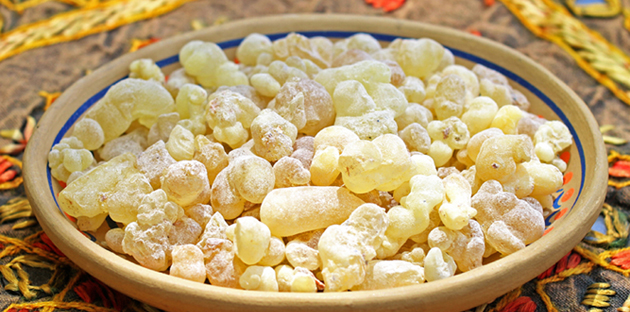
Copal Plant Profile – Ancient Incense & Mystical Medicine

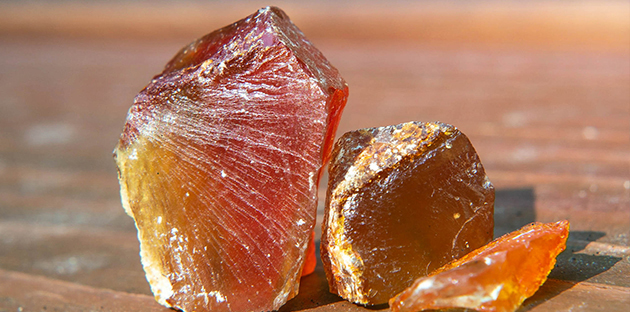
Copal, it's one of the most well-known and oldest names in the world of incense. If you're into incense, surely you've heard of it and likely have burned some before.
by NW School of Aromatic Medicine
Aromatic Recipes
Bio-Regional Aromatic Medicine
Herbal Medicine
Plant Profiles
Topical Medicine
March 3, 20201Comments

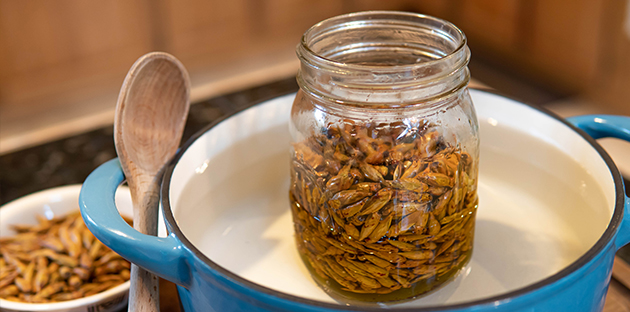
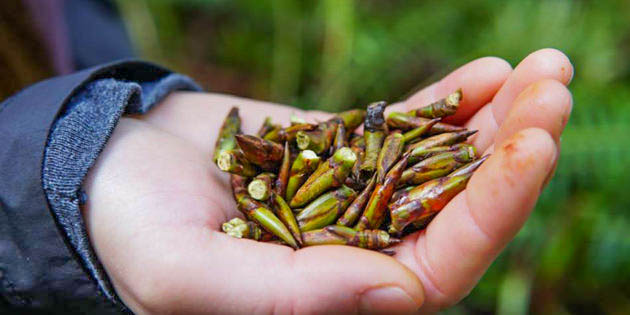
Making Poplar Bud Medicine: Harvesting, Infusions, & Salves

As I write this, the snow in the foothills of the Pacific Northwest has vanished, signs of life begin to sprout from the earth, the first blossoms of the year
by NW School of Aromatic Medicine
Plant Profiles
Sustainability
November 25, 20190Comments

A Distress Call from the Sacred White Sage Plant

Oftentimes when trends spread like wildfire around the world, there is a great deal of misinformation or lack of understanding around them. Unfortunately, many trends these days include the use
by NW School of Aromatic Medicine
Aromatic History & Lore
Plant Profiles
August 26, 201912Comments

Myrrh Plant Profile – The Sacred Bitter Medicine of Antiquity

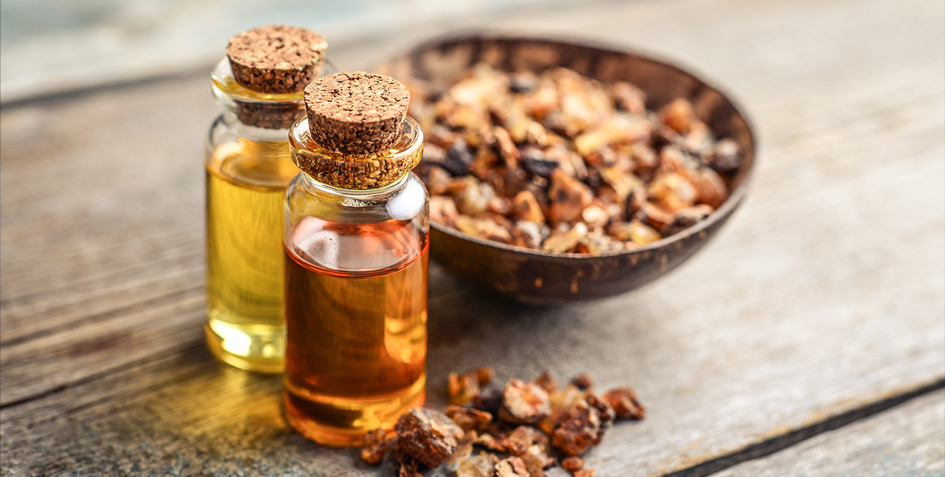
Have you ever noticed how Frankincense and Myrrh are commonly mentioned together by herbalists and incense connoisseurs, yet Frankincense somehow receives all the attention in the media and medical journals these days? Why
by NW School of Aromatic Medicine
Aromatic History & Lore
Plant Profiles
Ritual
Topical Medicine
January 1, 20190Comments

Balm of Gilead, Comfort for the Soul

Considered to be among the most sacred of herbs throughout many ancient Eastern cultures, the renowned Balm of Gilead was once used in various forms of holy incense and anointing
by NW School of Aromatic Medicine
Aromatherapy
Aromatic History & Lore
Ayurveda
Plant Profiles
Sustainability
January 23, 20180Comments

The Ancient Divinity and Healing of Sandalwood

One of the most widely used metaphysical plants in the world is the renowned Sandalwood tree. The use of this sacred tree in spirituality and ritual dates back thousands of
by NW School of Aromatic Medicine
Aromatherapy
Aromatic History & Lore
Incense as Medicine
Plant Profiles
Sustainability
September 11, 20170Comments

Palo Santo – Holy Wood

Palo Santo (Holy Wood) has been used throughout Central America and many northern territories of South America for thousands of years for purification and cleansing of the physical, energetic, and
by NW School of Aromatic Medicine
Aromatherapy
Aromatic History & Lore
Incense as Medicine
Plant Profiles
Sustainability
May 13, 201741Comments

Frankincense – Divine Communion

Frankincense: the name echoes throughout the fragrant histories of the world as a champion of aromatics. One of the most popular incense materials of the ages, it has nourished many
by NW School of Aromatic Medicine
Aromatic History & Lore
Plant Profiles
May 13, 20170Comments

The Aromatic Smoke of Juniper: Resilience, Protection, and Hardiness

Juniper: the desert elder, the minimalistic and resilient tree of the Sun. When I think of the Juniper tree, I often think of its hardened and gnarly trunk, standing strong
by NW School of Aromatic Medicine
Aromatherapy
Aromatic History & Lore
Plant Profiles
May 12, 20170Comments

Rosemary, For Heart And For Mind

Rosemary (Rosmarinus officinalis) is an aromatic herb in the Mint family that grows as a small evergreen bush, native to the Mediterranean. Its emotional and physical healing properties have been
by NW School of Aromatic Medicine
« Older Articles Newer Articles »

aromatic_medicine

🌿 Follow us on Instagram for daily inspiration, plant knowledge, aromatic wisdom, and one-of-a-kind courses 🌿

Did you know that astrology can be more than horos Did you know that astrology can be more than horoscopes… and actually serves as a powerful tool for working with plants in your aromatherapy or herbal practice?

For centuries, the study of the planets and celestial forces has been a core part of aromatic and herbal medicine.

This is the ancient tradition of Medical Astrology, a system used to classify plants, understand bodily constitutions, and create remedies that align with both the individual and the cosmos.

​​​​​​​Far from being outdated, these celestial patterns still influence our health, the plants we work with, and the world around us.

And when you learn to work alongside them, your plant practice can become deeper, more precise, and more potent, just as practitioners have known across cultures for ages.

In our blog post, we dive into the fascinating relationships between astrology, plants, and people. You’ll discover how incorporating astrology can:

▪️ Illuminate the root causes of imbalance and illness
▪️ Guide you in matching people with the remedies that will benefit them most
▪️ Even enhance the potency and effectiveness of your plant preparations

You might never look at your astrological chart (or your apothecary) the same way again!

🌿✨ Click the link in our bio to read the full article.

___________
#astrology #herbalism #astroherbalism  #medicalastrology #birthchart #astrologicalmagic
Have you ever worked with a plant that was technic Have you ever worked with a plant that was technically the right match for someone – aligned with their constitution, indicated for their symptoms, supported by everything you’ve studied – and yet something about it still felt slightly off?

In your mind and on paper, it made sense, but in practice, it didn’t have the impact you'd hoped for.

There’s a layer of plant work that lives beyond symptom-matching and even beyond basic energetics. And you don't have to be a wizard to figure it out!

It has to do with patterns... the deeper architecture of a person, and the deeper signature of a plant.

When I first began exploring the relationship between planets and plants through my buddy Sajah’s work, I was drawn in by how mystical it all felt. But what struck me was how simple and observational it actually was.

You can literally see planetary qualities in the way a plant grows, in its structure, its scent, its taste, the direction it moves in the body, and the kinds of imbalances it addresses.

And once I started putting it all into practice, everything shifted.

Suddenly, the famous alchemical saying “As above, so below” stopped sounding symbolic and started functioning like a super-accurate diagnostic lens.

In Lesson 2 of his free Astro-Herbalism Mini-Course, Sajah lays out the exact framework he uses to determine a plant’s planetary signature, and shows how to see which herbs truly correspond to a person’s underlying patterns, not just their surface symptoms.

If you’ve ever felt like there’s a deeper pattern at play in plant medicine, something that explains why certain remedies truly resonate, this training can give language to what you’ve already sensed and help you find greater depth, meaning, precision, and confidence in your plant work.

✨ Join the free Astro-Herbalism Mini-Course online using the link in our bio. (It's only available for a limited time, so check it out soon!).

___________
 #astroherbalism #astrology #herbalism #herbalist #plantsandastrology #planetsandplants #evolutionaryherbalism
Yarrow’s Latin name, Achillea millefolium, honors Yarrow’s Latin name, Achillea millefolium, honors Achilles, the great warrior of Greek myth who used Yarrow to tend his soldiers’ wounds in battle. 

Just as Yarrow helps seal physical wounds, it can strengthen energetic boundaries & support empaths who absorb others’ emotions.

But to truly understand Yarrow's emotional support, we have to go back to the myths that helped shape its name.

In Greco-Roman lore, Chiron, the wise centaur who taught Achilles about medicine, was struck by a poisoned arrow & (though immortal) was condemned to endless suffering. His pain became a lifelong teacher, shaping his ability to tend the wounds of others with unmatched compassion. He was known as the wounded healer.

Achilles, on the other hand, embodies the archetype of the wounded warrior. His mother dipped him in the River Styx to make him invincible, but his heel remained exposed and vulnerable – the famous “Achilles heel.” 

Through these stories, Yarrow became known as the herb of the wounded healer & wounded warrior: uniting strength & vulnerability, courage & compassion. 

So many people find their way to aromatic medicine and herbs through a similar story; drawn in, as Chiron was – sometimes not by choice but by necessity – to find healing. Through that search for relief and meaning, we learn not only how to mend ourselves but how to support others with hard-won understanding & skill. 

This is the essence of the wounded warrior-healer: wisdom earned through suffering, then generously shared.

Yarrow honors that inner transformation. It reminds us that to serve as a steady presence for others, to truly support others, we must continue tending to our own wounds, too (because that work is never truly finished). 

In our new video blog, we'll dive into the whole story of Yarrow together:

✨ The mythology & folklore behind its name
✨ How it supports digestion, circulation, skin & uterine health
✨ Its role in aromatic medicine (essential oil, hydrosol, incense, tea, tincture)
✨ Why so many empaths & healers feel called to work with it

🌿 Comment “YARROW” to get the full Yarrow vlog.

________
#yarrow  #herbalism #aromatherapy #empaths #herbalfolklore #greekmythology
Absolutes vs essential oils: what’s the difference Absolutes vs essential oils: what’s the difference?

Essential oils are extracted in various ways, most often through steam distillation, but also solvent extraction, and other methods. Steam distillation extracts the volatile oils from plant materials using a process of heating and cooling water vapor. The end products of this process are essential oils and hydrosol.

Absolutes, on the other hand, are highly concentrated aromatic substances similar to essential oils. They are obtained through a solvent extraction process instead of steam distillation. This method is typically used for delicate or highly fragrant plant materials that cannot be effectively distilled using steam distillation. 

In the solvent extraction process, plant materials are submerged in a solvent, such as ethanol, hexane, or carbon dioxide, to release their aroma. The solvent mixture dissolves the aromatic compounds of the plant and releases them into the liquid, and then the solvent is removed, leaving behind a fragrant, concentrated mixture known as an absolute. 

It's important to note that absolutes may or may not contain trace amounts of the solvent used in the extraction process. Some folks choose to avoid using absolutes for this reason, others feel the amount is too low to be impactful in any way. 

By definition, both absolutes and essential oils are highly concentrated liquid extracts containing volatile chemical compounds from medicinal and aromatic plants. 

Absolutes are often more expensive than essential oils due to the complexity of the extraction process and the amount of raw material required to produce them. Typically, you'll see bottles of essential oils and absolutes sold side by side in stores. 

To know whether it’s an essential oil or absolute, carefully read the label and look for the word “absolute,” and often you can also find the solvent that was used listed as well. Some examples of aromatic plants that are commonly processed into absolutes include Jasmine and Rose. 

__________
#essentialoils #absolutes #aromatherapy #essentialoileducation #aromaticmedicine #aromatherapytips #AromatherapyEducation
Have you ever had a physical symptom you knew was Have you ever had a physical symptom you knew was directly related to your emotions, thoughts, or something even spiritual?

Or maybe had an intuitive sense that the root cause of someone's problem wasn't exactly physical?

If you've ever wondered how to trace these relationships between the body, mind, and soul — to make it easier to use herbs to help people on these more subtle levels — you're in luck!

My good friend Sajah Popham just did all the hard work and put it all together in the Astro-Herbalism Mini-Course.

Ancient physicians and founding herbalists like Paracelsus and Nicolas Culpeper understood that the most effective path of healing with herbs was through the understanding of the stars and planetary bodies.

The School of Evolutionary Herbalism is carrying on this powerful tradition — offering important insights into exactly how astrology and herbalism correspond to each other in their free series.

You'll learn how to see the connections between the body, emotions, thoughts, and the evolutionary process of the soul — and how to translate these into finding the specific remedy, whether that's incense, essential oil, or herbs, that gets to the roots of our health problems.

If this speaks to you, sign up via the link in bio and start watching the first lesson now. You'll gain a higher perspective about your work with plants that will change everything. 🌿✨

This mini-course is only available for a limited time — if you're curious about the connection between the stars and the plant kingdom, now's your chance!

#herbalmedicine #astroherbalism #astrologyandherbalism #astrology #holistichealth
Forest Bathing at Home 🌲 You don’t need to visit Forest Bathing at Home 🌲

You don’t need to visit a forest to reconnect with nature.

Place a few sprigs of Pine, Cedar, or Fir in hot water on your stove, or a few drops of EO in your diffuser. Inhale deeply. Exhale fully. Repeat.

These aromatic evergreens can reduce stress, clear the mind, and uplift your spirit…all from the comfort of home.

What's your favorite forest scent?

_____________
#forestbathing #forestsmell #forestenergy #forestbathingtherapy #forestscent #pine #cedar #fir
Want to go deeper with Yarrow? In our newest vlog Want to go deeper with Yarrow?

In our newest vlog, we explore one of our favorite plants in depth. You’ll discover:

• The mythology of Achilles and Chiron
• Yarrow’s traditional uses across cultures
• How it supports digestion, circulation, the uterus & more
• Its role in aromatic medicine and emotional boundary work
• Why the essential oil is that stunning deep blue
• Practical ways to work with it as tea, tincture, essential oil, hydrosol, incense & more

Watch it through the link in our bio.
What if the “weed” growing along the roadside was What if the “weed” growing along the roadside was once carried into battle to save lives?

I still remember the first time I truly met Yarrow.

I was on a hike with one of my herbal teachers when he stopped, bent down, and brushed his hand across a patch of feathery leaves at our feet.

“This plant,” he said, “was carried into battle to slow bleeding from wounds. And if you’re ever hiking without a first-aid kit… or bleeding during the zombie apocalypse… a poultice of Yarrow should do the trick.”

I laughed…But I never forgot it!

Yarrow is a powerful plant of paradox.

It can slow bleeding… and move stagnant blood.
It can cool heat… and stimulate circulation.
It can protect boundaries… and open what’s stuck.

For centuries, it’s been called many names: Staunch Weed, Soldier’s Woundwort, Nosebleed, and Life Medicine.

Legend says Achilles used it on the battlefield to take care of his soldiers. Chinese divination traditions use their stalks to consult the I Ching. Herbalists call it the “master of blood.”

And beyond the physical, Yarrow has long been known as the herb of the wounded warrior and wounded healer – a plant for those who have had to become strong because they first had to survive something.

In our new video blog, you’ll learn:

• The mythology of Achilles and Chiron
• Yarrow’s traditional uses across cultures
• Its powerful support for digestion, circulation, skin issues and menstrual struggles
• How it works in aromatic medicine and emotional boundary work
• Practical ways to use it in tea, tincture, essential oil, hydrosol, incense & more

By the end, you may never look at this “common weed” the same way again. ✨

If you’ve ever felt called to understand this plant beyond just its benefits – to really know its story, its spirit, its intelligence – this one is for you.

🌿 Watch/read the full story of Yarrow at the link in our bio.

________
#yarrow #yarrowflower #aromaticmedicine #emotionalboundaries #boundarysetting #weedsaremedicine #herbalmonograph
Follow on Instagram

OFFERINGS

  • Aromatic Medicine Garden Membership
  • Incense Crafting Course
  • Botanical Resins & Gums Course
  • Materia Aromatica Ebook

QUICK LINKS

  • About
  • Courses
  • The Aromatic Medicine Blog
  • The School
  • Evan Sylliaasen
  • Contact
  • Privacy Policy
  • Terms & Conditions

FOLLOW US

  • Facebook
  • Instagram
  • Youtube

OUR NEWSLETTER

Stay in the know on new releases and special offers

Loading

support@aromaticmedicineschool.com

© 2026 The Northwest School of Aromatic Medicine, All rights reserved.