Skip to content
The Northwest School of Aromatic Medicine
  • About
  • Courses
  • Resources
    • The Aromatic Medicine Blog
    • Video Library
  • Shop
  • Contact
  • Close Search Form
    Open Search Form
  • facebook
  • instagram
  • youtube
Student Login
Tag

plant connection

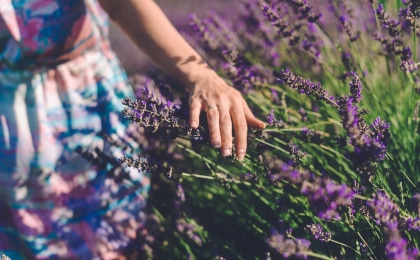
woman's hand lightly touching a fresh lavender plant
Aromatherapy
Herbal Medicine
Human/Plant Connection
Ritual
August 28, 20250Comments

Why True Plant Wisdom Goes Beyond Facts & Recipes

We live in a culture that loves quick fixes. If you’ve got a headache, there’s a pill for that. Feeling run down? Take Reishi. Feeling anxious? Chamomile. Trouble sleeping? Just
by NW School of Aromatic Medicine
Bio-Regional Aromatic Medicine
Human/Plant Connection
Sustainability
July 29, 20250Comments

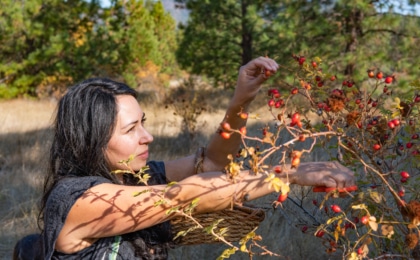
Wild Harvesting with Integrity: Respectful and Sustainable Harvesting Practices

There’s a kind of botanical magic that only summer can bring – the scent of a sun-warmed Rose bush in full bloom, the crisp brightness of Lemon Balm brushing against
by NW School of Aromatic Medicine
bundle of fresh mugwort herbs for dreamwork
Aromatherapy
Human/Plant Connection
Incense as Medicine
Ritual
June 10, 20250Comments

Aromatic Plants and Dreams: Scents for Deep Sleep and Inner Wisdom

Have you ever woken from a dream so vivid it blurred the line between memory and imagination? Dreams can be fun, strange, symbolic, emotional, or eerily real. They arise most often
by NW School of Aromatic Medicine
Aromatherapy
Aromatic Recipes
Herbal Medicine
Ritual
Topical Medicine
May 30, 20250Comments

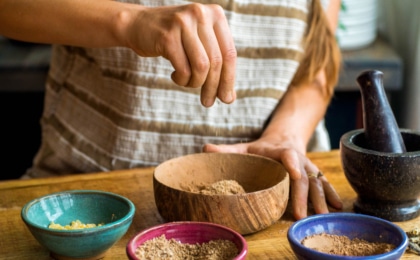
Making Your Own Aromatic & Herbal Remedies

As a plant person, you likely already know this: Aromatic plants and herbs hold incredible healing potential. Beneath their beautiful scents and vibrant leaves lies a world of medicine, just
by NW School of Aromatic Medicine
Aromatherapy
Bio-Regional Aromatic Medicine
Herbal Medicine
Human/Plant Connection
Incense Crafting
Natural Perfumery
Ritual
May 22, 20250Comments

The Energy You Bring to the Craft: Intention as an Ingredient

Have you ever followed a recipe exactly, only to have it fall flat, while someone else makes the same thing and it comes alive? Or crafted an herbal or aromatic
by NW School of Aromatic Medicine
Aromatherapy
Bio-Regional Aromatic Medicine
Herbal Medicine
Incense as Medicine
Plant Profiles
Sustainability
Topical Medicine
January 9, 20250Comments

The Benefits of Pine Resin & How to Harvest It

I will never forget meeting my friend Sam (name changed to spare them any embarrassment), a budding herbalist radiating excitement and curiosity about the wonders of the natural world. One
by NW School of Aromatic Medicine
Aromatherapy
Aromatic History & Lore
Herbal Medicine
Human/Plant Connection
Incense as Medicine
Plant Profiles
Ritual
Sustainability
Topical Medicine
December 19, 20240Comments

The Power of Frankincense: Boosting Immunity and Overall Well-Being

Thousands of years ago, in ancient kingdoms, the air was thick with the rich, aromatic smoke of Frankincense. This sacred resin, harvested from Boswellia trees, played a central role in
by NW School of Aromatic Medicine
Aromatherapy
Aromatic History & Lore
Aromatic Recipes
Bio-Regional Aromatic Medicine
Herbal Medicine
Human/Plant Connection
Plant Profiles
Sustainability
November 7, 20240Comments

Pine Needle Tea Benefits, Harvesting Tips & Recipe

In the bitter winter of 1536, deep in the wilds of North America, morale was low. The French explorer Jacques Cartier and his crew, weakened by months at sea, began
by NW School of Aromatic Medicine
Aromatherapy
Aromatic History & Lore
Aromatic Recipes
Human/Plant Connection
Incense as Medicine
Incense Crafting
Ritual
October 1, 20240Comments

Incense 101: Aromatic Medicine Beyond Incense Sticks

The scented swirls of incense smoke carry a profound story – the life cycle of each botanical ingredient, the journey from seedling to thriving herb, nurtured by the sun and
by NW School of Aromatic Medicine
Aromatherapy
Human/Plant Connection
Incense as Medicine
Plant Profiles
Ritual
September 25, 20241Comments

Aromatic Plants for Improving Indoor Air Quality

In a world where we often retreat to the comfort of our homes, the indoor air we breathe has never been more crucial to our health. Did you know that
by NW School of Aromatic Medicine
« Older Articles Newer Articles »

aromatic_medicine

🌿 Follow us on Instagram for daily inspiration, plant knowledge, aromatic wisdom, and one-of-a-kind courses 🌿

What do ancient Egyptian temples, the art of incen What do ancient Egyptian temples, the art of incense, Aztec healing applications, natural perfumery, topical medicines, and modern meditation practices all have in common?

Tree resins.

For thousands of years, these fragrant substances have been burned as ritual incense, used as traditional medicine, and treasured as sacred offerings across cultures around the world.

But what exactly are tree resins… and why have they been revered for so long?

In our new video and blog, we explore:

🌲 What tree resins are (and how they differ from sap)
🌲 Their powerful therapeutic properties
🌲 Their sacred history across cultures
🌲 A simple way to work with resin incense at home

If you love aromatic herbs, sacred incense, or plant medicine, this is a fascinating world to explore.

Read the blog and watch the full video at the link in our bio.

---
 #treeresin #incenseresin  #harvestingtips  #wildharvesting  #sustainableharvest  #incensecrafting  #botanicalresin
The sweet, sacred Frankincense resin we know and l The sweet, sacred Frankincense resin we know and love is a rich terpenoid oleoresin harvested from Boswellia trees, a group of about 24 species in the Torchwood family, alongside other aromatic icons like Elemi and Myrrh. 

Known as “tears” for the way they drip from the bark, these golden drops are the tree’s natural defense system: when injured, the bark releases this resin to seal the wound, protect against infection, and guard against pests.

Frankincense is one of the oldest aromatic medicines on the planet. For thousands of years, it has been traded across ancient civilizations and deeply rooted in spiritual practices from Judaism and Hinduism to Christianity and Islam and beyond. 

Its role in rituals of cleansing and renewal reflects a universal human desire to connect to the sacred. This enduring resin transcends cultural boundaries, offering a sense of balance and grounding that has resonated across generations.

Its name comes from the medieval French word franc (“pure”) and the Latin word incensium (“to smoke”), echoing its ancient role as “pure smoke” used for purification, protection, and connection to the divine. 

Across cultures and religions, the rising smoke of Frankincense has symbolized prayers carried to the heavens and the bridge between the material and spiritual realms. 

🔥 Swipe through to explore the aromatic and therapeutic gifts of this sacred resin.

✨ P.S. Our sister company, Higher Mind Incense, carries 4 different species of sustainably sourced Frankincense resin! You can find them at the link in our bio.
The first time I ever burned Frankincense, somethi The first time I ever burned Frankincense, something unexpected happened.

Within a few breaths, my awareness sharpened, my thoughts grew quiet, and a deep sense of calm washed over me. There was a feeling of ancient sacredness in the air…something difficult to explain, but impossible to ignore.

That moment opened the door to a world I hadn’t yet discovered: the beautiful realm of tree resins.

For thousands of years, resins like Frankincense, Myrrh, Copal, Pine, and Cedar have been burned as sacred incense in rituals, used as traditional medicines, and revered across cultures for their therapeutic and spiritual qualities.

In our new video and blog, we explore:

• What tree resins actually are (and how they differ from sap)
• Why cultures around the world consider them sacred
• Their powerful therapeutic properties
• How they’re used in incense, perfumery, and herbal medicine
• A simple way to begin working with resins at home

I also talk about my favorite way to work with resins: burning it on charcoal as incense.

Sitting with the smoke of a single resin allows you to experience its qualities directly, while tuning in to how its presence affects your mind, body, and emotions.

In this way, working with resin incense becomes not only a ritual practice but also a subtle and powerful form of plant-based medicine.

🌲✨ Read the full blog and watch the video at the link in our bio.

 #treeresin #incenseresin  #harvestingtips  #wildharvesting  #sustainableharvest  #incensecrafting  #botanicalresin
One Plant. Many Expressions. 🌿 In the 1960s, bio One Plant. Many Expressions. 🌿 

In the 1960s, biochemist Pierre Franchomme uncovered something groundbreaking while studying essential oils: a single aromatic plant species can express itself through multiple chemotypes, each with a distinct chemical makeup, aroma, and therapeutic personality.

A chemotype is a chemically distinct version of the same plant species. Influenced by factors like soil, climate, altitude, and genetics, chemotypes can dramatically change how an essential oil works in aromatic medicine.

Thyme is a perfect example.

Here are some of the most common Thyme chemotypes:

✨ Thymus vulgaris ct. thymol
Strong, pungent, and herbaceous. Highly stimulating and powerful for respiratory support (but best reserved for adults due to its potential to irritate skin and mucous membranes).

✨ Thymus vulgaris ct. linalool
Soft, sweet, and green-herbaceous. Gentle, calming, and emotionally supportive. Generally non-irritating and suitable for children over 6.

✨ Thymus vulgaris ct. geraniol
Rosy-sweet and mild. Often used interchangeably with linalool and traditionally considered supportive to the heart and gentle on the system.

✨ Thymus vulgaris ct. thujanol
Native to southern France. Sweet, soft, and non-irritating (making it one of the most versatile and widely loved thyme chemotypes).

✨ Thymus vulgaris ct. borneol
From Northwest Africa. Spicy, herbaceous, and robust, with stimulating aromatic qualities.

✨ Thymus vulgaris ct. cineole
Fresh, camphor-like, and high in 1,8-cineole. Commonly used to support the respiratory system and clear congestion.

Same species. Different chemistry. Different medicine.

This is why knowing the chemotype is just as important as knowing the plant. 🌱

_____________
#chemotypes #essentialoils #aromatherapy #thyme #thymusvulgaris #thymeessentialoil #thymeoil
DIY: Make your own multi-use resin liniment It’s DIY: Make your own multi-use resin liniment 

It’s common to see resins included in herbal liniments meant to help soothe aches, pains, minor wounds, bumps and bruises. 

Resins are created by trees as a protective defense mechanism, so it’s no wonder that they’re great at protecting human skin as well. Their antibacterial, antifungal, and antiseptic properties make them an important ingredient for any skin or wound care preparation.

This age-old herbal liniment recipe is easy to make and was first created by Jethro Kloss, an herbalist in the 1800s, and used by famous herbalists like Rosemary Gladstar.

Ingredients: 
1 quart 70 percent rubbing alcohol
2 ounces finely powdered Myrrh
1 ounce powdered Oregon Grape Root*
½ ounce Cayenne Pepper

Directions:
​​Mix ingredients together in a clean mason jar and allow it to sit for 7 days, shaking periodically. Then, decant and label with all ingredients, noting: “For external use only”.

How to use:
For headaches, Kloss recommends applying it to the temples, back of neck, and forehead. For sprains and strains, apply liberally and massage for 15-20 minutes before swelling sets in. Repeat 3-4 times a day. He also indicates it can ease bruises and back pain. Rosemary Gladstar recommends using it for disinfecting small wounds from splinters, cold sores, and warts, or irritation from poison oak and ivy.

*Note: The original recipe calls for Goldenseal, however, this plant is currently on the endangered species list due to over-harvesting. Oregon Grape Root is abundant and possesses many of the same qualities of Goldenseal. They both share the same alkaloid, Berberine, which gives them each a golden color. This alkaloid is highly antimicrobial and great at fighting infection.
Long before modern perfumery… before incense shops Long before modern perfumery… before incense shops… before aromatherapy… there was Labdanum. ✨

Considered one of the oldest aromatic materials used by the ancients, Labdanum carries a history as rich and resinous as its scent.

As described by Herodotus, Arabian shepherds first harvested this sacred resin by chance. Their goats, drawn to the Rockrose shrubs, grazed among the thickets, emerging with fragrant resin clinging to their beards.

The shepherds combed the sticky treasure from their coats, unknowingly gathering what would become one of the most prized aromatic substances in history.

In ancient Egypt, Labdanum was believed to be born from the “Tears of Osiris,” fallen from the heavens onto the Cistus bush. Pharaohs adorned themselves with ceremonial beards made from goat fur soaked in Labdanum, a symbol of divine authority and celestial connection.

Labdanum became a cornerstone of sacred perfumery and incense traditions.

​​​​​​​It was a key ingredient in Kyphi, the revered Egyptian temple incense, and in Ketoret, the holy incense offering described in the Hebrew Bible, its rising smoke symbolizing prayers ascending toward the heavens.

It was also used in Egyptian royal cosmetics and perfumes, praised for its richness and depth.

When burned, it releases a deep, earthy, luxurious aroma – warm amber, soft leather, woody undertones – both grounding and mysteriously expansive.

Labdanum is a resin that connects you to ancient temples, arid land winds, sacred ritual, and the lineage of perfumers and incense artisans who came before us.

🌿 Our sister company, Higher Mind Incense, offers sustainably grown and harvested Labdanum resin from the sunny hills of Spain. Check it out at the link in our bio.

✨ Want to learn more about Labdanum’s story? Comment RESIN and we’ll send the full blog straight to your inbox.

______________
#labdanum #incenseresin #treeresin #cistus  #rockrose #naturalperfumery  #ancientegypt
Do you have anything special planned to honor the Do you have anything special planned to honor the arrival of Spring? 🌱

On this day, we celebrate ​​the sun crossing the equator from south to north, bringing warmth and light back to the Northern Hemisphere.

As this happens, the hours of day and night are almost equal. In fact, the word “equinox” comes from the Latin words meaning “equal” and “night.” 

The days will continue to grow longer, lighter, and warmer as we celebrate the sun's return. ☀

___________
#spring #springequinox  #springishere🌸  #celebratespring  #firstdayofspring
What are chemotypes? And why do they matter? 🌿✨ N What are chemotypes? And why do they matter? 🌿✨

Not all essential oils are created equal, even when they come from the same plant species.

A chemotype refers to the dominant chemical profile of an essential oil. In other words, it describes which compounds show up most prominently in that oil, and that changes how the oil smells, feels, and works in the body.

Climate, altitude, soil, season, and even stress on the plant all influence which constituents rise to the surface. The result? One plant… multiple personalities.

For example, a single plant species may yield:
✨A chemotype that is calming and gentle
✨Another that is stimulating or antimicrobial
✨And another that is best used with extra caution

This is why reading the full botanical name and chemotype on labels is so important, especially when working with essential oils for wellness or clinical use. 

Chemotypes aren’t just for essential oils, too – they reflect the plant’s chemistry itself. While essential oils highlight these differences most clearly due to their potency, chemotypes also influence hydrosols, dried herbs, and other plant preparations, affecting aroma, flavor, and therapeutic properties. 

Knowing a plant’s chemotype helps you work with it more safely and effectively, whether you’re blending oils, crafting incense, or making herbal remedies. 🌱 

___________
#chemotypes #essentialoils #aromatherapy #herbalremedies #aromaticmedicine #hydrosols #herbalism
Follow on Instagram

OFFERINGS

  • Aromatic Medicine Garden Membership
  • Incense Crafting Course
  • Botanical Resins & Gums Course
  • Materia Aromatica Ebook

QUICK LINKS

  • About
  • Courses
  • The Aromatic Medicine Blog
  • The School
  • Evan Sylliaasen
  • Contact
  • Privacy Policy
  • Terms & Conditions

FOLLOW US

  • Facebook
  • Instagram
  • Youtube

OUR NEWSLETTER

Stay in the know on new releases and special offers

Loading

support@aromaticmedicineschool.com

© 2026 The Northwest School of Aromatic Medicine, All rights reserved.