
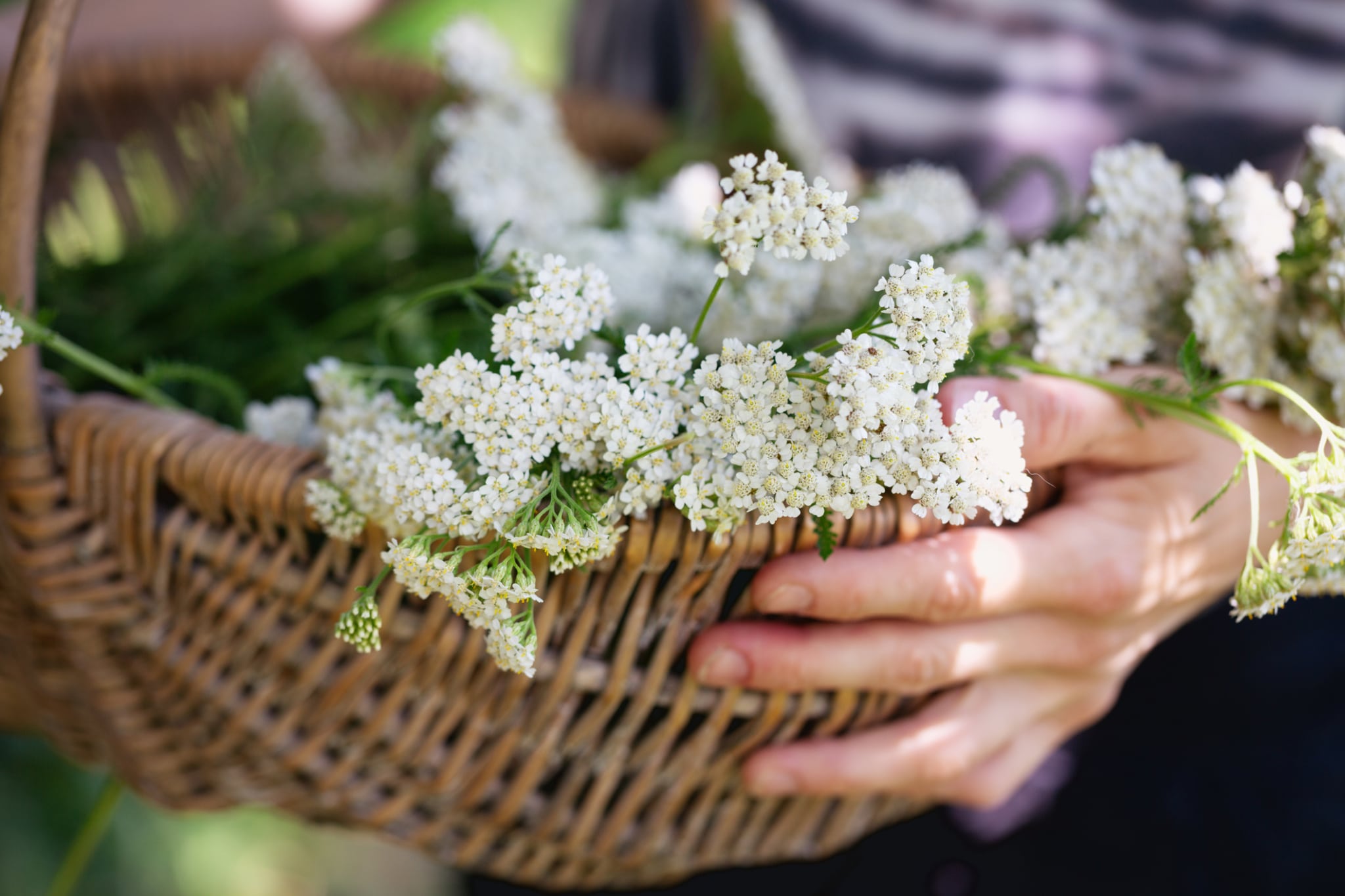
The first time I truly met Yarrow was on a group hike with one of my herbal teachers. As we walked, he pointed out the feathery leaves at our feet and explained that this plant was once carried into battle to slow bleeding from wounds and nosebleeds. He added, “If you’re ever on a hike without a first-aid kit – or bleeding during the zombie apocalypse – a poultice of Yarrow should do the trick!”
Yarrow (Achillea millefolium) is an ancient aromatic herb with many names, and each one tells a story. It's often called "Nosebleed" because its leaves were historically used to staunch (or start) nosebleeds. Other common names like Staunch Weed, Bloodwort, and Soldier's Woundwort point to its long traditional use as a wound herb. According to legend, Achilles himself used Yarrow to tend his soldiers' bleeding wounds on the battlefield – a fitting origin for a plant that seems to meet you exactly where you need it.
Yarrow is a plant that embodies opposites. It is said to be both cooling and warming, grounding and uplifting, moving and stabilizing, opening while protective. On a physical level, it can slow bleeding, but it can also help move stagnant blood. Notable herbalists noticed this duality too. In 1597, English herbalist John Gerard wrote that sniffing "Nosebleed" sometimes caused a nose to start bleeding rather than stop. Herbalist Maude Grieve (1931) remarked in her book A Modern Herbal that Yarrow "seems to act either way," acknowledging its ability to balance what has gone too far in one direction.
There's something settling about this paradox – a plant so attuned to the body's needs that it responds to imbalance rather than simply pushing in one direction. It's a kind of intelligence that makes it one of the most fascinating herbs I've encountered (and one that will indeed be worth knowing in an apocalypse).
In this video blog, we'll dive into the whole story of Yarrow together: its rich history and folklore, how it supports the physical, emotional, and spiritual realms, and its role in aromatic medicine. By the end, you may find yourself looking at this roadside “weed” as one of the most powerful allies in your garden.
Botany of Yarrow
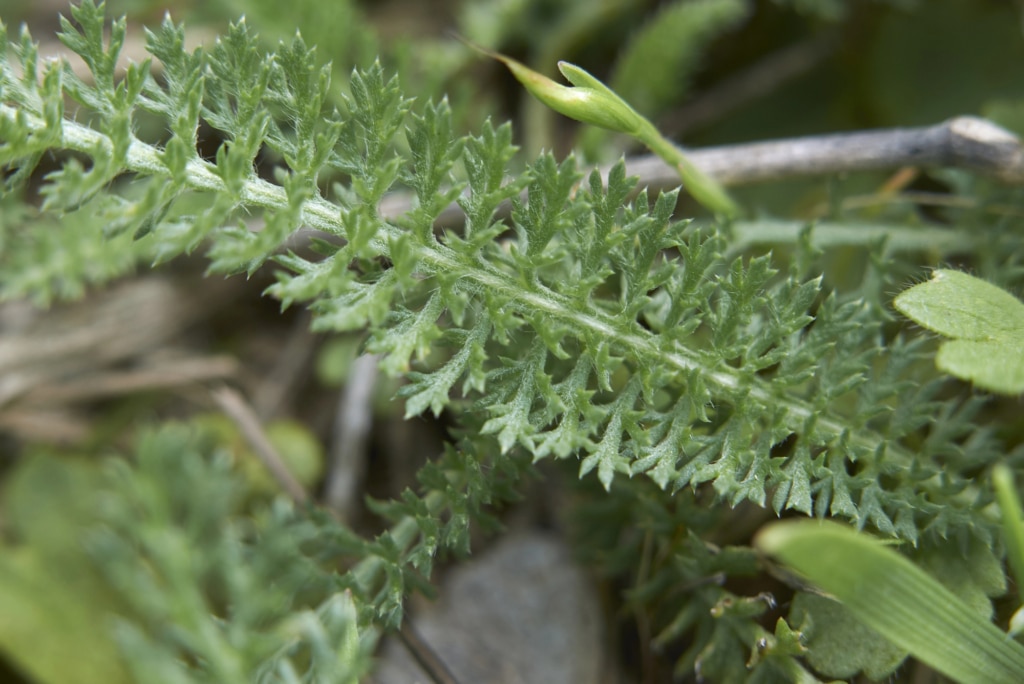
Yarrow's Latin name, Achillea millefolium, has several roots: "millefolium" means "thousand-leaved," referring to the many segments of its foliage, and "Achillea" is dedicated to Achilles, the great warrior of the Greek army who famously used Yarrow to care for his soldiers' wounds on the battlefield.
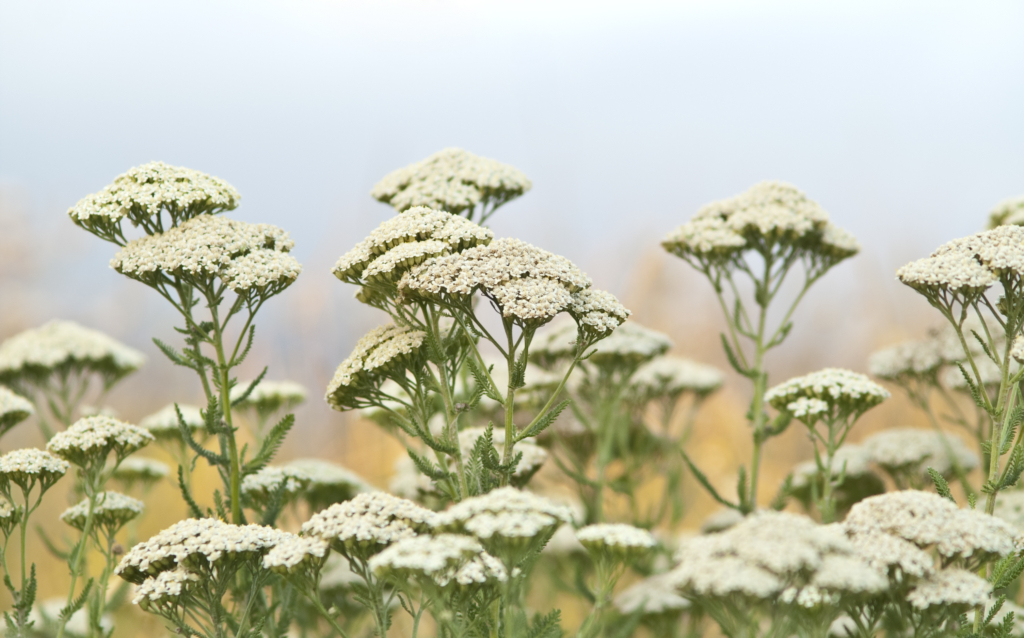
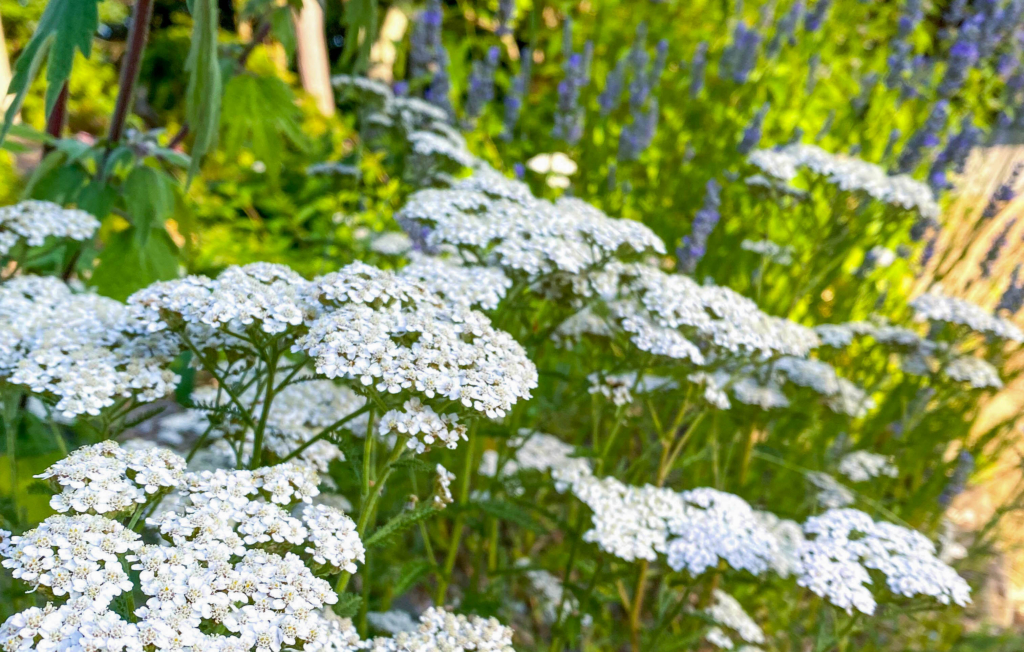
Yarrow is a hardy perennial growing anywhere between 3 inches and 3 feet tall. In the spring, the plant first reveals itself in a soft, feathery plume of green lace-like leaves. Come late spring to early summer, it sends up long, sturdy stems, supporting the plant's crowning feature: a flat-topped cluster of tiny, daisy-like blossoms. These flowering heads are called compound corymbs, and each cluster contains dozens of minute flowers, bone-white or occasionally tinged with pink.
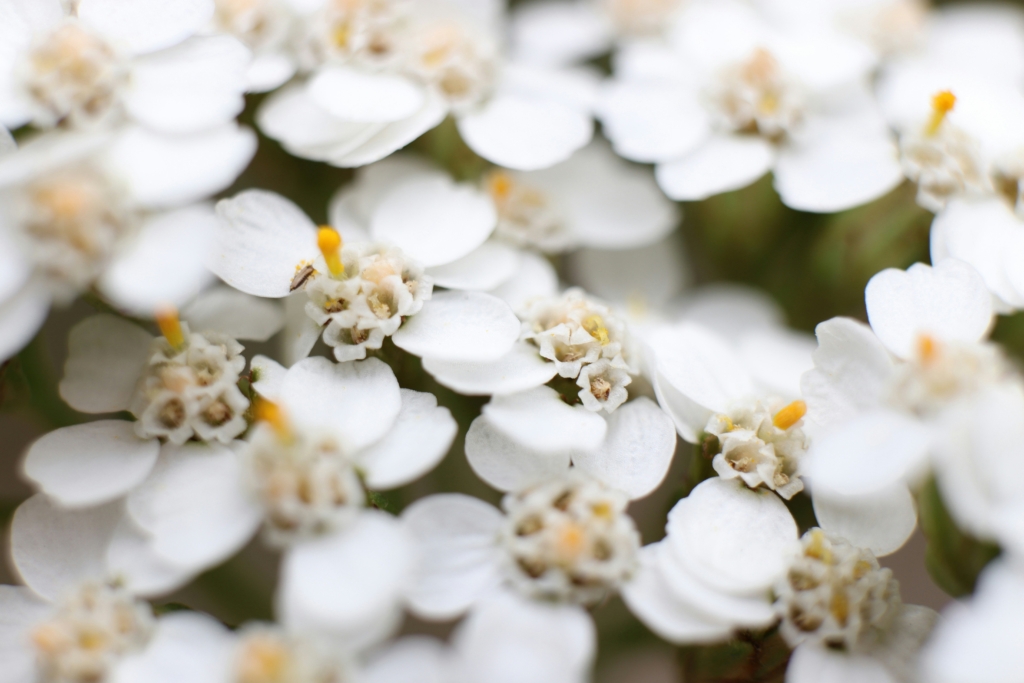
Lean in close and you’ll notice not only the aroma – sweet and herbal with a faintly resinous edge, reminiscent of Chamomile touched with Pine – but also that what appears to be a single bloom is actually a composite, a hallmark of the Asteraceae (Daisy) family. A composite flower is a compact head of many tiny individual flowers (called florets) that together form what looks like one large flower: central disk florets surrounded by small, five-petaled ray florets resembling miniature daisies.
Yarrow is drought-tolerant and has a remarkable knack for adaptability. It thrives across North America in sun-drenched fields, along roadsides, in wild open spaces, cultivated gardens, dry hillsides, soggy meadows, breezy coastlines, and even high-elevation timberlines – flourishing, it seems, wherever life plants it. (While many cultivated Yarrow varieties display striking pink, red, or yellow flowers, the classic white-flowered Achillea millefolium is best for traditional therapeutic applications.)
The History of Yarrow
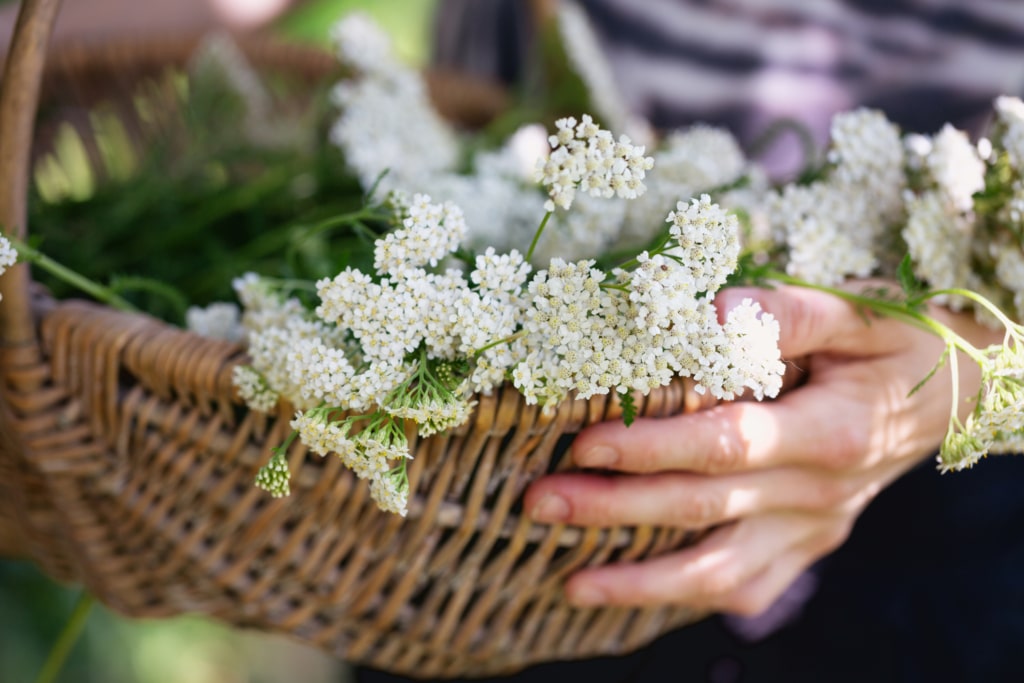
Due to its widespread native habitat, Yarrow has traditional use across many cultures in the Northern Hemisphere, from Europe and Asia to North America. Many Native cultures refer to Yarrow as "Life Medicine," and the Teton Dakota (aka Lakota) name for the plant is tao-pi pezu'ta, which translates to "medicine for the wounded" [1].
The Schillers, a husband-and-wife team of aromatherapists and authors, write in their book: "Early Americans chewed the leaves to relieve an upset stomach, regulate menstrual flow, for fever, chills, and rashes, and to promote dreaming. An infusion of the leaves was used for colds and a chest rub made from the flowers to reduce congestion of the breathing passages" [1]. In Latin America, the plant has been commonly used for wounds, muscle and joint aches, and as a blood purifier. In China, the herb is commonly used for animal and snake bites [1].
Yarrow's relationship with the unseen world runs just as deep as its medicinal roots. It appears in many folktales and love charms across cultures. In one such charm, sewing an ounce of Yarrow into flannel and placing it under your pillow while repeating a verse was said to bring a vision of your future husband or wife [2].
Its divinatory role extends beyond love charms too: Yarrow's dried stalks have been used for centuries in the ancient Chinese oracle known as the I Ching, or Book of Changes, one of the foundational texts of Chinese philosophy. Through the casting of 64 hexagrams, the I Ching offers guidance in navigating life's crossroads and understanding the ever-shifting interplay of forces (often described as yin and yang). Yarrow, in this sacred practice, becomes a bridge between worlds, helping seekers discern the path ahead.
In the Western herbal tradition, Nicholas Culpeper, an English botanist and herbalist of the 1600s, considered Yarrow to be under the influence of Venus and recommended it for wounds, inflammation, and menstrual issues. Medieval households scattered it across floors as a cleansing, protective strewing herb, and it found its way into tobacco blends and snuff. In Nordic brewing traditions, Yarrow sometimes replaced hops to give beer its bite, while in parts of Germany, seeds were added to wine as a preservative [1]. In the British Isles, healers infused Yarrow into oil and blended it with tallow to craft wound ointments.
Yarrow was listed in the United States Pharmacopoeia in the 19th century and was commonly used to promote menstruation, among other traditional uses [1]. Yarrow is even an ingredient in some pharmaceutical products for skin conditions, primarily for its high content of azulene, a potent anti-inflammatory agent. Its drying and toning qualities made it a go-to herb wherever the body needs help tightening and restoring itself.
Yarrow Traditional Medicinal Uses
Topical Use of Yarrow
Historically, Yarrow has been commonly applied to the skin to slow bleeding and support tissue repair. Its astringent and anti-inflammatory properties help tone tissues and calm irritation, while its antimicrobial compounds reduce the risk of infection as wounds heal. Paired with mild analgesic effects, Yarrow has long been a trusted topical herb for sprains, strains, bruises, varicose veins, arthritis, neuralgia, acne, sunburns, and other inflammatory skin issues.
Fresh leaf poultices and herbal compresses remain some of the most traditional ways to work with Yarrow externally. The plant can also be infused into oil for use on its own or as a base for salves and balms, while the essential oil can be diluted in a carrier oil (click here to view our Essential Oil Dilution Guide). Beyond topical use, Yarrow also shines in herbal steams, baths, and washes: as a facial steam for congested skin or cold symptoms, a tea rinse for acne or eczema, a hair rinse for scalp health, a sitz bath for uterine support, or even a soothing mouthwash for inflamed gums.
Yarrow Benefits for Digestion
As a pungent, bitter herb, Yarrow helps stimulate digestion and supports the assimilation of nutrients. Its bitterness awakens digestive secretions, while its antispasmodic qualities help relax tension in the gut. In Traditional Chinese Medicine (TCM), Yarrow is understood to support the liver and regulate the flow of Qi, making it useful for patterns of stagnation that show up as indigestion, intestinal cramping, IBS, or sluggish bile production.
Many herbalists commonly call on Yarrow for clearing congestion in the digestive tract. Its anti-inflammatory and mildly astringent actions help tone and soothe irritated tissues, making it beneficial for bloating, gas, diarrhea, and stomach cramps. For these reasons, Yarrow is a beautiful addition to gut-healing tea blends or digestive bitters formulas (especially when stagnation and inflammation are part of the picture).
Yarrow Benefits for Uterine Health
Yarrow has a long history of supporting uterine health and is well known as an emmenagogue, an herb that encourages balanced menstrual flow and helps relieve uterine discomfort. Its dualistic nature shows up again here. Yarrow can dry and tighten tissues to slow heavy bleeding, while simultaneously thinning and moving stagnant blood. That dual action makes it valuable for painful, heavy periods, pelvic congestion, endometriosis patterns, and situations where blood feels "stuck" in the lower body. It tones the uterus, cools heat, and calms the restlessness that can accompany hormonal shifts.
Essentially, Yarrow supports the uterus in doing what it needs most – releasing what is congested while protecting against excessive loss. It's no wonder many herbalists recommend Yarrow tea for practically any uterine concern. Its genius lies in that balancing intelligence: it doesn't push the body in one direction, it simply helps restore flow (pun intended!).
Yarrow Benefits for Circulation & Balance
Herbalist Matthew Wood affectionately calls Yarrow the "master of blood," and the nickname fits. It works on circulation from every angle, helping blood clot when it's needed and loosening congestion when it isn't. Thickening, thinning, moving, or containing – Yarrow seems to have a knack for restoring balance wherever blood has gone too far in one direction. That is why it shows up again and again for wounds, bruising, bleeding, stuck circulation, and hot, inflamed tissues.
Yarrow is also well known for its diaphoretic actions (meaning it encourages sweating), giving it a long tradition of use for supporting the fever process and helping the body break a fever naturally. That same affinity for heat and the body's surface makes Yarrow useful for respiratory complaints and illness as well. Its anti-inflammatory and decongestant properties make it a common recommendation in both aromatherapy and herbal preparations for cold and flu symptoms, pneumonia, and even seasonal allergies.
Unlock Your Free Issue Of...
🌿 The Aromatic Medicine Garden Membership 🌿
Are you ready for a deeper, holistic dive into the world of aromatic plants? See what our membership is all about with your full free Rosemary sneak peek issue – similar to this vlog style but more in-depth – featuring an hour-long plant talk & 21-page plant profile pdf full of recipes and insights.

Yarrow’s Medicine in the Emotional Realm
Just as Yarrow helps seal up physical wounds, it can help to strengthen our energetic field and emotional boundaries. Energetically, Yarrow is regarded as the herb for empaths: those who tend to feel overwhelmed by intense external energy or absorb the emotions of others. Many healers see it as a boundary-setting herb for people who need help keeping their own energy separate and safe while supporting those around them. But to truly understand Yarrow's emotional support, we have to go back to the myths that helped shape its name.
In Greco-Roman lore, it was Chiron, the great healer and wise centaur, who taught Achilles the art of medicine. Even though he was immortal, Chiron was not safe from suffering. One tragic day, as Heracles fought a band of wild centaurs using arrows poisoned with venom, Chiron was struck by mistake. Immortal and unable to die, he was instead condemned to unending agony. Even with all his knowledge, he could not heal himself. His suffering became a lifelong teacher, shaping his ability to tend the wounds and pain of others with unmatched compassion.
The story of Achilles embodies the archetype of the wounded warrior. His mother, Thetis, tried to make him invulnerable by dipping him in the sacred River Styx, but she held him by his heel, which remained untouched by the protective waters. That small, forgotten place became his single weakness, and it was there that Paris's arrow eventually struck him. (This is where the phrase “Achilles heel” comes from!).
Through the stories of Achilles and Chiron, Yarrow has become known as the herb of the wounded healer and wounded warrior: a plant that unites both strength and vulnerability, courage and compassion. Chiron's story reminds us that many people become healers because they first had to survive their own wounding.
So many people find their way to aromatic medicine and herbs through a similar story – drawn in, as Chiron was (sometimes not by choice but by necessity), to find healing. Through that search for relief and meaning, we learn not only how to mend ourselves but how to support others with hard-won compassion and skill. This is the essence of the wounded healer: wisdom earned through suffering, then generously shared.
Yarrow honors that inner transformation. It reminds us that to serve as a steady presence for others, we must continue tending to our own wounds, too (because that work is never truly finished). On a soul level, Yarrow acts like a talisman for anyone walking the healing path, supporting boundary clarity, emotional repair, and the courage to keep going even when the heart has been bruised.
Yarrow Plant Uses in Aromatic Medicine
Yarrow is a multifaceted plant commonly used in both aromatherapy and herbalism. Here are some of our favorite ways to use Yarrow:
Yarrow Essential Oil
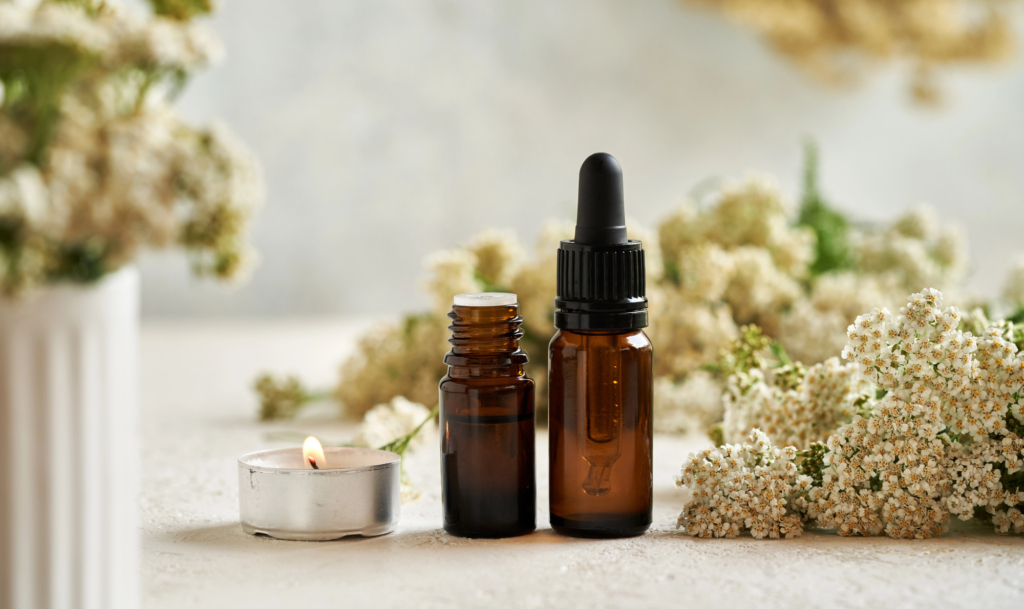
Yarrow essential oil is made by steam distillation of the plant’s flowers and aerial parts, often producing a vivid, ocean-blue hue that comes from chamazulene, a powerful anti-inflammatory compound in the plant. For aromatherapy, add 3-4 drops of Yarrow EO to your diffuser, or for topical use, properly dilute it into a carrier oil for an anti-inflammatory body oil. (The EO can be irritating to some individuals, so it’s best to perform a skin patch test.) Yarrow also works beautifully as a base note in botanical perfumes, as an oil-based roll-on natural perfume applied to pulse points or even as anointing oil paired with a personal mantra.
Yarrow Hydrosol
Yarrow hydrosol, distilled from the flowering tops, often carries a lovely pale blue tint, just like the essential oil, indicating the presence of the anti-inflammatory chamazulene. A hydrosol is the aromatic water that remains after steam distillation of plant material; essentially, a gentler, water-based essence that captures many of the plant’s therapeutic properties. Spritz Yarrow hydrosol anytime you need energetic cleansing, protection, or support, or use it as a gentle skin toner.
Natural Incense
Yarrow makes a wonderfully deep and rich incense when burned, offering a warm, slightly sweet aroma that fills a space with grounding energy. Both the leaves and flowers can be used (though I personally prefer the flowers for their fuller fragrance). It resonates particularly well for empaths or anyone who identifies with the archetype of the wounded warrior-healer. Try sprinkling Yarrow flowers on natural incense charcoal, or grind it into a powder and add it to loose incense blends or cones. To learn how to make your own incense, check out our Traditional Incense Crafting Course.
Oil Infusion
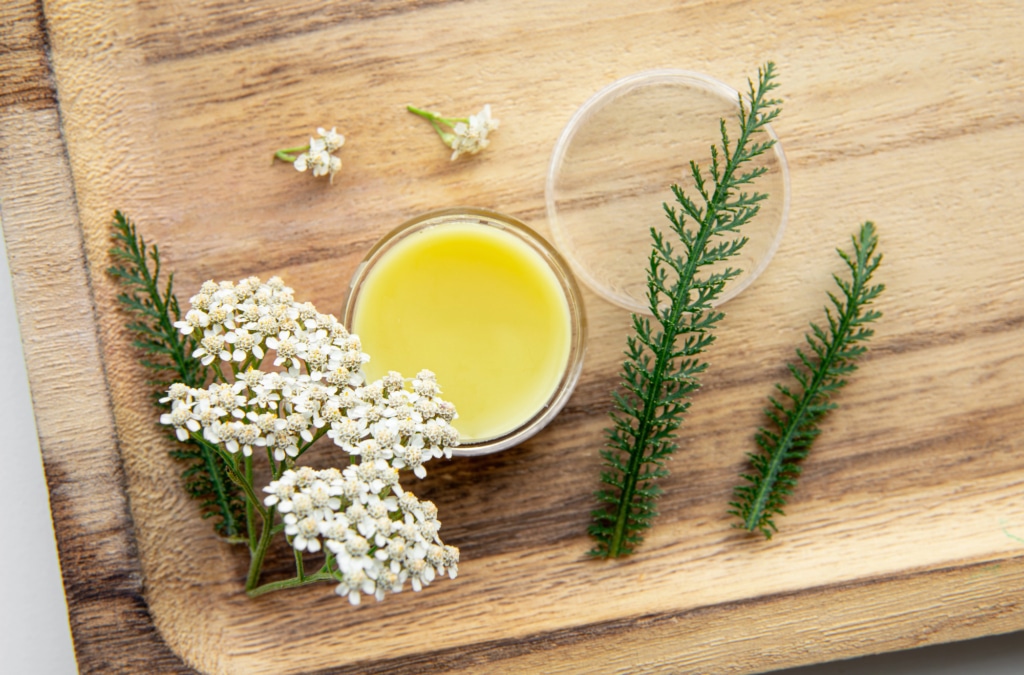
Oil infusions are a classic herbal and aromatic preparation in which vegetable or animal fats are used to draw out therapeutic compounds from herbs. Yarrow-infused oil can be used as an anointing oil for connecting with the energy of the wounded warrior-healer, or topically to support circulation. It works well as a massage oil for bruises, varicose veins, or other areas of congestion, and can also be incorporated into salves, balms, and ointments. (We cover how to make oil infusions in-depth in our Art of Aromatic Preparations Mini-Course!).
Yarrow Tincture
A tincture is a concentrated liquid herbal extract made by soaking plant material in alcohol (or another solvent) to draw out and preserve its therapeutic constituents. Yarrow tincture is quite bitter on its own, so I often blend it with complementary herbs to soften the flavor and create a more balanced formula. Traditionally, Yarrow is used as a supportive herb in tincture blends for the digestive, circulatory, and reproductive systems. In smaller, drop doses, Yarrow tincture can also be used for energetic support, especially when working with themes of boundaries and the archetype of the wounded warrior-healer. (Learn how to make tinctures in our Art of Aromatic Preparations Mini-Course.)
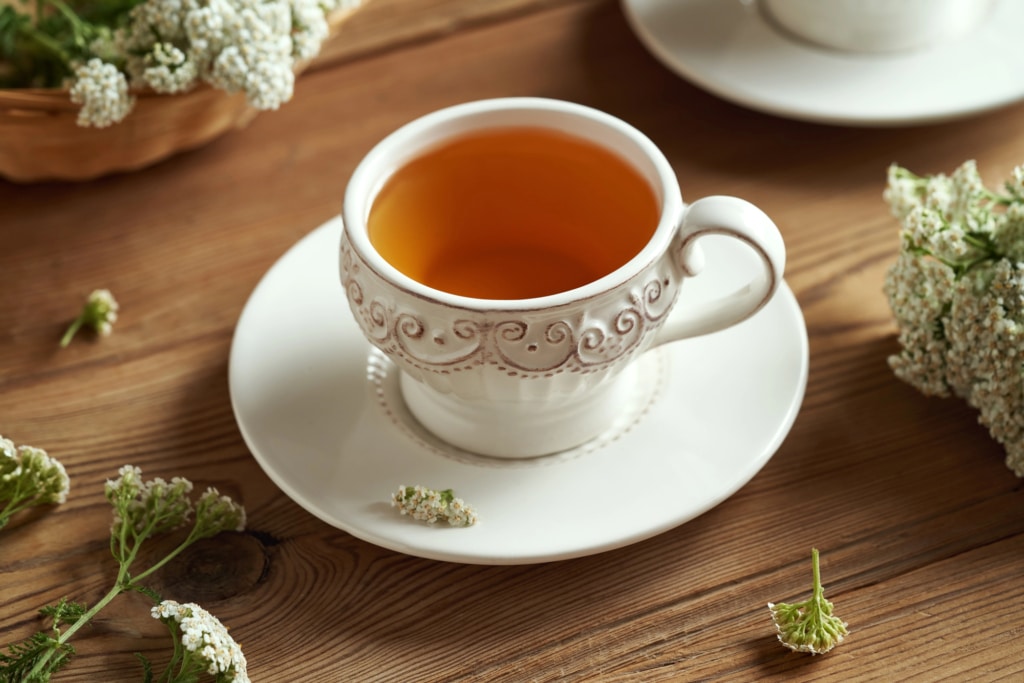
Yarrow Tea
To prepare Yarrow tea, use approximately 1 teaspoon of dried herb (or 1 tablespoon of fresh plant material) per 1 cup of hot water. If you want to fully experience the benefits of Yarrow tea, allow it to steep for 15–20 minutes, keeping the cup covered to preserve its delicate volatile oils. Yarrow has a distinctly bitter flavor on its own (which reflects its powerful action in the body), but blending it with other herbs can create a more balanced flavor. Yarrow shines as a supportive herb in tea blends for the digestive, circulatory, and immune systems. My favorite is EPY tea, which is equal parts Elderflower, Peppermint, and Yarrow.
Benefits of Yarrow Tea:
- Uterine support
- Urinary health support
- Digestive support
- Immunity support
- Emotional balance
Safety Precautions & Contraindications
Some individuals can get skin irritation with the topical use of Yarrow and/or Yarrow essential oil (this could be due to an Asteraceae plant family allergy, which happens to some folks, or other reasons). It’s generally recommended to perform a skin patch test before widespread topical use to see how the skin reacts.
Always dilute Yarrow essential oil in a carrier oil before topical use. Do not use more than a 2% dilution ratio. Some sources state that topical overuse may result in photosensitivity.
Avoid use in pregnancy or while breastfeeding. Avoid use with children under 2 years old. Some herbal texts recommend avoiding use in people with epilepsy. Always consult a trained health professional before starting any herbal regimen.

Loved this deep dive into Yarrow?
This is just a taste of what you’ll find inside the Aromatic Medicine Garden. Each month, we explore one plant in depth, with a full hour-long Plant Talk, detailed monograph, and step-by-step recipes. Joining the membership gives you instant access to our full library of past talks, monographs, Core Teachings, and tutorials, plus Live Q&A sessions and a supportive community of experts & peers to grow with.
Deepen your relationship to plants – one plant,
one preparation at a time.
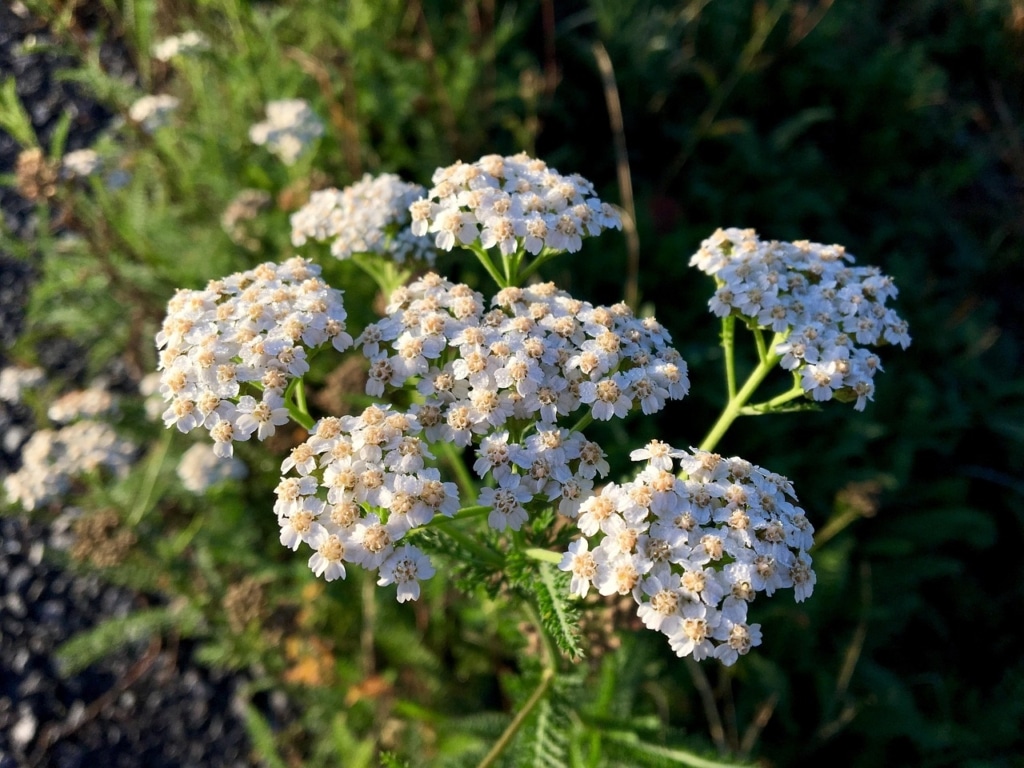
Yarrow Plant Profile
Latin Name: Achillea millefolium
Other Common Names: Thousandleaf, Thousand-Heal, Staunch Weed, Staunchgrass, “Herb militaris,” Bloodwort, Bloodweed, Sanguinary, Milfoil, Soldier’s Woundwort, Carpenter’s Weed, Nose-Bleed, Life Medicine
Genus: Achillea
Plant Family: Asteraceae (Daisy)
Parts Used: leaf, flower
Herbal Energetics and Actions: alterative, amphoteric, analgesic, anticatarrhal, antifungal, anti-inflammatory, antimicrobial, anti-phlogistic, antiseptic, antispasmodic, astringent, bitter, carminative, chalogogue, choleretic, circulatory stimulant, diaphoretic, digestive stimulant, diuretic (mild), emmenagogue, expectorant, febrifuge, hemostatic, hepatic stimulant, tonic, uterine decongestant, vasodilator, vulnerary
Body Systems Affiliation: genito-urinary system (reproductive and urinary systems), digestive system, integumentary system, cardiovascular/circulatory system
Aroma: rich, deep, herbaceous, bittersweet, pungent, slightly camphoraceous
References
1. Schiller, Carol and Schiller, David. (2008). The Aromatherapy Encyclopedia: A Concise Guide to over 385 Plant Oils. Basic Health Publications.
2. Darwin, Tess. (2004). The Scots Herbal: The Plant Lore of Scotland. Mercat Press.
This video features our instructor Erika Galentin

© 2026 The Northwest School of Aromatic Medicine. All rights reserved.
*The statements above have not been evaluated by the FDA, and are for educational purposes only. This article is not intended to diagnose, treat, cure, or prevent any disease. This article should not be taken as medical advice. Please consult your physician before you use this information for health purposes.
