
In late 2025, an investigation by Originality.ai revealed something staggering: roughly 82% of herbal remedy books on Amazon were at least partially generated by AI [1]. Pause for a moment and let that sink in. If you purchased an herbal book this past year (or even casually browsed herbal or aromatic blogs), there is a very real chance the words you read were not written by a trained herbalist, a clinical practitioner, or a professional with years of relationship to the plants… but by a machine.
And that should concern you. Because when it comes to herbal and aromatic medicine, there is a lot of nuance.
Just because something is “natural” does not automatically mean it is safe. There are so many different factors at play: dosage recommendations differ by individual, preparation methods vary in constituent content, the complexities of personal constitutions and energetics, and herb–drug interactions. The list could go on and on. One wrong recommendation (delivered with total confidence) can lead to real harm.
A few years ago, I wrote about the dangers of online misinformation and how anyone can publish anything and present it as fact. But what we’re witnessing now is something entirely different. We're not just talking about bad advice from someone who doesn't know better. This is content mills churning out thousands of pages that look credible but have no lived experience behind them.
If you’ve ever used ChatGPT, you may have noticed the small disclaimer at the bottom of the screen: “ChatGPT can make mistakes. Check important info.” That’s because AI generates responses based on patterns in existing data. It does not verify truth in real time. It can be false or outdated. It can misinterpret nuance. And perhaps most dangerously, it can sound absolutely certain while being wrong (more on this later).
You wouldn’t hand your health over to a robot with no clinical training or accountability. Yet many people are unknowingly doing exactly that when they rely on AI-generated herbal books, blogs, and courses, or even directly ask ChatGPT for health advice. This is a turning point for plant medicine. Because herbalism and aromatic medicine are not just data, they are a tradition built on experience, relationship, and care.
So how do you tell what's real anymore? How do you recognize the difference between wisdom that's been lived and AI content that's been assembled? Let’s explore what’s at stake, how to protect yourself, and the true heart and soul of plant medicine.
The Rise of the “AI Herbalist”
Natural remedies are trending now more than ever, and alongside this resurgence has emerged something new: the “AI herbalist.” In the past few years, we’ve witnessed an explosion of AI-generated herbal and aromatic blogs, social media “experts” with no clinical training dispensing health advice on Instagram, Facebook, and TikTok, and now even AI-written herbal books and courses entering the marketplace.
This is especially concerning in an era where social platforms are scaling back content moderation. Instagram and Facebook stopped independent fact-checking in early 2025 [2], and recent analyses suggest that about 20% of TikTok content contains misinformation [3]. In other words, the digital ecosystem is primed for confident-sounding – but unverified – health advice to spread rapidly.
And the issue goes beyond social media. In the summer of 2025, the #1 bestseller in Amazon’s “Herbal Remedies” book category was The Natural Healing Handbook, marketed as “more than a book… It’s a return to natural wisdom and confident self-healing.” As of this publishing, it has over 1,500 reviews and a 4.5-star rating. Yet a simple Google search reveals no evidence that the author, “Luna Filby,” exists. According to AI-detection analysis by Originality.ai, the author bio, book summary, and sample pages were flagged as likely AI-generated with extremely high confidence [1].
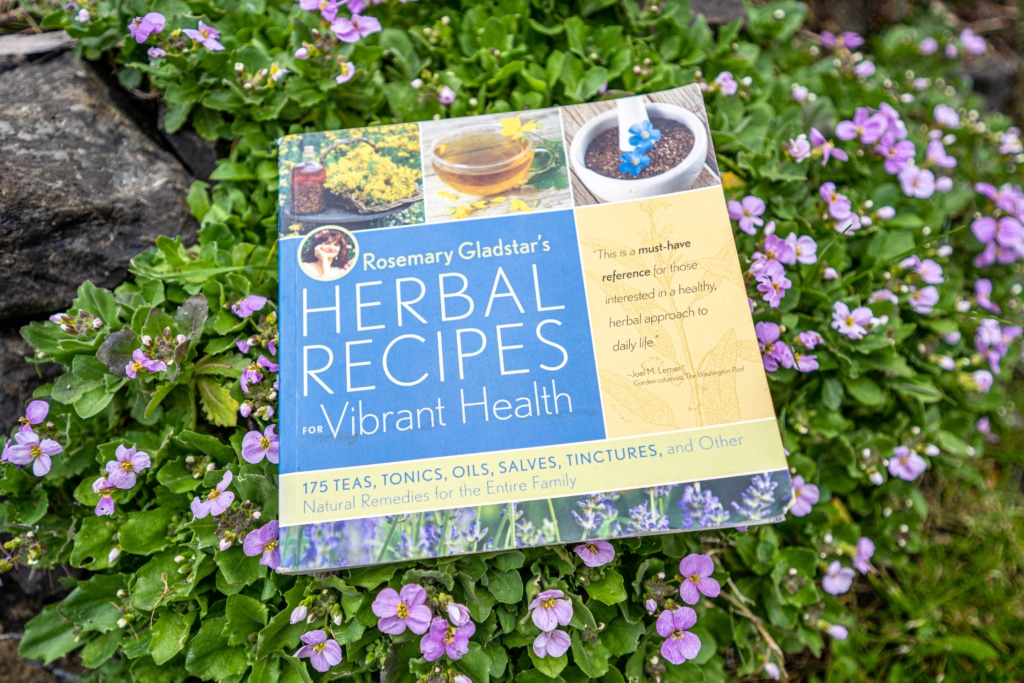
One of our favorite books by renowned herbalist Rosemary Gladstar
Unfortunately, this is not an isolated case. Other popular book titles feature fake authors using nature-inspired names (think Rose, Sage, Green, Willow, River), paired with AI-generated headshots and fabricated biographies. Some profiles use stylized logos instead of real photographs. In one case, an author named “Rosemary Gladwell” published The Holistic Guide to Optimal Health [1], a name strikingly similar to the highly respected herbalist Rosemary Gladstar. Coincidence? Perhaps. But to those familiar with the field, it raises eyebrows.
At first glance, these books appear polished and authoritative. But confidence is not the same as experience. And in herbal and aromatic medicine, the difference matters. Beneath the surface, the content often includes fictitious personal anecdotes, exaggerated cure-all claims, and references to controversial figures such as Barbara O'Neill (sometimes referred to misleadingly as “Dr. Barbara” despite not being a licensed physician), who has been banned from providing medical advice in New South Wales. Others cite Alfredo Bowman, widely known as “Dr. Sebi,” who promoted herbal cures for serious diseases despite lacking medical credentials.
One of the big problems with AI is that it is designed to predict the most statistically likely next word or sequence based on vast, unverified internet data, rather than understand logic or facts. These models lack common sense, often "hallucinating" plausible-sounding but false information. On top of that, AI is trained to be helpful, polite, and fluent, which inherently makes it sound confident, even when it is wrong. (Several weeks ago, viral videos circulated of people asking ChatGPT how many “r’s” are in “strawberry,” and when ChatGPT was challenged for its incorrect answer, it continued to double down and sound confident about its wrong answer.)
When content is generated by a machine trained on vast swaths of unverified internet data, it can easily recycle misinformation, amplify lofty claims, and present it all with unwavering confidence, making false information sound really believable. And that is where the real danger lies.
Why the “AI Herbalist” is Dangerous
Inaccurate Information Lacking Context
A practicing clinical herbalist or trained aromatherapist would likely disagree with much of the herbal answers AI produces. Why? Because herbal medicine is nuanced, individualized, and very contextual. Dosing alone depends on multiple variables: plant potency, preparation method (tincture vs. tea, essential oil vs. CO₂ extract), formulation strategy, and the individual’s age, medications, overall health history, and more.
Constitution and energetics matter, too. Ginger, for example, is often promoted online as a universal remedy for nausea. But for someone who already runs hot, Ginger may feel overstimulating rather than soothing. Herbalism is not one-size-fits-all. (Read more about this in our article: The Foundation of Energetics & Constitution.)
And perhaps most importantly: herb-drug interactions and contraindications are very real. “Natural” does not automatically mean safe. Many herbs can interact with prescription medications, alter metabolism pathways, and more. Without proper training, these risks are easy to overlook.
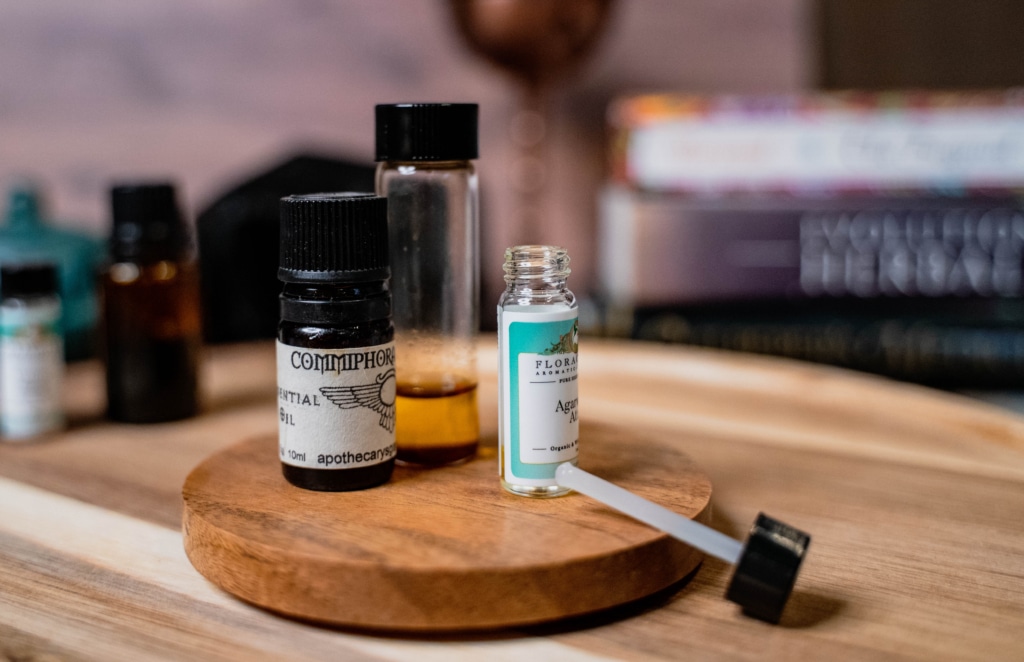
The same applies to aromatherapy. Essential oils are potent, highly concentrated substances. Safety considerations, including dilution, contraindications, and route of administration, are essential. Yet many companies still market essential oils as “therapeutic-grade” or “food-grade,” implying they are safe to ingest. In reality, essential oils can be extremely irritating to the digestive tract and potentially harmful when used improperly. Internal use should only be undertaken with the guidance of a properly trained professional. But AI often leaves this important safety information out. (Click here to see our full Essential Oil Safety Guide.)
Users on Reddit have shared instances where AI suggested rubbing Peppermint or Cinnamon oil on burns to "cool" them (which actually exacerbates the injury), or applying undiluted essential oils to open wounds – a practice that can cause chemical burns or allergic sensitization. AI frequently suggests drinking essential oils (like Oregano or Tea tree oil) in water, which can damage the mucosal lining of the esophagus and stomach. (Please do not do any of these things!)
And on top of all of this nuance, there have been plenty of examples of AI just being plain wrong. One of the most viral AI stories from this year involved a YouTuber named Kristi sharing a near-fatal experience with her best friend, who asked ChatGPT to identify a plant in her garden. AI confidently (and incorrectly) identified the plant as carrot foliage or Wild Carrot (Queen Anne's Lace). The herb was actually Poison Hemlock, a highly toxic plant with no known antidote that can cause respiratory collapse and death if ingested (or even touched by sensitive individuals).
Even when her friend specifically asked, "Could this be Poison Hemlock?" the AI reportedly doubled down, claiming it lacked the specific purple blotches associated with Hemlock, even though those features were visible in the photos provided. Note: There are a lot of toxic plant lookalikes out there in the botanical kingdom. Please do not ever use ChatGPT or AI for plant identification!
The Loss of Heart & Soul
Another sad side effect of AI-generated plant content is the loss of the heart and soul behind this tradition. Herbal and aromatic medicine cannot be reduced to algorithmic pattern recognition. Traditional medicine is an ancient, living practice that requires education, clinical experience, and an ongoing relationship with both plants and people. It is not a formula of “input symptom, output herb.”
AI has never apprenticed with a teacher. It has no training in herbalism or aromatherapy. No clinical experience. It has never sat with a client in crisis, adjusted a formula for a complex case, or witnessed the subtle ways plant energetics can shift a person’s body, mind, or spirit.
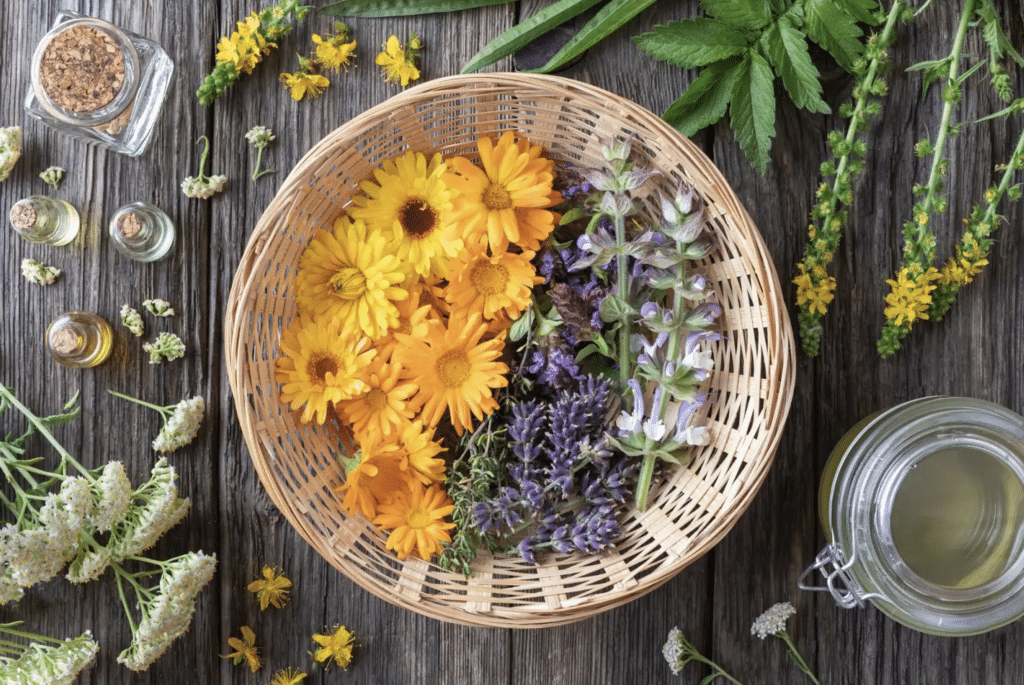
It has never knelt in a garden at dawn, brushing resin from its fingers after harvesting fresh Calendula. Or inhaled the deep, balsamic sweetness of Frankincense as it rises in smoke and felt the nervous system soften. It has never tasted a bitters formula and felt digestion awaken. It can never truly understand how plants move us in ways that words can’t describe.
Herbalism and aromatic medicine are relational and dynamic. They are practices that unfold in real time, responding to constitution, context, and nuance. AI, by contrast, is pattern prediction, reorganizing existing information without any lived understanding. Years of person-plant relationship cannot be replicated by a robot. Deep care for plants and humans cannot be simulated. And the spiritual dimension of plant medicine – the reverence, the sensory intimacy, the felt experience of working with the botanical kingdom – cannot be computed.
We often say that herbal and aromatic medicine is not as simple as “take this herb for that symptom.” Plant medicine is not just a biochemical interaction. It includes a spiritual relationship and sensory experience. It involves wisdom earned through observation, intention, and intuition. And that kind of wisdom is lived, not generated.
The Impact of AI on the Herbal & Aromatic World
The rise of the AI herbalist is flooding the marketplace with low-cost, AI-generated courses, fabricated credentials, and inflated promises that look polished but lack any real depth or accountability. In doing so, it undermines decades of apprenticeship, real clinical practice, and the devoted work of plant stewardship that true herbalists and aromatherapists have poured their lives into.
The consequences ripple outward: genuine herbal education becomes devalued, we struggle to discern credible teachers from manufactured ones, and public trust in plant medicine begins to erode. Traditional medicine already faces skepticism; this wave of AI-generated misinformation only fuels the “snake oil” stereotype. We know plant medicine works, we have seen it in practice, in clinics, in communities, and in ourselves, but quick, algorithm-driven content gives critics more ammunition and devalues the power of the botanical kingdom.
How to Spot an “AI Herbalist”
By now, we’ve established that relying on AI for herbal or aromatic advice is risky. But what happens when AI-generated books and online courses are marketed as if they were written by real practitioners? How can you tell the difference between lived wisdom and machine-assembled information? The truth is, it’s becoming increasingly difficult to spot AI-generated writing or images. The branding is clean and polished, and the tone is confident. That’s what makes it so convincing.
So instead of focusing only on the content itself, let’s look at the source: Who published it? Who is the author? What is their training? Do they list clinical experience, apprenticeships, or professional affiliations? Do they have a visible reputation within the herbal community? In the age of the AI herbalist, discernment begins with asking: Who is actually behind this information?
If the author has no traceable presence beyond a single book listing – no interviews, teaching history, community engagement, professional footprint – that’s a major red flag. If a simple Google search yields nothing credible, there’s a strong possibility the “expert” behind the content may not exist at all.
Red Flags to Watch For:
- Vague or unverifiable credentials
- No visible accountability within the herbal community
- Heavy reliance on trend-driven content or viral health claims
- Overly generic, surface-level content with no nuance
- No clearly stated clinical experience or years in practice
- No mention of lineage, apprenticeship, or mentorship
- No real-world photos of plant work, harvesting, formulation, or teaching
- No specific case studies or examples from actual practice
Our School & Our Teachers
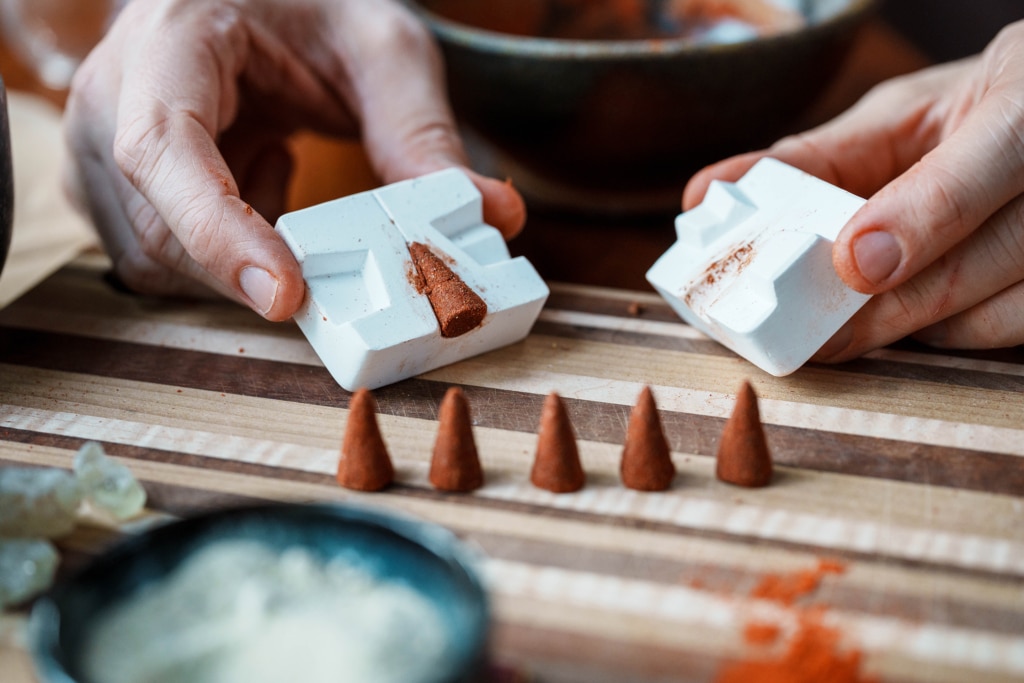
The Northwest School of Aromatic Medicine is built on real human experience: decades of lived relationship with plants, hands-on practice, and clinical study. We are practitioners, teachers, and formulators who have devoted our lives to the botanical kingdom. Founded in 2014 by Evan Sylliaasen, the school was created with a clear vision: to guide students into a deeper relationship with aromatic plants and build skills to craft their own incense, natural perfumes, and herbal remedies.

Evan Sylliaasen: School Founder and Instructor of the Traditional Incense Crafting Course & Botanical Resins + Gums Course
Evan helped revive the ancient art of traditional incense in the Western world and brought it back into modern herbal culture, coining the term “aromatic medicine” to describe his visionary integration of herbalism, aromatherapy, and incense as medicine.
His path began in 2008 with studies in herbal gardening, aromatherapy, herbalism, Ayurveda, and Western alchemy. In 2011, he became Head Incense Formulator for his sustainable company, Higher Mind Incense. He went on to complete an advanced one-on-one aromatherapy mentorship with pioneer Avraham Sand in 2012, studied herbalism under Sajah Popham (founder of the School of Evolutionary Herbalism), and deepened his aromatherapy training with master aromatherapist David Crow in 2013. That same year, he began working as a spagyricist and tincturist at Natura Sofia (formerly Organic Unity).
In 2014, he founded the Northwest School of Aromatic Medicine to share the depth, beauty, and power of the aromatic arts with students around the world. And like any true practitioner, he continues to study, drawing inspiration from his teacher and mentor, traditional alchemist and chemist Robert Bartlett.
Erika Galentin (MNIMH, RH): Instructor of the Aromatic Medicine Garden Membership
Erika Galentin is a clinical herbalist, aromatherapist, distiller, grower, and medicine-maker consulting from Sovereignty Herbs in Athens and Columbus, Ohio. She serves as Head Director of the American Herbalists Guild and is a professional member of the National Institute of Medical Herbalists.
After earning her degree in Herbal Medicine from the University of Wales in Cardiff, UK, and the Scottish School of Herbal Medicine in Glasgow, UK in 2006, Erika began her clinical practice. Over two decades of clinical work in the field have given her a profound platform for witnessing the efficacy of medicinal plants and aromatics in real-world therapeutic settings.
Through her clinical work, Erika seeks to cultivate informed, empowered relationships between plants and people, and between individuals and their own bodies. She honors the vital role that emotions and the psyche play in the ecology of our physical terrain, recognizing that true healing extends beyond symptom management.
Erika is also the author of The Family Guide to Aromatherapy: A Safe Approach to Essential Oils for a Holistic Home, published in August 2019. A highly sought-after educator, she teaches at herbal and aromatic conferences, workshops, and retreats, and offers mentorship programs for emerging practitioners. Erika shares her wisdom in our Aromatic Medicine Garden, a rich membership and library packed with Plant Talk videos, plant monographs, preparation tutorials, recipes, philosophical teachings, cultivation tips, and more.

JK DeLapp (L.Ac, DAOM): Instructor of the Natural Perfumery Course
JK DeLapp is an award-winning natural perfumer and practitioner of Traditional Chinese Medicine. From an early age, he was drawn to the elemental forces of the natural world – woods, resins, earth, flowers, and herbs – a fascination that would later define his life’s work. After graduating from Pacific College of Oriental Medicine in San Diego in 2012, JK felt called to explore the art of natural perfumery. What began as a personal passion soon evolved into Rising Phoenix Perfumery, his thriving artisanal perfume house dedicated to crafting top-shelf, all-natural fragrances.
As both an importer and exporter of rare botanical materials, JK travels internationally in search of exceptional essences and plant treasures. His work has taken him to the heart of perfumery traditions in the Middle East and beyond, where he has cultivated direct relationships with distillers, growers, and traders to ensure the highest quality materials for his creations.
JK’s perfumes are highly regarded in the aromatic world for their depth, complexity, and longevity. His work has earned recognition worldwide, and he is known for crafting fragrances that evoke emotion, memory, and narrative. JK operates at the intersection of fragrance and medicine, a rare convergence of artistry and botanical knowledge. Drawing on extensive herbal training and pharmacy compounding education, he applies clinical precision and plant wisdom to natural perfumery and aromatherapy. With over a decade of experience, JK now shares his expertise and passion as the lead instructor of the Natural Perfume Course at the Northwest School of Aromatic Medicine.
Melissa Szaro: School Content Manager
Melissa is the content manager behind the scenes at the NW School of Aromatic Medicine, writing educational blog posts and social media content, drawing on her extensive herbal training while meticulously fact-checking all course materials. Her journey into plant medicine began with a desire to heal, which led her to study at the Elderberry School of Botanical Medicine in Portland, OR, where she became a clinical herbalist in 2017. She also holds a Gardening for Herbalism certificate and is a trauma-informed yoga teacher.
Melissa spent years working in herb shops before founding her own herbal business, Blossom + Thorn, in 2019. She finds great joy in leading Plant Spirit Meditation circles and herbalism workshops, and when she’s not at the computer, she can usually be found gardening or exploring nature with her dog, Rudy. Her dream is to continue sharing plant medicine and empowering others with accessible education.
Summer Goon: Operations & Student Support Manager
Summer's herbal education began at the Self-Heal School of Herbal Studies in San Diego, CA. From there, she shifted her focus to bioregional herbalism of the Southwest U.S. in 2019 and completed a wild food and medicine apprenticeship with Daisy Jones of Daily Daisy Botanicals. Throughout her apprenticeship with Daisy, Summer nurtured a deeper understanding of plant wisdom and traditional uses in food & medicine.
After taking the Traditional Incense Crafting Course at the Northwest School of Aromatic Medicine, her adoration for this aromatic craft grew, and she was honored to join Evan and other aromatic experts in 2020. Summer finds deep purpose in serving as an end-of-life doula and leading medicine-making circles and workshops in her local community.
Protect the Heart & Soul of Plant Medicine
In a world where algorithms can generate polished content in seconds, it’s easy to forget that herbal and aromatic medicine is not just information, it is lived experience. True plant medicine unfolds in the kitchen, the garden, the apothecary, and the clinic. It engages the senses and touches the spirit. Here at the NW School of Aromatic Medicine, we are proud to be part of this living lineage. Behind every lesson is a human being who has cultivated a relationship with plants that spans years, continents, and sensory experience.
The rise of the “AI herbalist” may feel daunting, but it also reminds us why human expertise matters now more than ever. Real herbalists and aromatherapists bring nuance, context, and accountability to their work. They know the plants intimately: their flavors, smells, textures, energetics, and how they interact with each unique person. They understand the delicate balance of body, mind, and spirit. They pass their knowledge on through approachable mentorship, ensuring that plant medicine continues to thrive as a living tradition rather than a recycled dataset.
Let us not lose sight of the heart and soul of plant wisdom. Let us seek teachers, mentors, and communities who have walked this path, who have felt the resin on their fingers, inhaled the deep aroma of incense smoke, and seen the subtle ways plants work. Because that is where the real magic of herbal and aromatic medicine lives – in the hands, hearts, and lives of human beings devoted to the plants and to each other.
Ready to experience plant medicine the way it was meant to be, with hands-on guidance by real experts?
Explore our courses and begin your journey into the world of herbalism, aromatic medicine, natural perfumery, or incense craft with teachers who bring decades of lived experience and heart to every lesson.
References
1. Fraiman, Michael. Originality.ai. 82% of Amazon “Herbal Remedies” Books in 2025 Were Likely AI-Written. November 10, 2025. Online article: https://originality.ai/blog/likely-ai-herbal-remedies-books-study#
2. McMahon, Liv; Kleinman, Zoe; & Subramanian, Courtney. BBC News. Facebook and Instagram get rid of fact-checkers. January 7, 2025. Online article: https://www.bbc.com/news/articles/cly74mpy8klo
3. Brewster, Jack; Arvanitis, Lorenzo; Pavilonis, Valerie; & Wang, Macrina. NewsGuard. Beware the ‘New Google:’ TikTok’s Search Engine Pumps Toxic Misinformation To Its Young Users. September 14, 2022. Online article: https://www.newsguardtech.com/misinformation-monitor/september-2022/
Article Written By Melissa Szaro
© 2026 The Northwest School of Aromatic Medicine. All rights reserved.
*The statements above have not been evaluated by the FDA, and are for educational purposes only. This article is not intended to diagnose, treat, cure, or prevent any disease. This article should not be taken as medical advice. Please consult your physician before you use this information for health purposes.
