
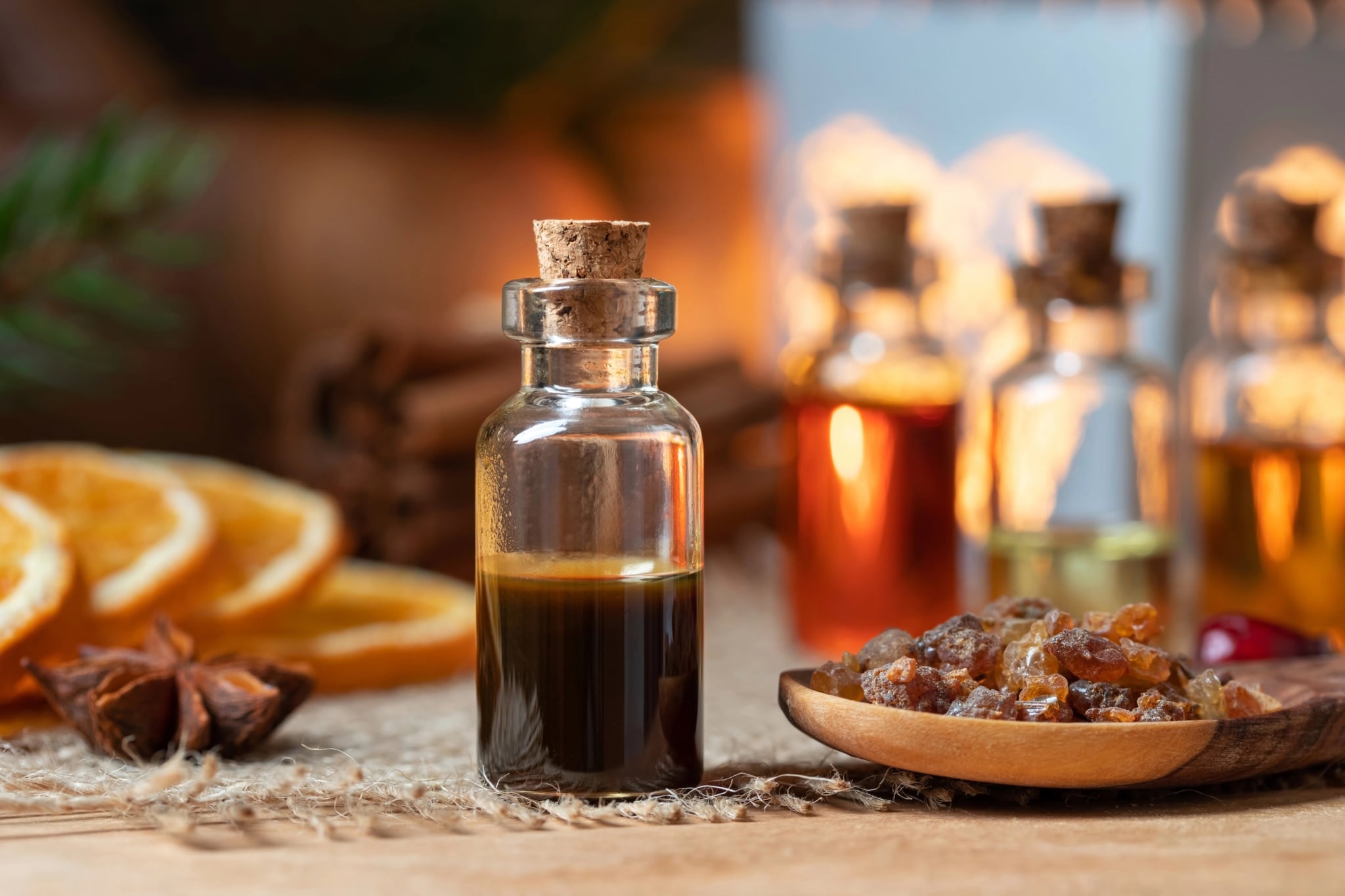
The scents of Cinnamon, Clove, Nutmeg, and Ginger drift from the oven. Fresh Pine fills the living room from the Christmas tree and evergreen boughs framing the fireplace. Dried Oranges and Star Anise hang in the windows. Frankincense and Myrrh resin are warming on charcoal. Aromatic spices bloom in a simmering pot on the stove. Before we ever name it, the holidays announce themselves through scent.
Long before calendars and clocks, humans marked sacred time through aroma. The deep smoke of resins, the sharp green breath of winter trees, the warmth of aromatic spices carried along ancient trade routes: these scents told us where we were in the turning of the year. They signaled celebration and vitality, endings and beginnings, remembrance and hope, darkness and the return of light.
Even now, one whiff of Cinnamon or Pine can pull us instantly into memory. Scent bypasses logic and travels straight to the heart, anchoring us to tradition, meaning, and the deep rhythms of the seasons. There’s something about the holidays that calls us back: back to childhood memories, back to ancestral traditions, back to a sense of something larger and more mysterious than daily life. We light candles and string lights not only for beauty, but because winter’s darkness asks us to remember the light. We gather, we feast, we reflect. And through it all, scent weaves its invisible magic.
In this article, we’ll journey through time and tradition to revisit the sacred scents of the season. We’ll explore the ritual and symbolism of Frankincense and Myrrh, along with other holiday resins and spices that have long held their place during this powerful turning of the year.
What Makes a Sacred Scent of the Season
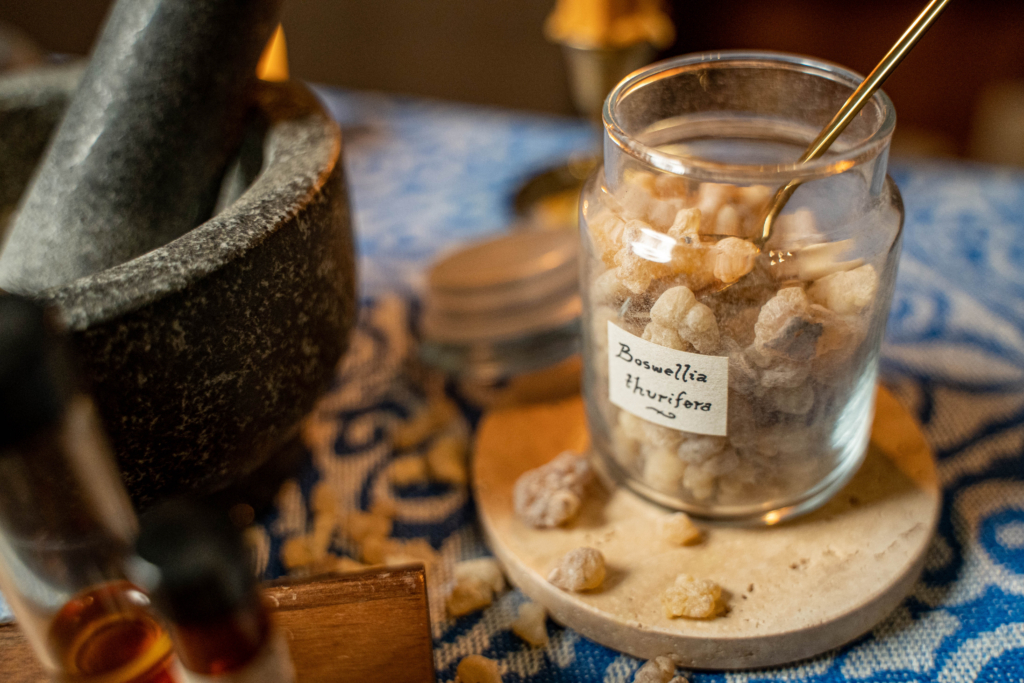
The holidays are a time of ritual, remembrance, and sensory memory. Whether you celebrate Christmas, Hanukkah, the winter solstice, or simply honor the season's contemplative energy, chances are certain aromas decorate your experience. The smell of Pine announces the season has arrived. The rich complexity of spiced cider or mulled wine signals warmth and togetherness. The mysterious sweetness of Frankincense rising speaks of something sacred, something set apart from ordinary time.
Scent has an extraordinary power to root us to tradition, significance, and seasonal transitions in ways that other senses don’t touch. One smell of Cinnamon can transport us instantly to grandmother's kitchen 20 years ago. The smell of burning Sage or Cedar can shift our entire nervous system into a state of ceremony. Aromatics become bridges between the physical and spiritual realms, between past and present, between the mundane and the holy.
Many of the ancient practices that shaped these aromatic traditions still live in our modern holiday rituals (even if we've forgotten their origins). When we hang a wreath of evergreens on our door, we're echoing protection rituals that predate Christianity by thousands of years. When we burn Frankincense and Myrrh, we're participating in a practice that stretches back to the ancient temples of Egypt, Arabia, and Jerusalem. When we burn evergreens like Juniper and Fir, we’re honoring the 12 nights of Christmas. These scents carry stories.
Frankincense & Myrrh: The Heart of Sacred Scent
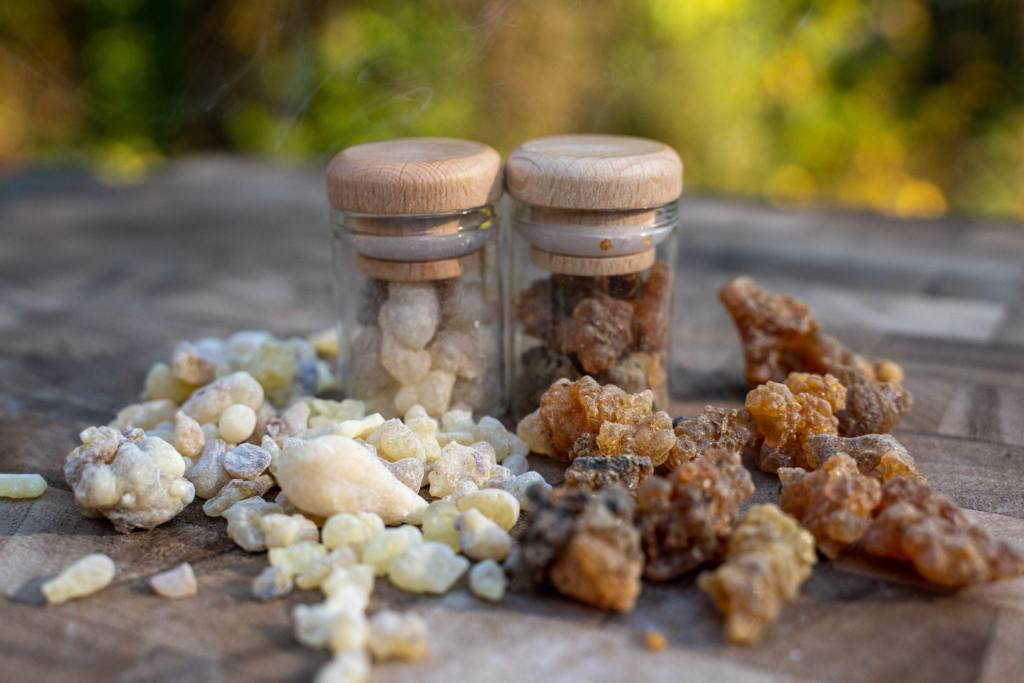
Frankincense and Myrrh – the sacred resins of winter’s light. Across history, these two resins have been inseparable, entwined in ritual, devotion, and sacred scent. They appear again and again in ancient texts, temple ceremonies, burial rites, and healing practices – offered to the gods, burned in sanctuaries, and used to tend both body and spirit.
Even in the wilds of their native Somali lands, the trees often grow side by side, their roots intertwined beneath the same sun, as if the Earth itself declared: these resins belong together. When burned in tandem, they release a sacred smoke that opens the heart, clears the mind, and bridges heaven and earth.
Thanks to the Biblical narrative of the three wise men bearing gifts of Frankincense, Myrrh, and gold to the Christ child, these two resins have become cemented into the holiday season. But their story begins long before Bethlehem, and their significance reaches far beyond a single religious tradition.
Both Frankincense and Myrrh are resins, the hardened tears of small, shrub-like trees that grow in some of the harshest landscapes on Earth. To harvest resin, the tree must be wounded – either by nature or human hand. The tree responds by releasing resin as protection. This process of wounding and transformation is itself deeply symbolic. The tree sacrifices part of itself, and from that sacrifice comes something precious, something that has been valued for thousands of years as worth more than gold: the physical matrix encasing the tree's spirit, or spiritual essence.
Resins, as sacred plant forms, embody themes of sacrifice, transformation, and healing. Perhaps this is why they have been central to ritual for so long: they reflect the spiritual truth that our wounds, too, can become sources of medicine, beauty, and renewal. Many resins also offer practical protection, used topically in ancient times to seal wounds and protect the skin from infection, further linking their symbolic and tangible power.
When burned, resins release fragrant smoke that rises like visible prayer. Across cultures, from Buddhist temples to Catholic cathedrals to ancient Egyptian ceremonies, this smoke carries intention, reverence, and offering to the divine. The symbolic role of resin incense is remarkably consistent: it purifies space, marks sacred time, and creates a sensory threshold between the ordinary and the holy.
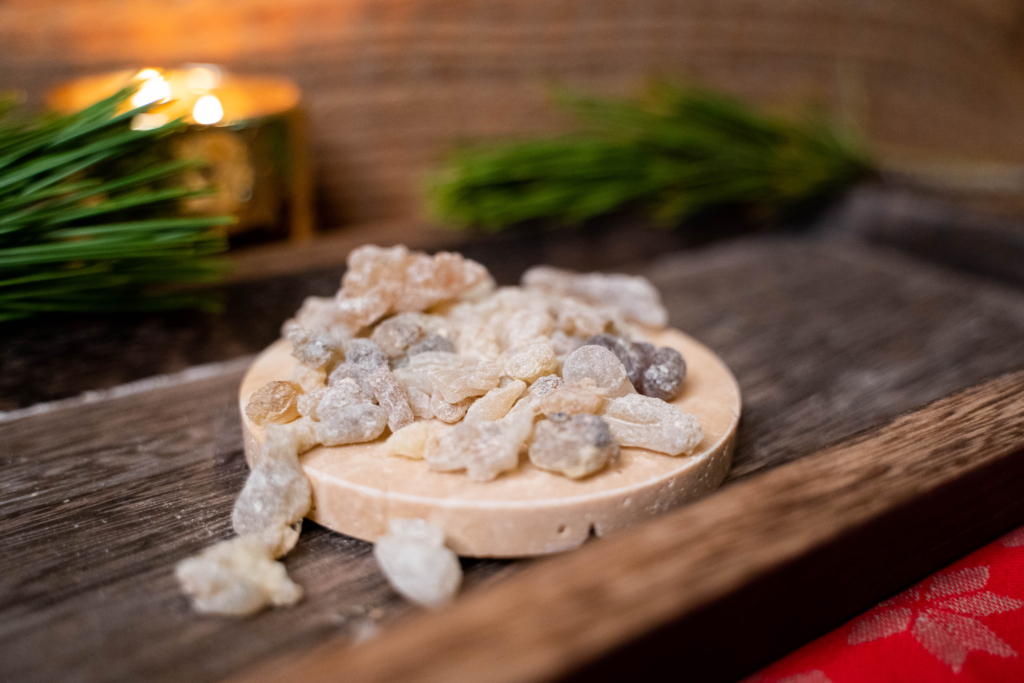
Frankincense (Boswellia spp.)
For more than 5,000 years, Frankincense has been prized across the Middle East, North Africa, and Asia as an essential part of spiritual practice. Ancient Egyptians burned Frankincense in their temples and used it in embalming rituals. In ancient Israel, it was one of the key ingredients in Ketoret, the sacred incense of the Temple. Arabian traders grew immensely wealthy along the Frankincense trade routes, as this precious resin was so prized in the ancient world that its value sometimes rivaled gold.
Used in temples and churches across millennia, Frankincense has been the scent of prayer, divine offering, purification, and transcendence, guiding the soul toward light. The aromatic profile of Frankincense is bright, resinous, uplifting, and clarifying; like sunshine concentrated into scent. It clears the mind without overstimulation, offering both illumination and steadiness.
Emotionally and spiritually, Frankincense supports the nervous system, invites contemplation, and creates a sense of spaciousness. Its bright, resinous scent clears stagnation and invites the sacred into everyday life. Traditionally, Frankincense was burned during holy days, infused into oils for anointing, and used in rituals of purification and prayer, making it a natural ally for the holiday season. (To learn more about Frankincense, visit our blog: The Power of Frankincense.) To explore the beauty and sacredness of Frankincense, try out our Frankincense variety pack.
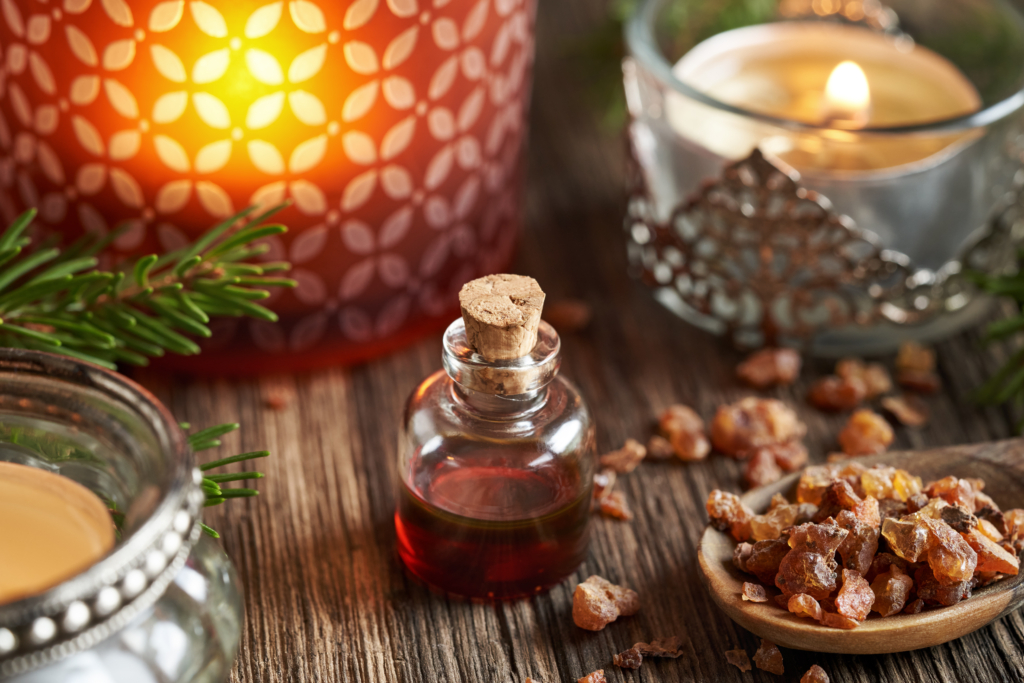
Myrrh (Commiphora spp.)
Myrrh’s history is equally as ancient as Frankincense, with uses in ritual, embalming, and healing stretching back thousands of years. The ancient Egyptians used Myrrh in their mummification processes (earning it the title “Funeral Herb”) and as an ingredient in the sacred temple incense, Kyphi. It appears repeatedly in Biblical texts, from the gifts of the Magi to the bitter wine offered to Christ on the cross. Myrrh has always carried associations with death, transformation, and the deep mysteries of life.
Many believe burning incense is like a rising prayer; as the fragrant smoke drifts up to the heavens, it is believed to carry prayers with it. As an incense, Myrrh is thought to be a conduit to the spirits of the deceased. Myrrh, in particular, has been seen as a way for the living realm to stay connected to and communicate with the spirits in the afterlife. Myrrh is believed to bridge the gap between "Heaven" and "Earth," linking the spiritual and physical worlds. This connection is thought to not only enhance one’s own spiritual awareness but also facilitate communication with loved ones who have passed on to other realms.
The aromatic profile of Myrrh is warm, bitter, earthy, and deeply grounding. Where Frankincense lifts and clarifies, Myrrh descends and stills. It has a complexity that unfolds slowly, revealing layers of warmth and shadow. Myrrh invites us to sit with life’s difficulties, endings, and inevitable losses. It doesn’t chase away grief – it holds space for it. Winter, a season of introspection and quiet tending, mirrors this process: the old year fades, the light retreats, and we are called inward. Myrrh supports this descent, offering stillness and wisdom in the darkness. Amid the holiday pressure to be joyful, it reminds us that the sacred embraces both shadow and light, the bitter alongside the sweet. (To learn more about Myrrh, visit our video blog: The Magic & Mystery of Myrrh.) Find our sustainable Myrrh resin here.
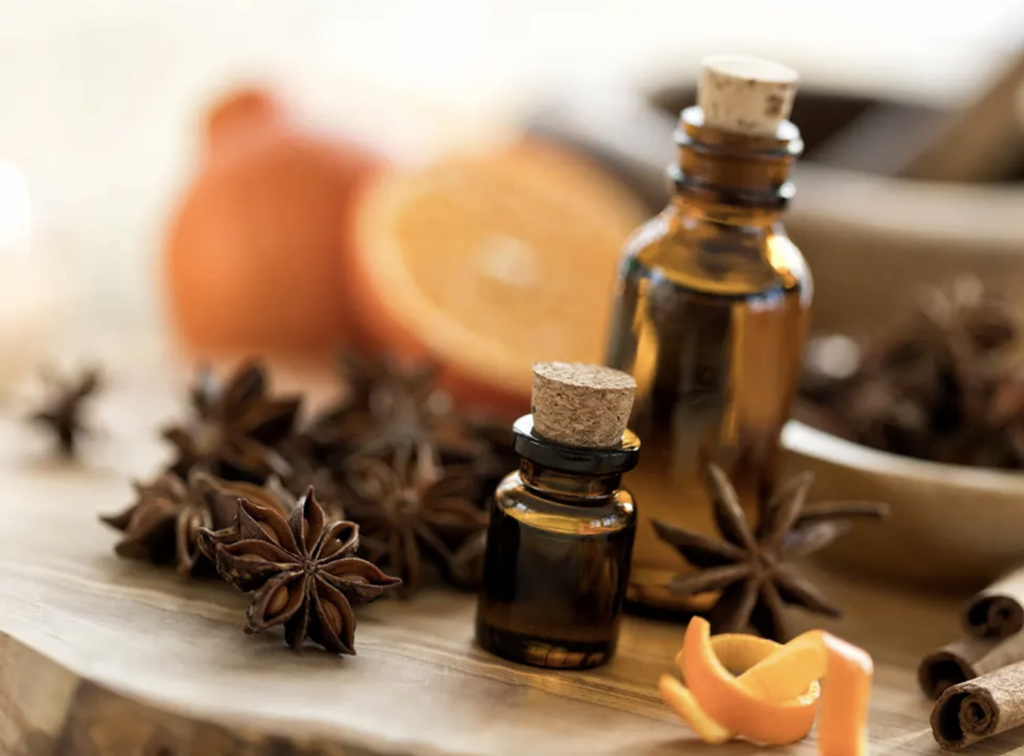
Beyond Frankincense & Myrrh: Other Sacred Holiday Aromatics
While Frankincense and Myrrh often take center stage, they're far from the only aromatics that have marked sacred seasons throughout human history. Different cultures honor the winter season with regionally available plant allies, creating a rich range of aromatic traditions.
Deeply Sacred Ritual Resins
Several other resins pair beautifully with Frankincense and Myrrh in both tone and tradition, creating the complex, mysterious aromas we associate with temples, cathedrals, and holy nights.
Benzoin (Styrax spp.) offers a warm, vanilla-like sweetness that feels right at home in the holiday season. Revered across cultures, its grounding smoke commonly fills Hindu and Buddhist temples, where it’s believed to calm the mind, sharpen focus, and purify the spirit for meditation and devotional practice. Prized for its natural fixative qualities, Benzoin helps sacred incense blends linger in the air, deepening the ritual atmosphere. Its legacy also extends into Christian tradition, where it remains a key component of church incense throughout Western Europe and Russia. Ancient legends even tell of Frankincense harvesters burning Benzoin to ward off mythical flying serpents said to guard the sacred trees [1].
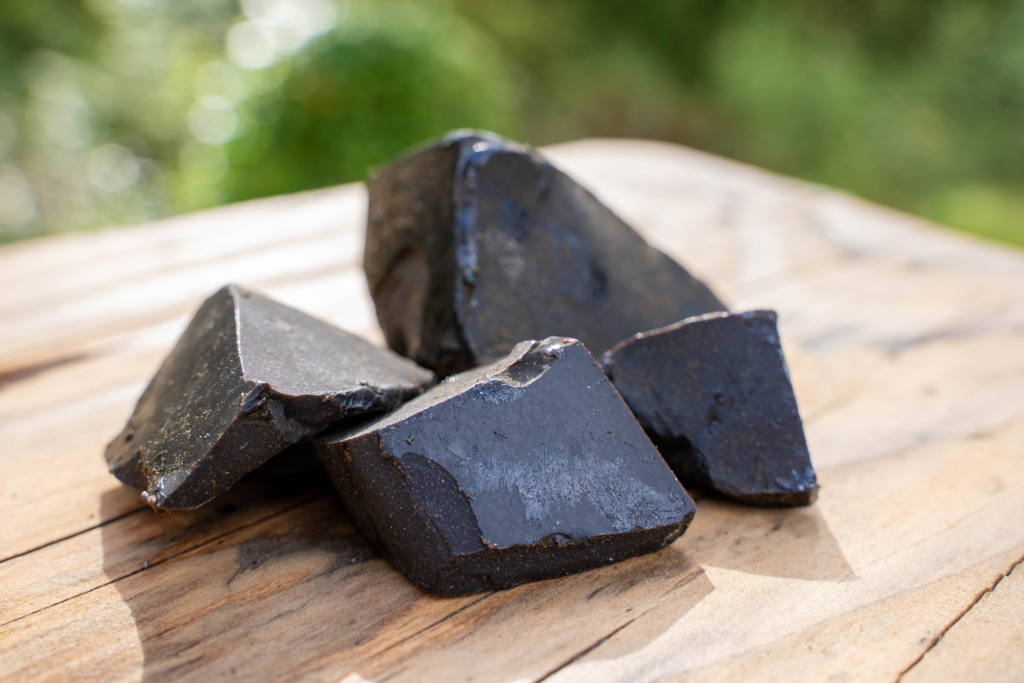
Labdanum (Cistus ladanifer) is perhaps the most overlooked of the sacred resins, yet it carries a distinctly holy night quality that invites deeper attention. Its aroma is often described as amber-like, leathery, and subtly sweet, with a depth that feels both ancient and intimate. Labdanum was a key ingredient in Kyphi, the revered Egyptian incense burned in religious ceremonies as an offering to the gods for its spiritual and medicinal virtues. It also appears in the Ketoret, the sacred incense described in the Hebrew Bible, believed to create a pleasing aroma that symbolized prayers rising to heaven. When burned, Labdanum releases a deep, earthy, and luxurious smoke long associated with purification and spiritual presence, and it is often blended with Frankincense and Myrrh to create rich, complex incense blends.
Evergreen Allies of Winter
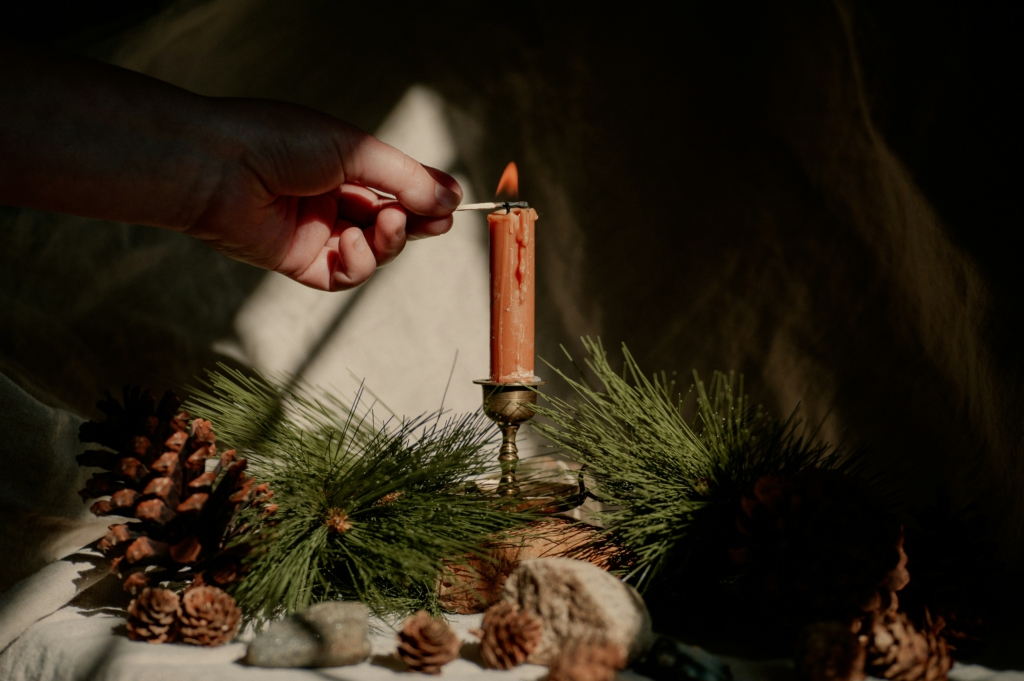
While resins carry ancient mystique, the evergreens offer something equally powerful: the symbolism of vitality through winter. When deciduous trees stand bare and the world seems stripped of life, evergreens remain green – a visible reminder that life persists even through the harshest and darkest times.
This symbolism of eternal life, resilience, and protection runs through virtually every culture that experiences winter. Long before Christianity adopted the evergreen tree as a Christmas symbol, Pagan peoples brought Fir, Pine, and Cedar boughs into their homes during the winter solstice as protective charms and reminders that spring would return. Folk traditions of wreaths, boughs, and smoke cleansing with evergreen branches span continents, cultures, and millennia.
According to old Northern European folklore, dark spirits come out during the “Twelve Nights of Christmas” between December 25 and January 6. Traditionally, those living during this time practiced what they called “the smudging nights'' in the depths of winter, where they burned aromatic plants like Juniper, Fir resin, and Mugwort in their homes and stables for 4 nights in a row to protect against evil spirits and influences. These rituals, originating from Pagan cultures and later performed by Catholic priests, were used to ward off demons and to summon the rebirth of the sun, welcoming warmth and light after the dark days [2].
The aromatic actions of evergreens are uplifting, vitality-enhancing, and clarifying. They support respiratory health (particularly valuable during winter's cold and flu season) and bring emotional clarity when the darkness feels heavy. There's a brightness to evergreen scents, a quality of fresh air and wide-open spaces that can lift winter doldrums remarkably quickly.
To learn more about the stories and benefits of each type of evergreen tree, check out our blog, Medicine of the Evergreens: Our Greatest Winter Allies.
Aromatic Holiday Spices of Hospitality
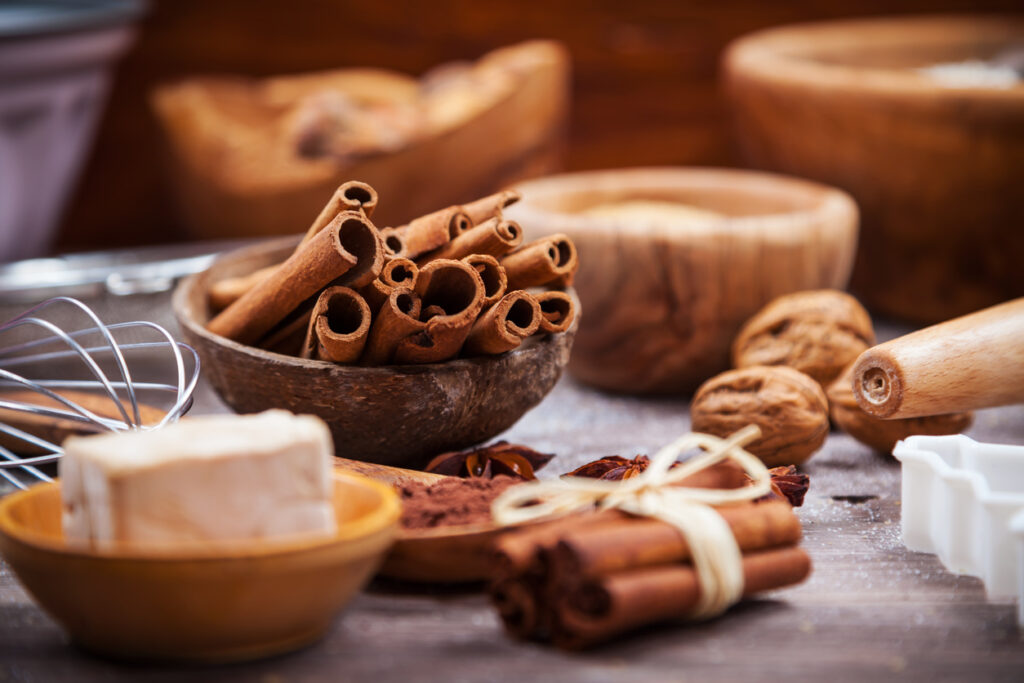
While resins and evergreens speak the language of the sacred grove and ancient temple, the aromatic spices tell a different story: one of hospitality, abundance, and the warmth of the kitchen hearth. These are the aromatics that greet guests at the door, that fill the house with comfort and celebration, that transform simple ingredients into feasts. Many of the spices we now associate casually with holiday baking were once so rare and valuable that they were reserved for royalty and religious ceremony. To use these aromatics is to participate in a tradition of abundance and generosity that spans centuries.
Cinnamon (Cinnamomum spp.) embodies fire, vitality, and flow all at once. The inner bark of the Cinnamon tree has been prized for thousands of years and was historically so rare and sacred that it commanded extraordinary prices. Ancient Egyptians used it in embalming rituals and in Kyphi incense as an offering to the gods. In medieval Europe, Cinnamon was a symbol of wealth and abundance. Its warming, energizing qualities boost circulation and bring warmth to the body and soul during winter frost. Today, it's one of the most emotionally evocative holiday aromas, instantly conjuring images of warm kitchens, fresh baking, and love.
Clove (Syzygium aromaticum) carries a deeply warming, comforting intensity that feels especially suited to the colder months. Like Cinnamon, its warming nature supports circulation and digestion, helping to stoke inner heat during winter. Clove is also renowned for its potent antimicrobial and antibacterial properties, long valued for immune support. Aromatically, Clove is both stimulating and uplifting to the mind. Across traditions, Clove has also been wrapped in protective folklore, believed to ward off illness and negativity, a reputation that likely mirrors its potent medicinal strength.
Cardamom (Elettaria cardamomum) offers a bright, sweet, and uplifting counterpoint to the heavier spices of the season. This gently warming aromatic supports digestion and assimilation, particularly when rich holiday foods abound. In Ayurvedic and aromatic medicine traditions, Cardamom is said to move prana, the vital life force flowing through body and mind. Aromatically, it can restore mental clarity and a quiet sense of contentment, rekindling our appetite for life itself. Cardamom invites us to meet the season with steadiness and openness, generating a subtle inner warmth that nourishes creativity, gratitude, and renewal.
Other spices that grace holiday traditions include Ginger, with its warming, digestive, and gently fiery nature; Nutmeg, which lends a sweet, dreamy warmth; Anise and Star Anise, offering licorice-like sweetness and digestive support; and Allspice, aptly named for carrying the essence of many holiday spices in a single berry. And, of course, we can’t forget the savory aromatics that spice up our holiday foods: Rosemary, Thyme, Sage, and more.
Unlock Your Free Rosemary Issue Of...
🌿 The Aromatic Medicine Garden Membership 🌿
Are you ready for a deeper, holistic dive into the world of aromatic plants? See what our membership is all about with your free sneak peek Rosemary issue, including an hour-long plant talk and a 21-page plant profile pdf full of recipes and insights.

The Language of Scent: Why These Aromas Move Us So Deeply
Why do certain aromas hold such power over us? Why can a single inhale of Pine or Cinnamon instantly transport us across decades, stirring tears or lifting the heart with inexplicable joy? The answer lies in scent’s unique connection to memory and emotion. Unlike other senses, which pass through the thalamus before reaching consciousness, scent travels directly to the olfactory bulb, which links straight to the amygdala and hippocampus, the brain’s centers for emotion and memory. In other words, scent bypasses logic and speaks directly to the heart.
This is why holiday aromas feel timeless and profoundly moving. They're keys that unlock entire worlds of feeling and memory. Amid the busyness of the season, aromatics become tools for emotional balance: the grounding smoke of Myrrh or Cedar can steady a scattered mind, and when grief or loneliness threatens to overwhelm us during what's “supposed to be” a joyful time, the comforting warmth of Benzoin or Frankincense can ease the heart. Intentionally working with these sacred scents allows us to move through the holidays with presence, authenticity, and a deeper connection to ourselves and the season.
Working with Sacred Scents in Modern Holiday Rituals
Use these ideas as a starting point. The possibilities are limited only by your imagination. Trust that these plant allies have been guiding humans through sacred transitions for thousands of years – they know what they're doing. Here are some simple ways to honor holiday traditions:
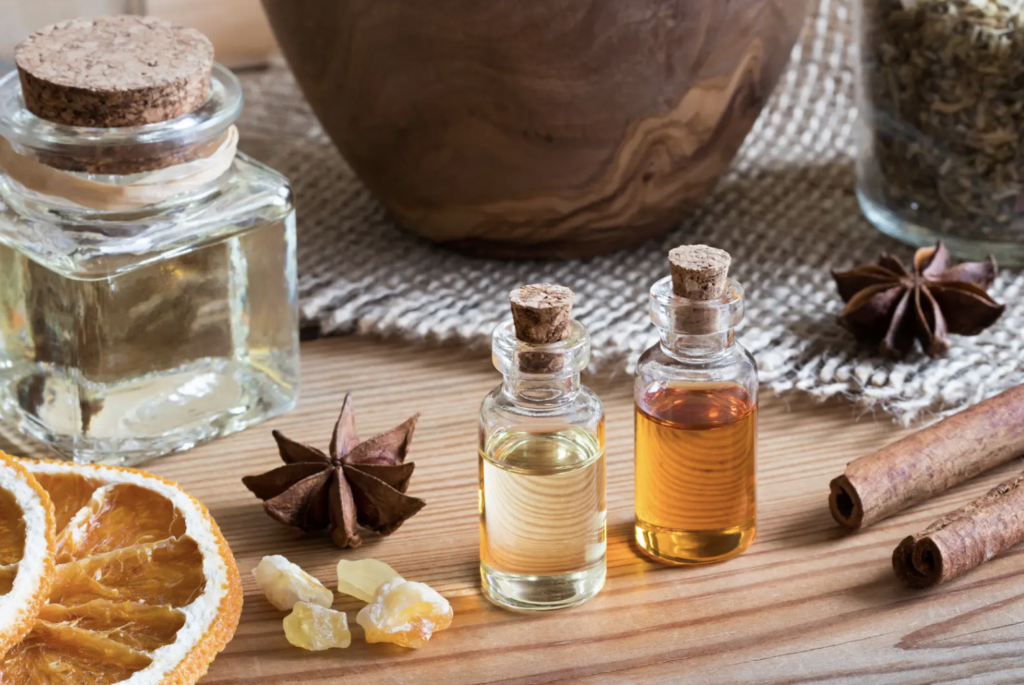
- Resin incense blends for solstice or holiday evenings: Burn Frankincense, Myrrh, and perhaps one or two other resins. Or choose a holiday blend that speaks to you. For more instructions on burning resin on incense charcoal, click here.
- Anointing oils: Dilute essential oils of sacred aromatics in a carrier oil like jojoba or fractionated coconut oil. Anoint your wrists, heart center, or forehead as part of a morning or evening ritual. You might also anoint candles, doorways, or ritual objects.
- Simmer pots and aromatic steams: Fill a small pot with water and add fresh or dried aromatics: Cinnamon sticks, Clove buds, Orange peels, Pine needles, Cardamom pods. Let it simmer on very low heat, adding water as needed. The steam carries the aromatics throughout your home, creating an atmosphere of warmth and welcome. This is a particularly lovely practice when hosting gatherings or when you simply want your home to smell like the holidays in the most natural way possible.
Ethical Sourcing & Reverent Use of Sacred Plants
As we work with these precious aromatics, we must also reckon with some difficult truths about sustainability and sourcing. Some sacred resins and aromatics are under increasing pressure from overharvesting, habitat loss, and climate change. Frankincense trees, for example, are declining across their native range due to unsustainable tapping practices, fire, and grazing pressure. Some species of Boswellia are now considered vulnerable or endangered.
Mindful sourcing matters because if we claim to honor these plants as sacred, we must honor them not just in our rituals but in our purchasing choices. To use aromatics with regard for their source, their sustainability, and the communities that steward them is to respect their spirit, story, and legacy. It’s one small way to give thanks and show reciprocity. Before buying aromatics, take some time to research your sources to ensure sustainable and ethical sourcing. And before burning resin or using essential oils, take a moment to acknowledge the gift. Check out our sustainable resin selection at our sister company. Higher Mind Incense.
Sacred Scents to Carry You Through the Season
As we step into the holidays, I invite you to surround yourself with the aromas that speak to your heart. May the bright clarity of Frankincense illuminate your path, and may the deep stillness of Myrrh hold you in the darkness. May the evergreens remind you that life endures even in the coldest months, and may the warmth of spices welcome you home to yourself and to the eternal mystery that these sacred scents have always served.

If you feel called to work more deeply with these sacred scents during the holidays, sourcing matters.
For sustainably and ethically harvested resins, we recommend our sister company, Higher Mind Incense, which specializes in all-natural incense crafted with reverence for both plant and place. You’ll find thoughtfully sourced Frankincense, Myrrh, Pine resin, Labdanum, Benzoin, and more.
For those who prefer a ready-made offering, we’ve created a limited-edition Sacred Winter Collection, curated specifically for this season. It includes our exclusive Holy Days Blend, available only in this set.
Inside the Sacred Winter Collection:
✨ Frankincense Resin
✨ Myrrh Resin
✨ Agarwood Powder
✨ Australian Sandalwood Powder
✨ Juniper Nepalese Rope Incense
✨ Holy Days Loose Incense: Pine resin, Pine needles, Copal Oro, Orange peel & Sandalwood, a warming forest-wrapped winter blend
This is a small, intentionally crafted batch and will not be restocked once it’s gone. If it speaks to you, we invite you to explore it while it’s still here.
Article Written By Melissa Szaro

References
1. Sylliaasen, Evan. (2019). “Materia Aromatica: An In-depth Guide to the Traditional Ritual, Aesthetic, and Medicinal Uses of the 20 Most Common Incense Plants.” NW School of Aromatic Medicine Ebook. Chimacum, Washington.
2. Rätsch, E, & Müller-Ebeling, C. (2003). Pagan Christmas. Inner Traditions. “Sacred Nights, Smudging Nights, and Incense”
© 2025 The Northwest School of Aromatic Medicine. All rights reserved.
*The statements above have not been evaluated by the FDA, and are for educational purposes only. This article is not intended to diagnose, treat, cure, or prevent any disease. This article should not be taken as medical advice. Please consult your physician before you use this information for health purposes.
