
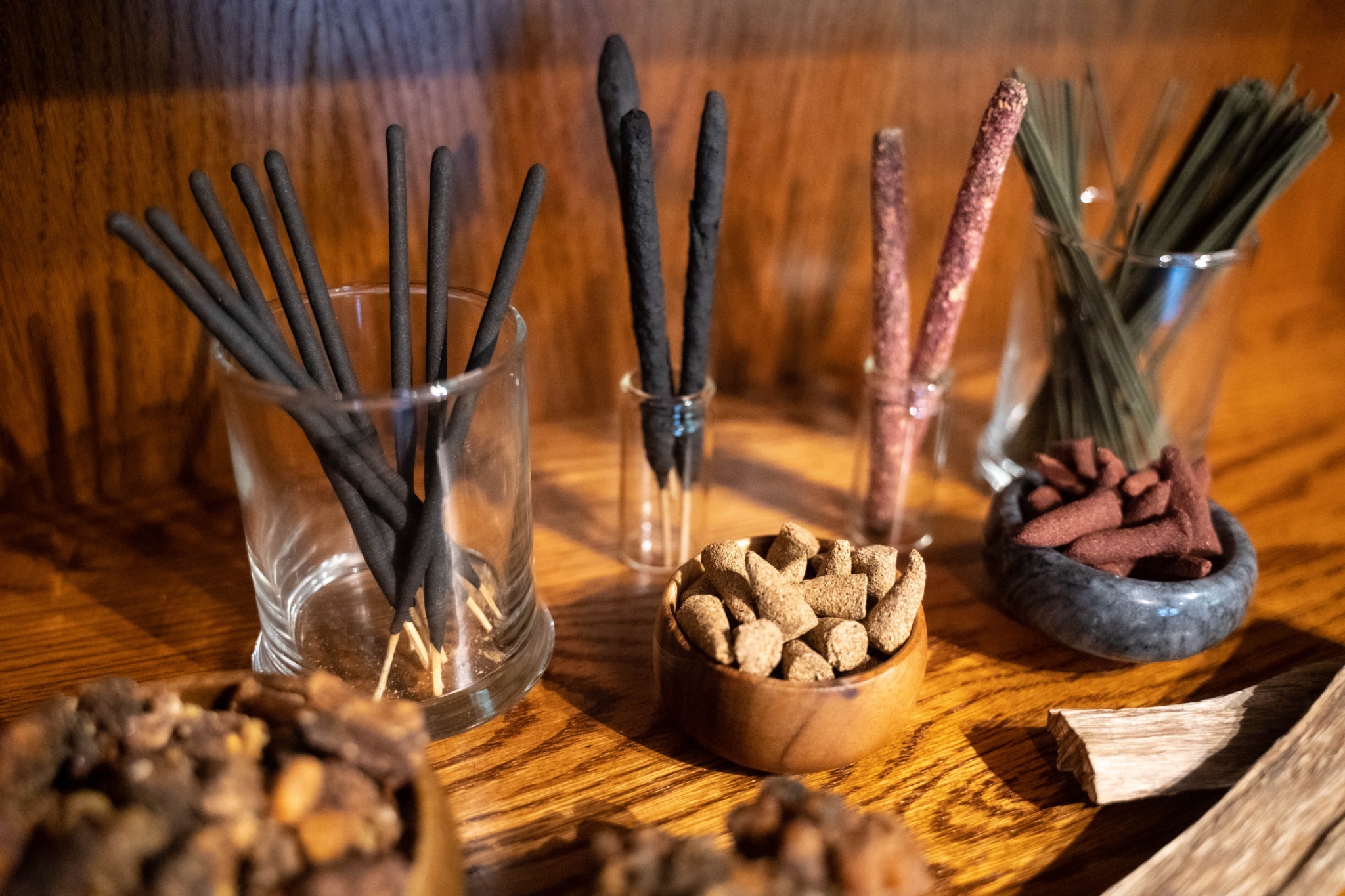
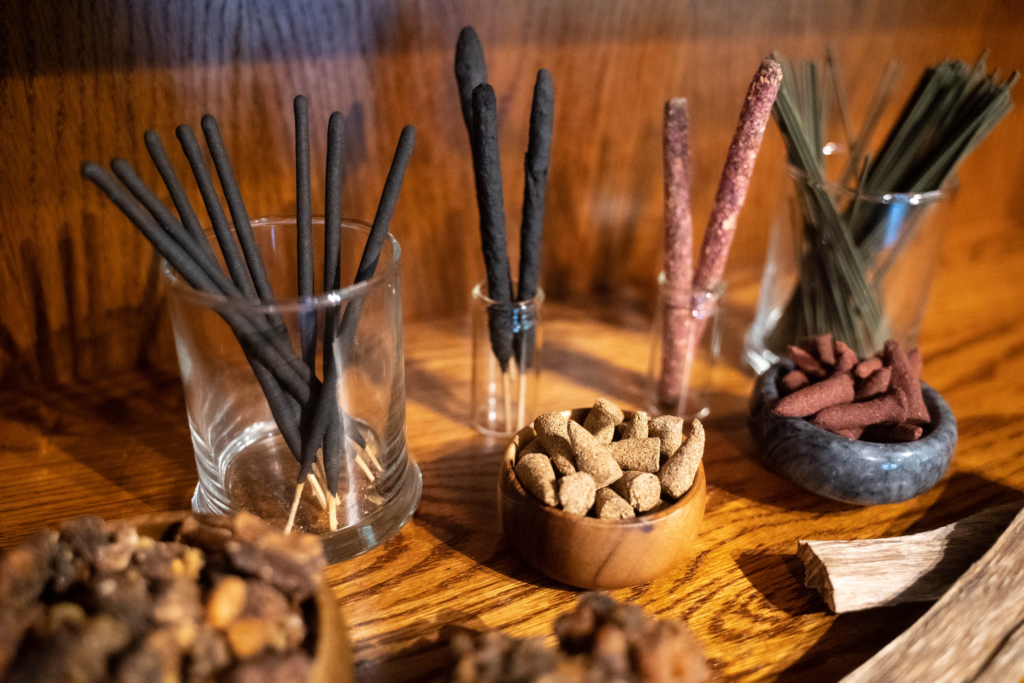
Have you ever smelled an incense that stopped you mid-step and made you want to know exactly what was in it? Some blends do that — they don't just smell good; they stir something deep in our souls. They can transport us to another place, evoke a forgotten memory, shift our mood, or simply leave us marveling at how a handful of aromatic plants can come together to create something so extraordinary.
One of the questions we hear most often is: how do you actually come up with a new incense blend? How do you look at a shelf of aromatic resins, woods, herbs, flowers, and roots and know what belongs together?
The truth is, a blend rarely starts with a recipe. More often, it begins with something a little more intangible: an experience, a place, a feeling, a memory, a season, an intention, or a single aromatic material that stopped you in your tracks the way that incense once did. And when it comes to finding that inspiration, there is no single formula to follow. Think of the aromatic arts more like a map of possibilities, a choose-your-own-adventure journey guided by feeling and imagination.
In this blog, we'll explore some of the many places inspiration for a new incense blend can come from, and how you can begin turning those sparks of inspiration into your own aromatic creations. Use this article as a guide the next time you're standing at your worktable, wondering where to begin.
1. Start With a Place
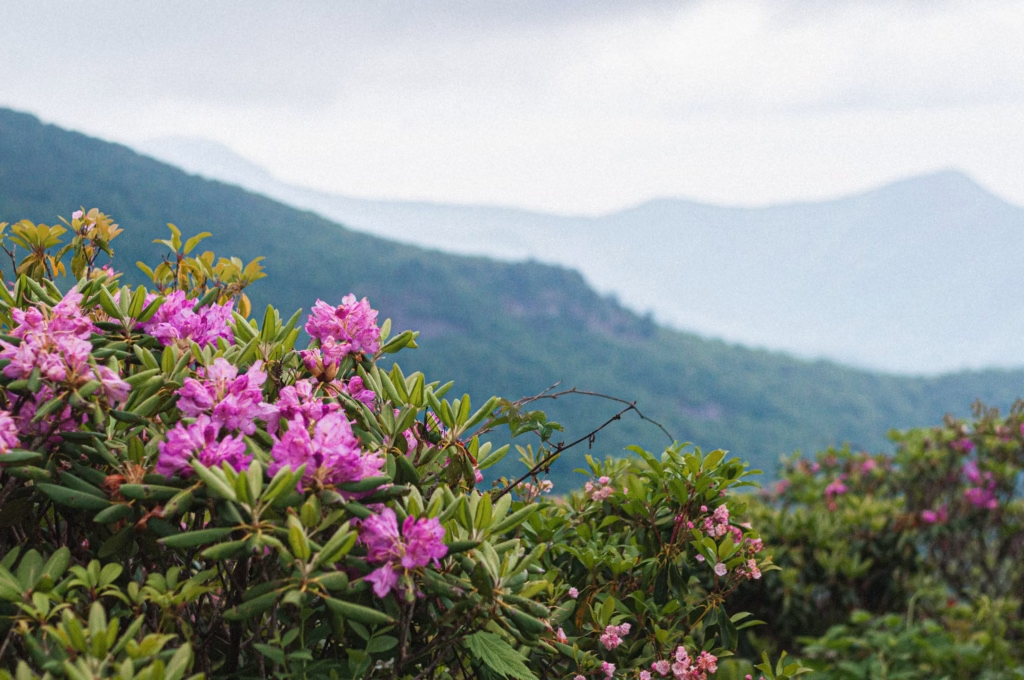
When I know I want to create an incense blend but I’m not really sure where to start, one of the richest sources of inspiration is place. Ask yourself: What place do I want this incense to transport me to? It could be a desert just after a rainstorm, a lush tropical garden, a high-alpine mountain meadow, a Japanese temple, a European bakery at dawn, an ocean at sunset, your childhood lake house, or somewhere you've traveled that has stayed with you long after you left.
Once you've settled on a place, imagine being there. What do you smell? What plants grow there? What trees, flowers, herbs, roots, or resins might be part of this aromatic landscape? What other scents shape the experience: the earth after rain, the salt of the ocean, warm stone beneath the sun, damp moss, woodsmoke, or the sweetness of something baking nearby?
For example, imagine you're trying to recreate the experience of standing in the desert just after a long-awaited rainstorm. You might begin with sharp, camphoraceous aromatics such as Sage, Juniper, or Creosote Bush, then look for materials that evoke the deep, earthy quality of petrichor—the unmistakable scent of rain falling on dry soil. Vetiver root, Patchouli, or Oak Moss might help bring that rich, damp earthiness into the blend. This is the art of building an aromatic landscape.

2. Recreate a Moment or Feeling
Sometimes inspiration doesn't come from a geographical location, but from a place in time. It might be a moment or memory that has stayed with you for years; an experience that created a feeling so profound that it's difficult to put into words. Or perhaps it's an emotion you want to capture and express through aroma.
This is one of the beautiful things about working with aromatic plants: aroma can make the intangible tangible. It can capture sensations, emotions, and memories that are otherwise difficult to describe. It's almost as though aroma has a language of its own, one that can speak directly to the heart. (We explore how aroma influences our emotions more in our blog: Supporting Emotional Health with Aromatic Medicine.)
Take a moment to wander through your memories. Which experiences stand out most vividly? What did you feel in those moments? Perhaps it was the sense of awe and expansiveness you felt sitting beside a campfire beneath a sky full of stars. Maybe it was the settled, quiet stillness of walking through a forest while rain fell softly around you. Or the warmth and nostalgia of watching the sun disappear over the ocean at the end of a long summer day.
What does it feel like to wake before everyone else and experience those first quiet moments of morning? To open the windows on the first warm day of spring? To step inside an ancient temple and feel the weight of centuries of ritual surrounding you? Once you've identified the feeling you want to capture, ask yourself: What aromatic materials could tell this story?
For example, imagine you want to recreate the feeling of sitting beside an alpine lake beneath a star-filled sky. You might begin with aromatic woods or resins that evoke the surrounding forest—perhaps Pine, Spruce, or Cedar—then introduce a watery material such as Chamomile to bring in the essence of the lake or wildflowers. A touch of Frankincense could add a luminous, resinous quality that feels expansive and contemplative, like looking up into an enormous night sky.
In this way, incense blending becomes a form of sensory storytelling. You're taking something that exists only in your memory or imagination and giving it a physical form, one that can be experienced through scent and the senses.
3. Begin With an Intention
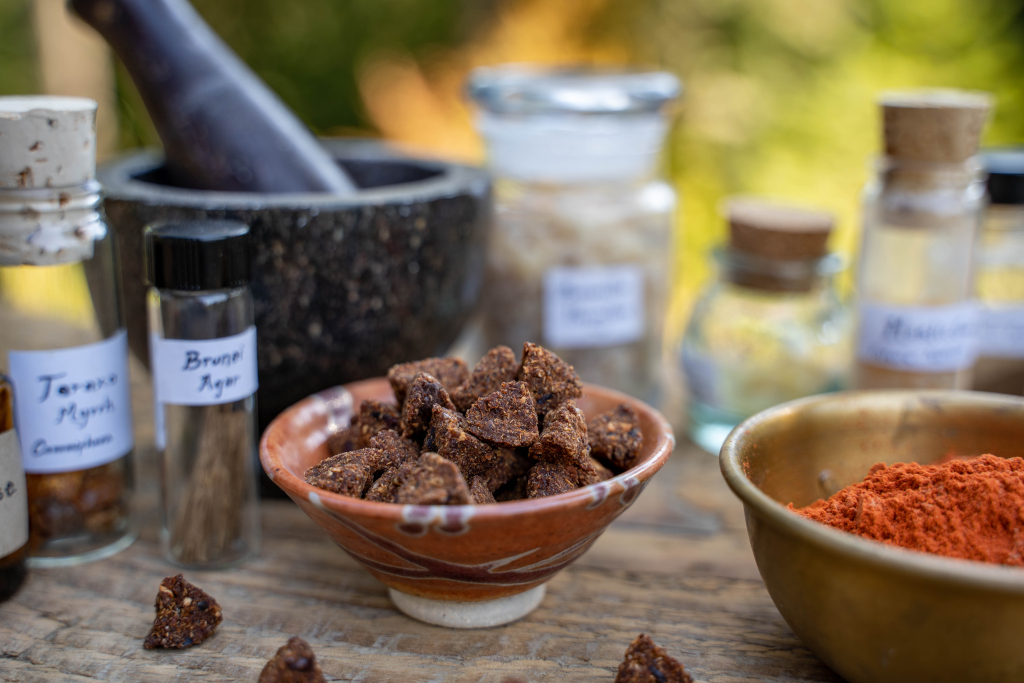
Another powerful starting point is to ask: what is the intention behind this incense blend? What do I want this incense to support? Maybe you want to create a blend to accompany a specific practice or activity, like meditation, yoga, prayer, ritual, art, writing, or another creative process. Or maybe the incense is meant to hold a particular intention: creating space for grief, cultivating gratitude, supporting focus, inviting cleansing, honoring protection, aiding a time of transition, or celebrating a joyful occasion.
You might begin by choosing plants that have traditional associations with your intention. But you can also take a step back and consider the overall aromatic experience. How do you want the incense to feel when it fills the room? A meditation blend, for example, might evoke a sense of quiet, spaciousness, grounding, and contemplation. A celebration blend might be bright, uplifting, expansive, and joyful, with layers of aroma that feel lively and radiant.
If you're not quite sure where to begin, try to step into the practice or energy of the intention itself. For instance, if you want to create an incense for gratitude, spend a few quiet moments in a gratitude practice. Reflect on what gratitude feels like in your mind, body, and emotions. Does it feel warm? Expansive? Soft? Joyful? Grounded? Write down the words, sensations, images, and aromas that come to mind.
Or perhaps you want to create an incense to accompany your artistic process. Spend some time creating, and pay attention to the energy you experience while you're making something. Do you feel playful and inspired? Focused and absorbed? Scattered or lost? Quiet and contemplative? Then ask: what aromas could embody or support that experience? This approach allows your intention to become a creative compass for the blend, guiding you toward aromatic materials that can help express the feeling, energy, or experience you want to create.

4. Let the Seasons Inspire You
Another way to think about place as a source of inspiration is to consider a place in time. Nature offers us an endless palette for creating incense, and the changing seasons can provide a beautiful framework for exploring it. Each season has its own energy, atmosphere, colors, textures, and aromas. As the landscape changes around us, so does the aromatic story it tells.
Spring might evoke tender green herbs, fresh flowers, and bright, awakening aromatics. Summer may bring to mind sun-warmed woods and resins, fragrant blossoms, and bright citrus-like notes. Autumn might call for grounding woods, roots, spices, and warm, earthy resins. And winter could inspire deeper woods, balsams, dense resins, and rich, warming aromatics.
But you don't have to stop at the season itself. Look for those fleeting aromatic moments in nature that only exist for a short time. What does the first frost smell like? Or what does a garden smell like after an afternoon rain? Perhaps inspiration comes from the crispness of autumn leaves underfoot, the first warm breeze of spring, the resinous scent of a sun-baked evergreen forest, or the earthy aroma that rises from the ground when winter finally begins to thaw.
These moments can become starting points for a blend. Ask yourself: “What does this season or moment in time feel and smell like to me?” From there, you can begin gathering aromatic materials that help translate that experience into a blend.
5. Look to the Elements
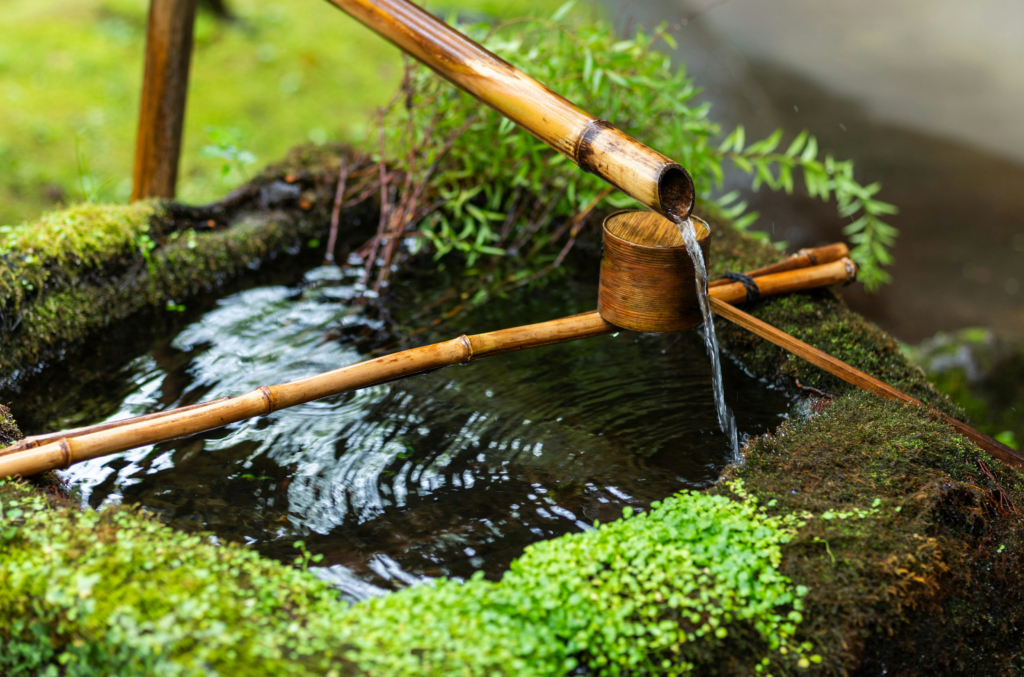
When I’m really feeling stuck, the elements open up another creative framework for creating blends. You can explore creating an elemental incense collection, where each blend expresses the aromatic personality of an element, or center around one element that really speaks to you.
The Earth element might evoke grounding, rooted, earthy, and dense aromatic notes, while Water may feel more cool, flowing, fresh, and reflective. The Fire element could be represented by warm, spicy, stimulating, or transformative aromas, and Air might feel more light, expansive, bright, or ethereal. These are just examples; take some time sitting with the elements and write down the words, sensations, images, and aromas that come to mind for you.
If you want to learn more about the elements, check out our mini-series: The Elements in Aromatic Medicine.

6. Follow the Celestial Calendar
This is a particularly fun direction because inspiration can come from time itself. The cycles of the sun, moon, seasons, and stars can offer endless starting points for an incense blend. You might draw inspiration from the equinoxes or solstices, with their shifting relationship between light and darkness, or from the lunar cycle: the inward energy of the new moon, the building momentum of the waxing moon, the illumination of the full moon, or the reflective energy of the waning moon.
For example, you might create an incense blend inspired by the Autumn Equinox, a moment of balance between light and darkness and a threshold between seasons. You could explore aromatic materials that evoke harvest, warmth, grounding, transition, and the gradual turning inward of autumn, perhaps incorporating earthy roots, aromatic woods, warm spices, and rich resins.
You might even look to the changing character of a single day. What does dawn smell like? What about midday, sunset, or the deep stillness of night? You can also explore astroherbalism (astrological herbalism), the practice of connecting the traditional energetic properties of plants with celestial bodies such as planets and zodiac signs. This can offer another symbolic language for exploring aromatic materials and developing blends with a particular theme or intention. (You can explore this topic more in our blog post: Astrology & Plant Medicine.) The sky is always changing. So there is always another moment to inspire your next blend.
7. Start With One Aromatic That Speaks to You
Perhaps you just acquired a particularly amazing aromatic, one that captivates you so completely that you find yourself thinking, “This deserves to be the star of something.” But now you're faced with the question: Where do I begin, and what should I pair it with? This can be a more challenging way to begin an incense blend, because creating a formulation around a single aromatic requires some experimentation, time, and patience.
First, simply spend some time sitting with the aromatic. Smell it slowly and repeatedly. Learn where it comes from, how it has traditionally been used, and what makes it unique. Burn it on its own and pay attention to how its aroma changes with heat. Take notes on everything you notice.
Some questions to ponder: What qualities does this material possess? What notes stand out most? What could amplify those qualities? What could provide an interesting contrast? What could add depth or complexity? What might soften a sharper edge or bring warmth to a cooler aromatic? And what could serve as a bridge between two very different materials?
Pro Tip: As you explore and deepen your understanding of aromatics, there's one final important practice that can help you on this journey: keeping an inspiration journal! Be sure to write down everything, from random ideas you think of to moments of meditation as you sit with a single aromatic plant incense. All of these notes will help support you on your incense crafting path.
Find & Follow Your Inspiration
There isn't one right place to begin. The art of creating incense is, in many ways, about learning to pay attention: to notice what captures your curiosity, stirs your senses, or speaks to something deeper within you.
Once you begin looking for it, inspiration stops feeling rare or elusive. It's in the rain falling on dry earth, the hush of an ancient forest, the first signs of a changing season, the warmth of the sun on aromatic wood, or the particular quality of morning before the rest of the world awakens.
It's in memories, landscapes, emotions, rituals, plants, seasons, and the unexpected aromatic material that catches your attention and makes you wonder, “What could I create with this?” Inspiration is everywhere, all the time, just waiting to be translated into smoke.
Ready to Take Your Incense Crafting Further?
Finding inspiration is just the beginning.
Learning how to take that spark of an idea and turn it into an incense that smells beautiful, burns properly, and expresses what you imagined is where the craft really starts to unfold.
And if you're feeling inspired to explore this art more deeply, we have something special coming very soon.
In October, we'll be opening the doors to our annual Hand-Crafted Incense Series, where we'll step beyond inspiration and begin exploring how natural incense is actually made.
Stay tuned—we begin October 12th. 🌿🔥

Article written by Melissa Szaro
© 2026 The Northwest School of Aromatic Medicine. All rights reserved.
*The statements above have not been evaluated by the FDA, and are for educational purposes only. This article is not intended to diagnose, treat, cure, or prevent any disease. This article should not be taken as medical advice. Please consult your physician before you use this information for health purposes.
