
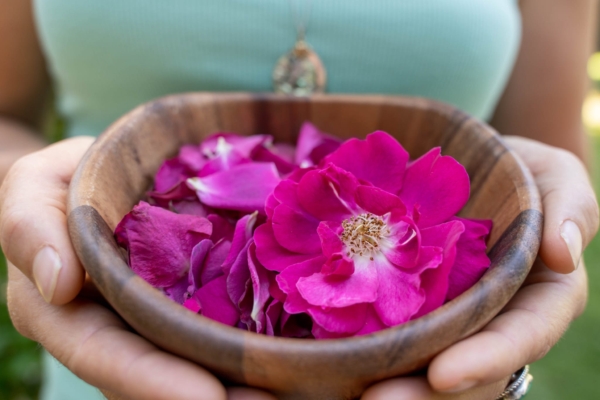
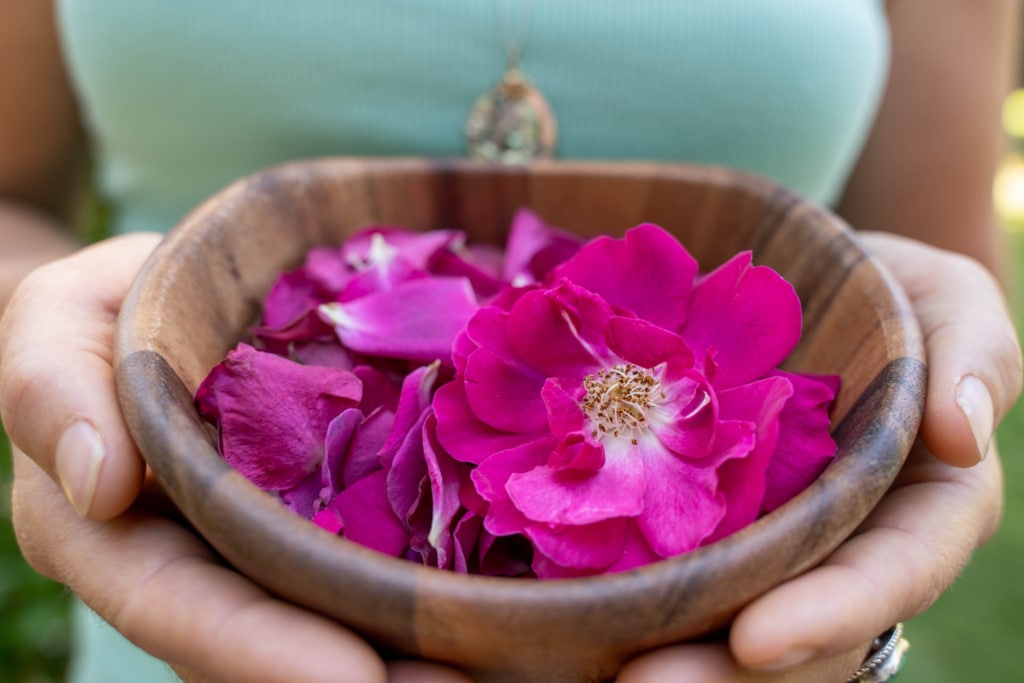
My love affair with Rose began long before I knew the words "essential oil" or "hydrosol." It began, like so many good love stories do, with a fairy tale. As a child, I was captivated by Beauty and the Beast, but not for the reasons you'd expect. It wasn't the ballroom or the talking candlestick that stuck with me––it was the Rose. Suspended beneath glass, glowing softly as its petals slowly fell, the Rose carried an air of mystery and magic. It was a symbol of love, transformation, heartbreak, hope, and redemption.
Years later, I would discover that Rose has always carried these stories. Across cultures and throughout history, Rose has been woven into myths, poetry, medicine, and ritual. It has long been associated with love, but not just the romantic kind. Rose teaches us about the deeper dimensions of the heart: self-love after disappointment, consolation during grief, compassion in times of struggle, and the courage to remain open after heartbreak.
There is something comforting about Rose. When life feels sharp around the edges, Rose softens them. When sorrow settles heavy in the chest, Rose gently uplifts and supports. Its medicine is subtle yet powerful, like a trusted friend wrapping a blanket around your shoulders and reminding you that healing takes time.
Here in the Pacific Northwest, June belongs to the Roses. Wild Roses begin blooming along sunny trails, neighborhood Rose gardens burst into color, and their sweet fragrance drifts through the warm afternoon air. For me, the scent of Rose is one of the first signs of summer, and a reminder to slow down and appreciate the beauty unfolding all around me.
Honestly, I could write an entire book about this beautiful plant and all of the delicious DIY remedies you can craft with it (and maybe one day I will!). But for now, let's spend some time getting to know Rose a little better. In this plant profile, we'll explore Rose's rich history and folklore, its many benefits in herbalism and aromatherapy, and a few beautiful ways to work with this amazing floral ally. And at the very end, I'll share one of my all-time favorite Rose preparations: a delicious homemade Rose Cordial recipe.
Rose Botany Explained
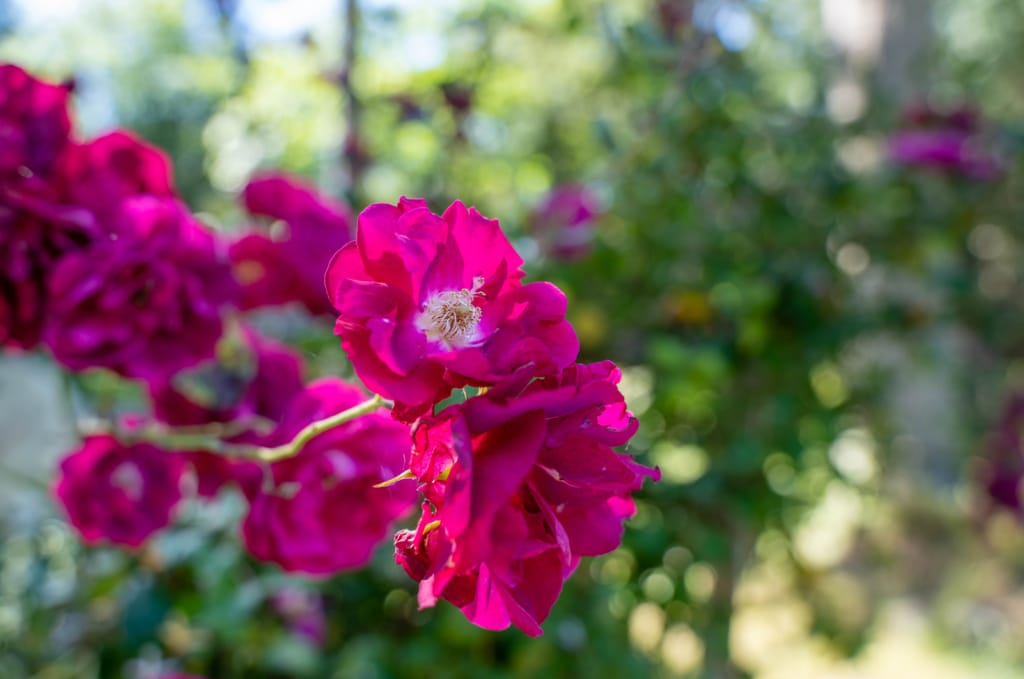
If you've ever wandered through a garden center and been amazed by the sheer number of Roses available, you're not alone. Roses have been extensively hybridized since the mid-1800s, making it nearly impossible to know exactly how many species and varieties exist today. Botanists estimate there are at least 250 Rose species and more than 25,000 cultivated varieties. While individual species can differ in appearance, most Roses share many of the same botanical characteristics.
Rose belongs to the Rosaceae, or Rose family, often nicknamed the "family of fives." Roses typically have 5 sepals, 5 petals, and leaves composed of 5 leaflets. This simple botanical clue helps identify members of this plant family. Most Roses are hardy, deciduous shrubs. Like many perennials, they can live for many years, but in colder climates, they shed their leaves each autumn before returning again in spring. With proper pruning and care, some Rose plants can thrive for 50 years or more!
Of course, Roses are famous for another feature: their thorns. Most species bear sharp thorns along their stems, although some cultivated varieties have been bred to have few or none at all. In late spring and early summer, Roses begin producing their famous flowers. If those blossoms are pollinated by bees, they develop into colorful fruits known as Rose hips by autumn. Rose hip production varies among species, with some Roses producing abundant, large hips and others yielding far fewer.
While there are thousands of Rose varieties, only a handful are typically used in the aromatherapy industry. The three most aromatic species commonly used in perfumery, aromatherapy, and aromatic medicine are Rosa gallica (French or Red Rose), Rosa damascena (Damask or Turkish Rose), and Rosa centifolia (Cabbage Rose).
Beyond these cultivated Roses, there are more than 100 species of Wild Rose found throughout the world. Their flowers tend to be simpler and less densely petaled than many modern hybrids, yet they possess a charm all their own. Along the Western coast of the United States, common Wild Rose species include Rosa californica, Rosa canina, and Rosa woodsii.
When it comes to aromatic medicine, many Rose species are considered largely interchangeable in their actions and benefits. However, fragrance is another story. Through generations of breeding for color, shape, and appearance, many modern Rose varieties have lost much of their aromatic potency. More on this topic later!
The History & Folklore of Rose
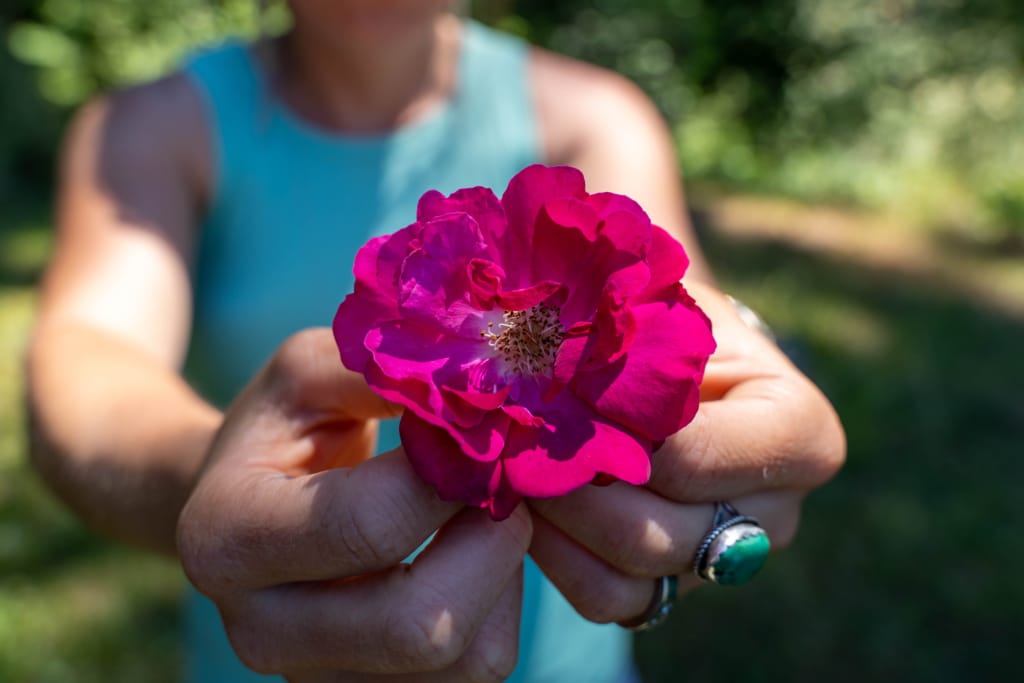
Few plants have captured the human imagination quite like Rose. For thousands of years, Rose has been a symbol of love, beauty, passion, and devotion. Its flowers and fragrance have adorned temples, palaces, sacred ceremonies, and royal celebrations, representing the beauty and affection offered to both gods and kings. According to legend, when Cleopatra first welcomed Mark Antony into her chambers, she covered the floor with Rose petals piled nearly a foot and a half deep (a grand gesture worthy of one of history's most famous love stories).
The ancient Greek poet Sappho was so enamored with the flower that she bestowed upon it the title "Queen of the Flowers," a name that remains fitting today. Long before modern perfumery or aromatherapy existed, Rose was already treasured throughout the ancient civilizations of Persia, Egypt, India, Greece, and Rome for its fragrance and therapeutic applications. Historical records show Rose has long been used in many ancient medical systems, including Ayurveda and Native and Indigenous cultures.
The Romans held Rose in particularly high regard and are said to have introduced its use throughout many of the lands they conquered. The Persians are believed to have begun distilling Rose oil even before the Christian era, helping establish Rose as one of the world's oldest aromatic medicines.
Rose also became closely associated with the Virgin Mary and has held an important place in spiritual traditions for centuries. The Persians, Greeks, and Romans frequently bathed in Rose-scented water and used Rose perfumes during religious ceremonies, burials, and sacrificial rites. Persians, Romans, and later the British often infused its fragrance into beverages and wine as well.
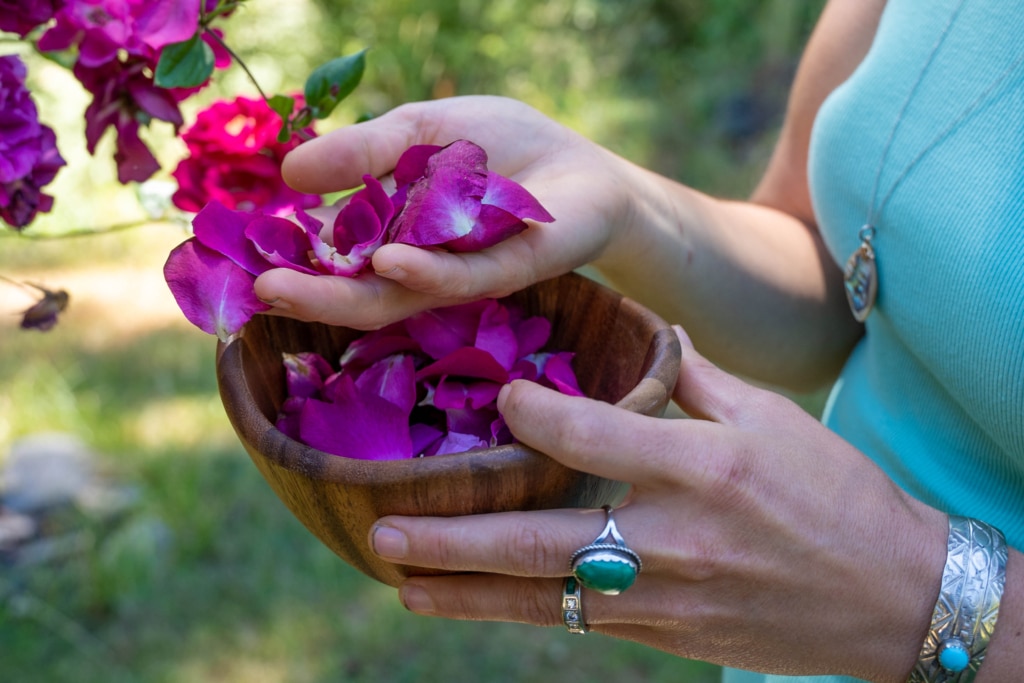
Rose Benefits in Aromatherapy
The deeper medicine of Rose is beautifully portrayed in a quote by Brazilian novelist Paulo Coelho: "A Rose dreams of enjoying the company of bees, but none appears. The Sun asks, 'Aren't you tired of waiting?' 'Yes,' answers the Rose. 'But if I close my petals, I will wither and die.'"
This simple story speaks to the essence of Rose. It reminds us that vulnerability is not weakness, but a form of courage. Rose teaches us to remain open to life, love, and connection, even after disappointment or heartbreak. To close the heart completely is to cut ourselves off from the very things that nourish us most.
Not surprisingly, Rose has long been regarded as one of the most important aromatic allies for the emotional heart. When life feels overwhelming, Rose has an ability to help us move through difficult seasons with grace. It seems to "carry" us through hardship, offering comfort during times of grief, emotional exhaustion, trauma, or loss. Like a warm embrace from a trusted friend, Rose brings support to the mind, body, and spirit.
From an energetic perspective, Rose is considered cooling to the emotional heart. It helps disperse excess heat that manifests as anger, frustration, irritability, resentment, or rage. Rather than suppressing difficult emotions, Rose encourages us to acknowledge them, feel them, and gently release them. Its aroma creates a safe container for emotional processing, helping stagnant feelings begin to move again.
One of the most fascinating aspects of Rose is that it is both opening and protective at the same time. This dual nature is reflected in the plant itself: delicate, vibrant blossoms surrounded by protective thorns. Rose encourages the heart to soften without becoming vulnerable to every passing storm. It offers support and protection while we navigate the tender work of opening ourselves to others and to life itself.
Whether you're healing from heartbreak, deepening a friendship, repairing a relationship with a loved one, or stepping courageously into an unfamiliar chapter of life, Rose helps create a sense of safety and emotional resilience. It reminds us that we can remain open-hearted without losing our boundaries. Its aromatic medicine invites us to explore who we truly are beneath old wounds, protective armor, and emotional patterns that served their purpose, but now are no longer needed. In this way, Rose becomes both a mirror and a guide, helping us uncover what is hidden, release what no longer serves us, and reconnect with the wisdom of our heart.
Rose Benefits in Traditional Medicine
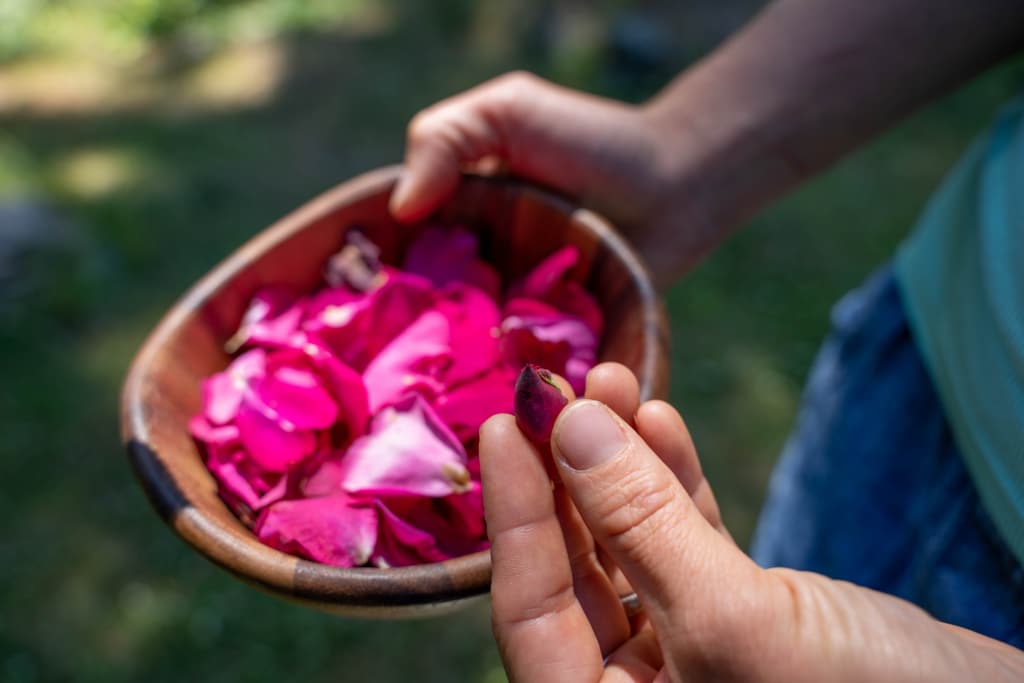
Rose for Nervous System Support
In both aromatherapy and herbalism (which the combination of the two is the middle path that we like to call aromatic medicine), Rose is considered a nervine, meaning it helps calm the nervous system, promote relaxation, and ease stress, anxiety, and tension. Rose is particularly known for its ability to soothe the emotional heart, making it a cherished ally during times of grief, overwhelm, or emotional strain. Rose has a special affinity for nervous anxiety, insomnia, and heart palpitations. Scientific studies suggest that the aroma of Rose helps activate the parasympathetic nervous system, the body's "rest and digest" mode. In essence, the scent of Rose communicates to the nervous system that it is safe to soften, slow down, and release tension, inviting the body and mind into a state of calm.
Rose for Skin Support
Rose has long been cherished in natural skincare for its antibacterial, anti-inflammatory, and astringent properties. Cooling, cleansing, and toning, it can help calm redness, puffiness, acne, sunburns, and other hot, irritated skin conditions while supporting mature, sensitive, or dry skin. One of the most popular ways to use Rose topically is as Rose water (Rose hydrosol), a gentle facial toner or body spray that tones the complexion, soothes the skin, and refreshes the spirit.
Rose for Digestive Support
Rose is not often thought of as a digestive herb, but it offers gentle yet effective support here! Its antispasmodic and carminative properties can help relax digestive tension, easing stomach cramps, gas, and bloating. Rose is also anti-inflammatory and astringent, helping to soothe irritated tissues while toning and tightening the digestive tract (which can be beneficial for occasional diarrhea). At the same time, Rose possesses mild laxative qualities that encourage regular bowel movements and can help relieve occasional constipation. Thanks to its cooling energetics, Rose is particularly well-suited for conditions associated with excess heat in the digestive system, helping to calm an irritated stomach lining and ease discomfort from hyperacidity, heartburn, and gastritis.
Rose for Reproductive Health
Traditionally, Rose petals have been used in herbalism to both cool and tone the uterus; its astringent nature can help ease heavy periods, while its antispasmodic qualities relax uterine muscles and soothe menstrual cramps. Rose is also believed to support balance within the hormonal and reproductive systems, with a particular affinity for heavy, inflamed, and painful cycles. Its anti-inflammatory and cooling properties help soothe localized heat and pain, a quality recognized even in antiquity. Hippocrates himself recommended Rose oil as a topical massage for uterine support. This gentle, calming herb also tends to the emotional weight that can accompany a difficult menstrual cycle.
Unlock Your Free Issue Of...
🌿 The Aromatic Medicine Garden Membership 🌿
This blog is adapted from the plant teachings inside our Aromatic Medicine Garden, an ever-growing library of in-depth plant talks and downloadable monographs. Get a taste of the membership with an exclusive free full-length issue on Rosemary, featuring a 1-hour Plant Talk and a 21-page plant profile PDF filled with recipes, traditional uses, and practical insights.

Rose Hip Benefits
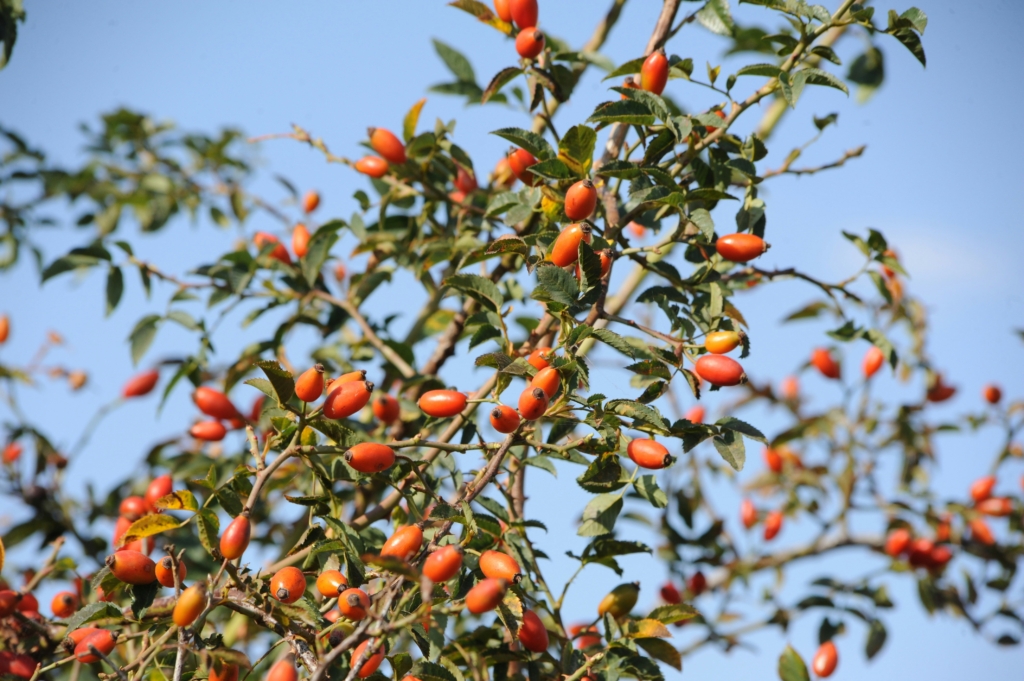
Once Rose petals are pollinated, they transform into Rose hips in the fall, and represent the fruit of the Rose plant. Rose hips are rich in Vitamin C, flavonoids, tannins, carotenoids, and antioxidants, which help boost the immune system and promote collagen production for healthy skin. They have a pleasantly complex flavor that is sour, slightly sweet, and distinctly astringent.
If you’re harvesting Rose hips, it’s important to note that their outer surface can be covered in fine, prickly hairs, which should be gently removed before use (either by rubbing them off with your fingers or a soft cloth). The inner seeds should also be carefully removed, as they are considered toxic. To prepare them, trim away the green calyx at the top, slice the Rose hip in half, and scrape out the tiny seeds inside.
The ideal window to harvest Rose hips is mid to late autumn, just after the first light frost, which actually enhances their sweetness. But it’s important to harvest before a hard freeze sets in, which can damage the fruit and lead to rot. Choose Rose hips that are fully ripe yet still firm, avoiding any that show signs of mold, dark spots, or softness. If foraging isn’t an option, Rose hips can also be sourced from a trusted herbal supplier: our favorite is Mountain Rose Herbs.
How to Use Rose Petals
No matter what preparation I’m making, my absolute favorite way to work with Rose is by using fresh Rose petals––there’s really nothing like it! Dried Rose petals are great, too, but tend to lose some of their aromatics.
If you are planning to harvest fresh Rose for aromatic medicine preparations, there are a few important things to keep in mind. First, always take a moment to smell the flower before harvesting. Not all Rose species are fragrant, and due to extensive hybridization, many modern varieties no longer produce significant aromatics. Once it has passed the smell check, it’s a good idea to take a note of your surroundings.
If you’re not harvesting from your own garden, it’s essential to be mindful of the plant’s environment. Roses grown in urban areas (or sourced from florists) are very often treated with fungicides, pesticides, and other chemicals, as they are highly susceptible to pests and disease. Try to choose plants that are grown organically and in unpolluted environments, and always check to make sure the plant shows no signs of disease or heavy insect infestation.
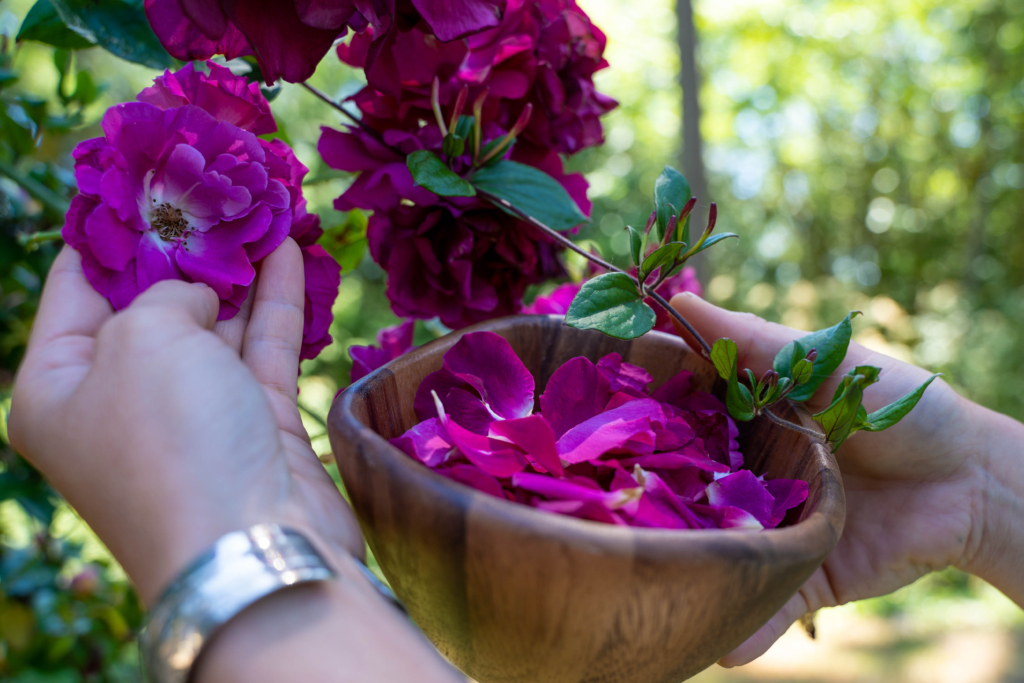
When harvesting, take only the petals and leave the central part of the flower intact on the stem. This preserves the stamens and pistils, allowing pollinators to continue visiting the bloom. Their work supports the plant’s natural cycle, ultimately leading to the formation of Rose hips in the fall, which is an important seasonal food source for many animals throughout winter!
Rose Remedies
- Rose Essential Oil: Pure, straight Rose essential oil is called “Rose Otto.” Rose is not a high-yield plant, which means that very high amounts of plant material are needed to make a very small amount of essential oil– (which is why Rose EO is often very expensive). My favorite ways to use Rose EO are simply diluted in an essential oil diffuser or diluted in a carrier oil like jojoba oil to use as a face or body oil.
- Rose Hydrosol: Also commonly known as Rose water, this is the “byproduct” of the essential oil steam distillation process. It contains some aromatic elements as well as water-soluble constituents. The benefits of Rose water are vast: it can be used as a cooling facial toner and a soothing topical body spray for any hot, inflammatory skin conditions. My favorite way to use Rose water is to add a dash in cocktails and mocktails!
- Rose Incense: Burning Rose petals sends out a beautiful, deep, resinous aroma. You can burn whole, dried Rose petals, incorporate them into a loose incense blend, or use the fine powder mixed into recipes for incense cones or sticks.
- Herbal Steam: Rose petals are a beautiful addition to facial steams and even vaginal steams! Check out our blog article for step-by-step instructions on herbal steaming.
- Herbal Bath: There’s nothing quite like sinking into a hot herbal bath on a cold winter night, surrounded by Rose petals floating all around you.
- Herbal Tea: You can add both Rose petals and Rose hips to herbal tea blends, or drink Rose tea or Rose hip tea on its own.
- Rose Tincture: An alcohol extract, also called an herbal tincture, is a concentrated herbal extract that uses alcohol as the solvent. You can try making your own, or buy one from herbal artisans.
- Rose Glycerite: This herbal extract is made by soaking plant material in a vegetable glycerin solvent. It’s a great, sweet-tasting alternative to traditional alcohol-based tinctures.
- Rose Honey: A simple Rose honey can be made by adding fresh Rose petals to a large jar and covering them with raw honey. Since Rose is edible, there’s no need to strain it––just let it soak for several weeks, then enjoy!
- Rose Vinegar Shrub: An herbal shrub (often called an oxymel) is a concentrated syrup made by steeping herbs in a mixture of apple cider vinegar and honey. Check out our article: How to Make an Aromatic Herbal Oxymel (+ Why You Should).
- Rose Cordial: A cordial is a combination of an alcoholic herbal extract and honey. They are traditionally made with brandy, but you can use other types of alcohol if you’d prefer, like vodka or gin. Rose cordial is absolutely delicious and really does a great job at extracting some of the delicate, sweet, floral flavor and aroma of the petals.
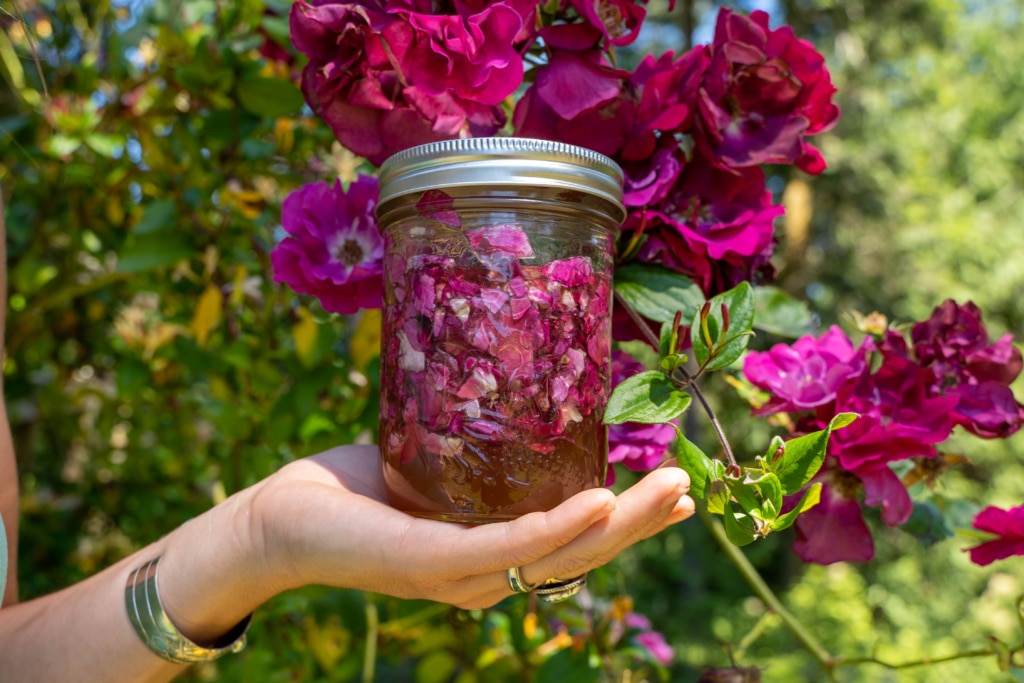
DIY Rose Cordial Recipe
Typically, a cordial contains anywhere from 1 part honey to 1–4 parts alcohol. For a cordial to remain shelf-stable, the final product should contain at least 25% alcohol. Since we're using brandy that is 40% alcohol, we'll use a ratio of 1 part honey to 3 parts brandy (0.5 cups honey to 1.5 cups brandy). This results in a cordial that is approximately 30% alcohol, which is well above the minimum needed for shelf stability.
Tools & Ingredients:
Fresh Rose petals
1.5 cups 40% alcohol (brandy, gin, vodka, or rum)
1/2 cup raw honey (local if possible!)
Knife & cutting board
16 oz. clean glass mason jar with lid
Clean stirring spoon
Fine mesh stainless steel strainer and/or cheesecloth or muslin cloth
Label & pen
Steps:
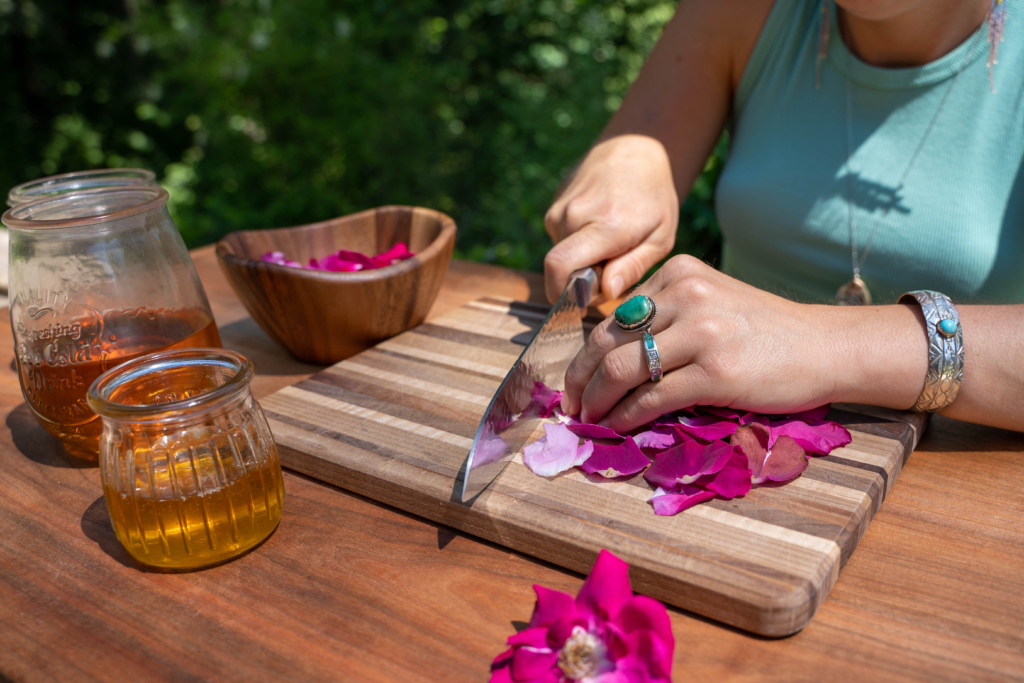
1. Using a knife and cutting board, chop the Rose petals into smaller ½ inch to 1 inch pieces.
2. Place your Rose petals in a glass mason jar, filling the jar about ¾ full.
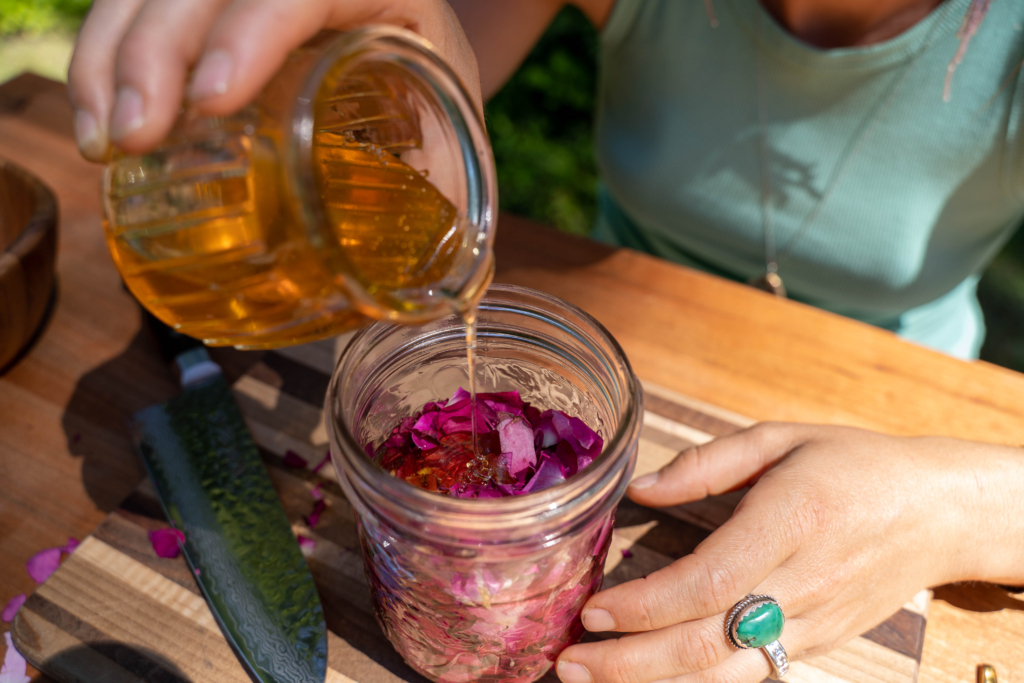
3. Pour your alcohol of choice over the plant material, then add the raw honey to fill the remaining space.
4. Gently stir the mixture using a clean spoon, ensuring the plant material is fully submerged in the menstruum mixture.
5. Screw the lid on the jar. Be sure to label the jar with the ingredients and the date.
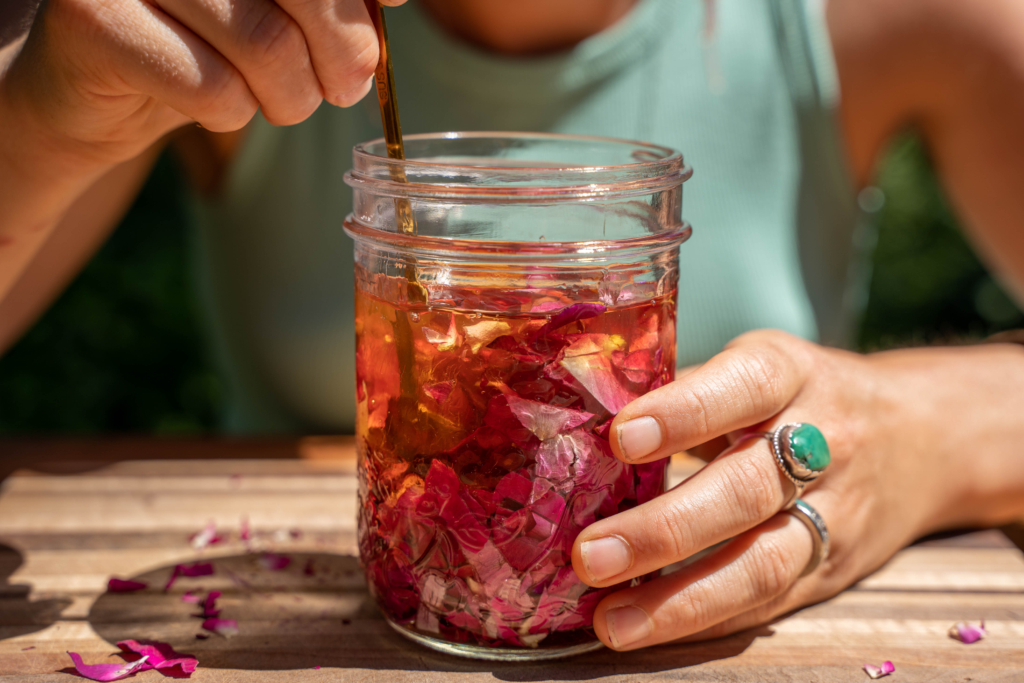
6. Set it in a cool, dark place and return every day to gently shake the mixture and check on alcohol levels. If the petals are no longer completely covered, you may add more alcohol to top it off. You always want the herbs to remain covered with menstruum to avoid spoilage!
7. Allow your cordial to infuse for 4-6 weeks, then strain out the herbs using a fine mesh strainer and/or cheesecloth or a muslin cloth. I like to use both to finely strain it.
8. Make sure to label your storage container with its name, ingredients, and date.
9. Store in a dark amber glass jar in a cool, dark place away from direct light and heat.
This Rose cordial recipe can be used just like a tincture, taken on its own or blended into other herbal formulas. One of my favorite ways to enjoy it is stirred into cooling summer mocktails, or simply added to sparkling water for a bright, herbal spritz. Enjoy!
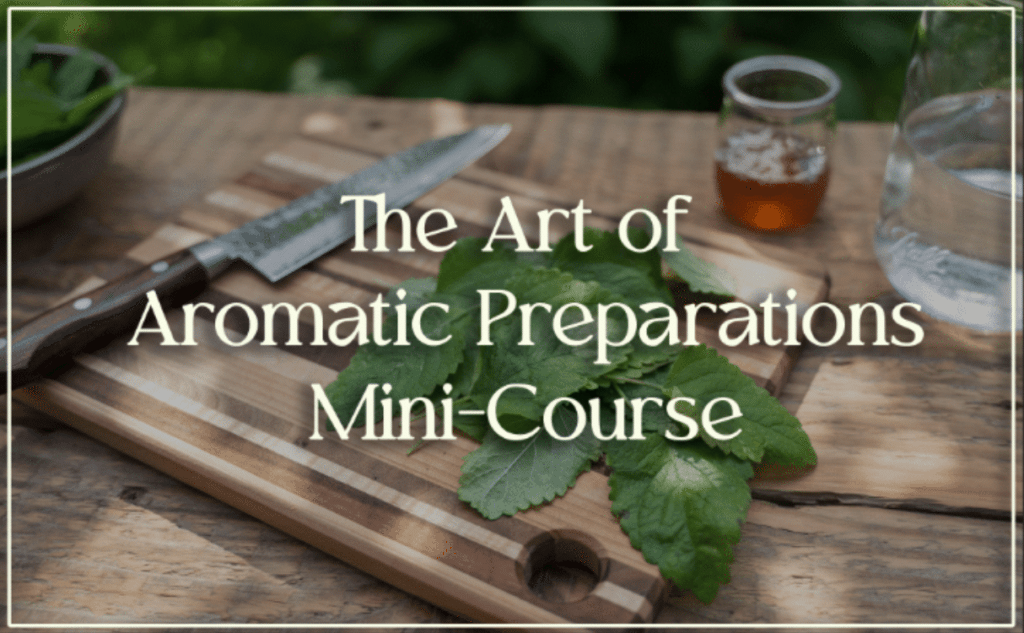
Rose can be transformed into practically any aromatic preparation or herbal remedy you can dream of, and that's exactly the kind of magic we love teaching.
If you've ever caught yourself dreaming of crafting your own herbal remedies and aromatic creations but weren't quite sure where to begin, now's your chance to turn those dreams into reality.
Our Art of Aromatic Preparations Mini-Course walks you step-by-step through the timeless skills every herbalist and aromatherapist treasures.
With 6 immersive, hands-on video tutorials, you'll master the essential preparations, guided by Erika Galentin, clinical herbalist and aromatherapist, whose passion and expertise make every lesson come alive.
From expert techniques to little-known tips passed down through tradition, you'll gain the confidence and skills to create a wide range of beautiful natural remedies.
Rose Plant Profile
Latin Name: Rosa spp.
Other Common Names: Queen of Flowers
Genus: Rosa
Plant Family: Rosaceae
Parts Used: petals, hips (fruits), leaves
Herbal Energetics and Actions: antibacterial, antidepressant, antifungal, anti-inflammatory, antiseptic, antispasmodic, antiviral, aphrodisiac, astringent, blood tonic, cardiotonic, carminative, cooling, decongestant, diuretic, emmenagogue, expectorant, hemostatic, kidney tonic, laxative, nervine, nutritive, sedative
Body Systems Affiliations: cardiovascular, digestive, reproductive (uterus and menstrual cycle), integumentary, and nervous system
Aroma: floral, rich, soft, sweet, slightly sour, astringent
Article Written By Melissa Szaro

© 2026 The Northwest School of Aromatic Medicine. All rights reserved.
*The statements above have not been evaluated by the FDA, and are for educational purposes only. This article is not intended to diagnose, treat, cure, or prevent any disease. This article should not be taken as medical advice. Please consult your physician before you use this information for health purposes.
